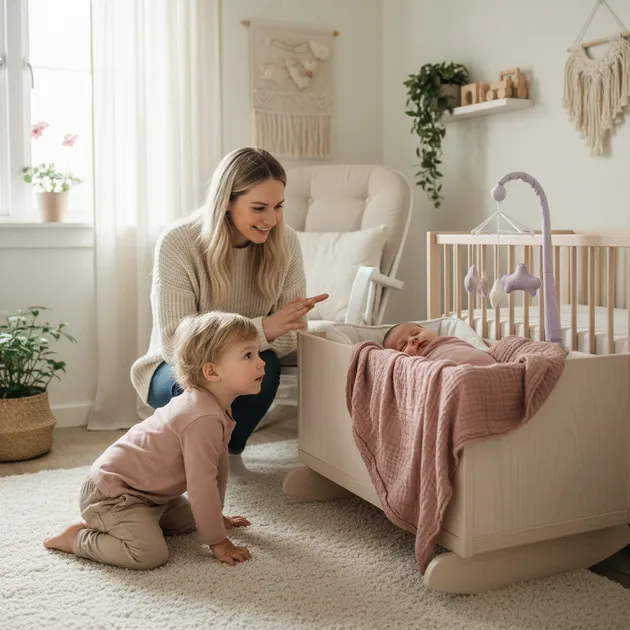
You've finally brought your new baby home from the hospital. But instead of the touching scene you imagined, your two-year-old is sitting with arms crossed, glaring at the new arrival.
Sibling jealousy is one of the most common challenges families with young children face. It's hard to watch your child struggle, but jealousy is a normal reaction. With a little patience and the right approach, the transition can go well for the whole family.
Why Do Children Get Jealous?
Imagine your partner suddenly brought a new person home and said: "This person lives here now, and everyone thinks they're adorable." You'd probably react too.
For a young child, a new baby is exactly that. The child has had their parents' full attention and now has to share it with someone else. It's natural to respond with jealousy, anger, or sadness.
Common causes of sibling jealousy:
- Loss of exclusive attention from parents
- Changed routines and predictability
- Lack of understanding of the new situation
- Observing that the baby gets lots of attention from everyone
Sibling jealousy is so common that experts say it would be more concerning if a child did NOT react. The reaction shows the child is securely attached and cares about their relationship with their parents.
How Young Children Show Jealousy
Children express jealousy in different ways, and sometimes it isn't obvious that it's about the new baby.
Obvious Jealousy
- Says "send the baby back" or "I don't like the baby"
- Tries to push the baby away or take toys from them
- Shouts "NO!" when you pick up the baby
- Constantly wants the baby to be put down
Hidden Jealousy (Regression)
- Suddenly wants a pacifier or bottle again
- Starts having accidents after being potty trained
- Talks in a "baby voice"
- Wants to be carried more and clings to you
- Sleep problems that weren't there before
Behavior Changes
- More tantrums than usual
- Hitting, biting, or pinching, toward the baby or others
- Refusing to eat or cooperate
- Withdrawing and becoming quiet
Never leave a young child alone with the baby unsupervised, even if the child seems loving. Toddlers don't have the impulse control to predict the consequences of their actions and can unintentionally hurt the baby.
Preparation: Before the Baby Arrives
You can't prevent all jealousy, but good preparation makes the transition easier.
Talk About the Baby During Pregnancy
Use picture books to explain that a baby is coming. Keep it simple and concrete: "A baby is growing in Mommy's tummy. The baby will come when it's big enough."
Avoid promising that becoming a big sibling will be super fun. Instead say: "Babies cry a lot and sleep a lot. But eventually you'll be able to play together."
Involve Your Child
Let your child help get the baby's room ready, choose a toy for the baby, or decide what onesie the baby will wear. Feeling like a contributor gives them a sense of ownership.
Keep Routines Stable
If big changes are coming, like moving from a crib to a toddler bed, starting daycare, or stopping a pacifier, do them well before the baby arrives. Don't let your child connect the changes to the baby.
After the Birth: The First Weeks
The first weeks with a new baby are intense for everyone. Here are strategies to help your older child.
Give "Big Kid Time"
Set aside time each day where your older child has a parent all to themselves. Even 15–20 minutes of undivided attention makes a big difference. Read, play, draw, let your child decide what you do.
Let Them Help
Young children love to help. "Can you get a diaper for the baby?" "Do you want to sing to the baby?" "You're such a great big sister for helping!" The role of helper gives your child a positive identity in the new family.
Acknowledge Their Feelings
Never say "you shouldn't be jealous" or "you're the big sibling now." Acknowledge what your child is feeling: "I understand it's hard when Mommy holds the baby a lot. You miss having Mommy just to yourself."
Keep a small "big kid gift bag" ready for visitors. When everyone arrives with presents for the baby, your older child gets something too. Some families keep a box of small gifts that the child can open whenever the baby has visitors.
Speak Positively About the Relationship
Tell the baby (with your older child present): "Look, there's your big sister! She's very kind. You're lucky to have such a wonderful big sister." Your older child overhears this and feels seen and valued.
Avoid Comparisons
Don't say "the baby doesn't cry at bedtime, you shouldn't either." Comparisons between siblings create more rivalry, not less.
Long-Term Strategies
Sibling jealousy isn't just a phase around the birth. It can resurface when the baby starts crawling (and grabbing toys), walking, talking, or getting more attention.
Respect Your Child's Belongings
A young child who suddenly has to share all their toys with a baby who breaks and mouths everything will get frustrated. Let your child have some things that are just theirs, and teach the baby boundaries as they grow.
Celebrate Each Child's Unique Strengths
"You're so good at building tall towers!" "Your baby has the most beautiful eyes." Each child needs to feel special, not in comparison to their sibling, but in their own right.
Create Positive Sibling Experiences
Help the children have good moments together. Let the older child show the baby something, sing, play peekaboo, or hand them a toy. Positive experiences build attachment between siblings.
Be Fair, Not Identical
Fairness doesn't mean everyone gets the same thing. It means everyone gets what they need. The two-year-old needs a little more one-on-one time with you. The baby needs feeding and care. It's fine to explain this simply.
When Should You Seek Help?
Most sibling reactions are normal and settle down within a few months. But sometimes families need a little extra support.
Talk to your pediatrician if:
- Your child repeatedly tries to hurt the baby
- Your child seems persistently sad or withdrawn
- Regression (accidents, baby talk) continues for several months
- You as a parent feel overwhelmed by the situation
Your pediatrician has experience with sibling dynamics and can offer guidance tailored to your family's situation.
Frequently Asked Questions
How long does sibling jealousy last?
The strongest reactions typically last 2–6 months. But milder forms of rivalry can come and go throughout childhood. That's normal and part of the sibling relationship.
Should I let my older child hold the baby?
Yes, with support. Let your child sit securely on the sofa with a pillow on their lap, and gently place the baby in their arms. Stay right beside them. "Look, the baby is smiling at you!" Moments like these build attachment.
What if my child says "I hate the baby"?
Don't get scared or upset. Say "I hear that you're upset. You don't have to love the baby all the time. But we're all in this family, and we take care of each other." Let your child express negative feelings without dismissing them.
Sibling jealousy is a natural part of becoming a bigger family. With time, patience, and intentional effort, your children will find their place, and may become each other's best friends.
Track both children's development with Babysential's milestone tracker. Need reminders and tips day to day? Check out our checklists for parents of young children.
Read also: Toddler and New Baby | Siblings and New Baby | Setting Limits for Toddlers | Emotional Development in Children
Sources
- AAP - Healthy Children: Sibling Rivalry
- Zero to Three - Sibling Relationships
- WHO - Child development
🔧 Helpful Tools
- All Baby Tools. Browse all free tools for pregnancy and baby care
📖 Related Articles
- New Sibling: How to Prepare Your Toddler. Expecting a second child? Here's how to prepare your toddler for a new sibling and prevent jealousy and rivalry.
- Siblings and a New Baby: How to Prepare Your Older Child. Tips for preparing siblings for a new baby. Jealousy, age-appropriate advice, and how the whole family finds its new rhythm.