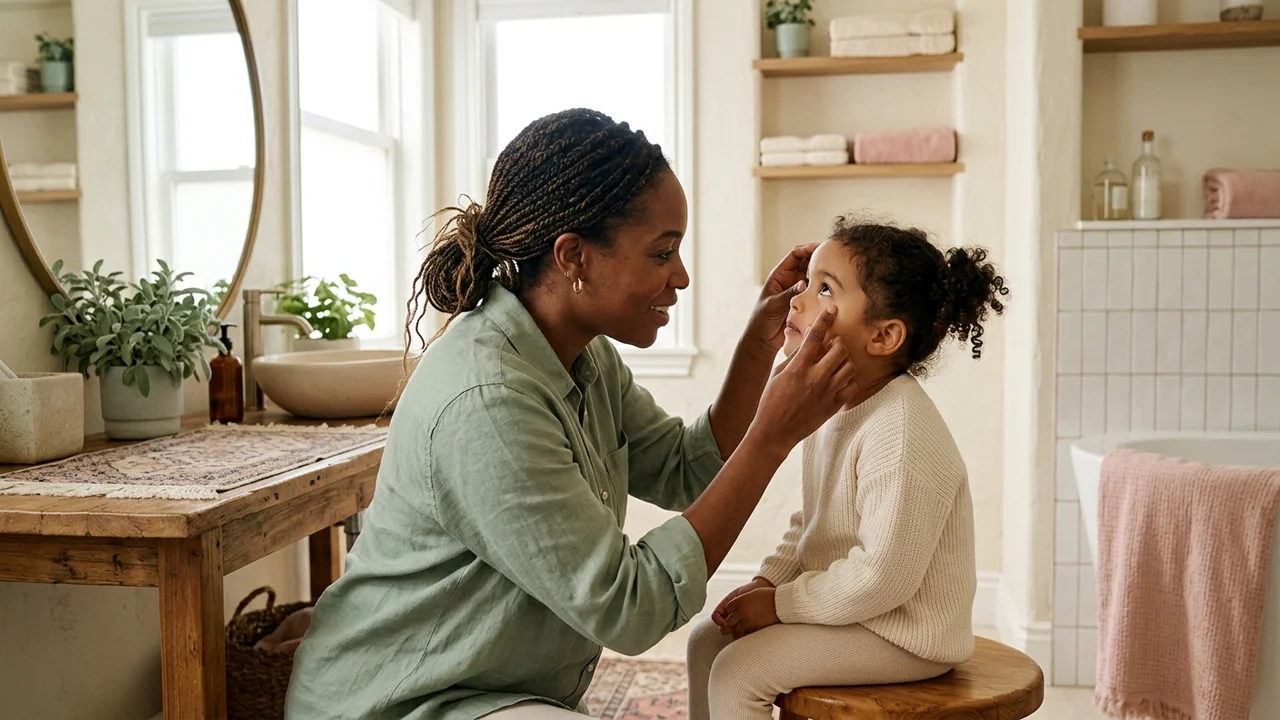
Your child has red spots on their tummy, patches on their cheeks or blisters on their hands. Rashes in children are very common and almost always harmless, but it can be difficult to know what it is and whether you should contact a doctor.
Most rashes in children are caused by viruses, allergies or skin conditions such as eczema. Some clear up on their own within a few days, others need treatment. And in rare cases, a rash can be a sign of something serious that requires prompt action.
Here is an overview of the most common rashes in children, what you can do at home, and when you should call the doctor.
Overview: The most common rashes in children
| Rash | Characteristics | Age | Contagious? | See doctor? |
|---|---|---|---|---|
| Atopic eczema | Dry, itchy skin, often in skin creases | All ages | No | If worsening |
| Hives (urticaria) | Raised, red, itchy welts | All ages | No | If breathing difficulties |
| Fifth disease | Red cheeks, then rash on the body | 5–15 years | Yes (before rash) | Rarely |
| Hand-foot-mouth disease | Blisters on hands, feet, in mouth | 0–5 years | Yes | With high fever |
| Scarlet fever | Sandpaper rash + sore throat | 3–10 years | Yes | Yes, always |
| Chickenpox | Fluid-filled blisters over the whole body | All ages | Yes | With complications |
| Diaper rash | Red, irritated skin under the diaper | 0–2 years | No | With fungal infection |
Atopic eczema
Atopic eczema (childhood eczema) is the most common skin condition in children. Around 15–20 percent of children are affected.
What it looks like
- Dry, red and itchy skin
- Often on the cheeks in babies
- In the creases (inside of elbows, behind knees) in older children
- Can weep and crust during flare-ups
- Itching is often worst at night
Treatment
Moisturizer is the foundation of treatment. Apply a fragrance-free moisturizer at least twice daily, more often during dry periods. Moisturizer is more important than any other treatment.
During flare-ups:
- Hydrocortisone cream in short periods, follow your doctor's instructions
- Avoid scratching, keep nails cut short, use cotton mittens at night
- Lukewarm baths (not hot) with bath oil
Prevention:
- Use wool-free, soft clothing next to the skin
- Wash clothes with fragrance-free detergent
- Avoid harsh soaps and bubble baths
- Keep the temperature comfortable, sweating worsens eczema
Many children with eczema grow out of it. Around half are symptom-free by the time they start school. Read more in our detailed eczema guide.
Hives (urticaria)
Hives cause raised, red and itchy welts that can appear suddenly and move around the body.
What it looks like
- Red, raised patches (welts) in various sizes
- Can look like mosquito bites or nettle rash
- Moves, new welts appear as old ones disappear
- Extremely itchy
- Usually lasts a few hours to days
Common causes
- Viral infections (most common cause in children)
- Allergic reactions (food, insect stings, medications)
- Cold or heat
- In many cases the cause is never found
Treatment
- Antihistamine (cetirizine) relieves itching, available over the counter for children over 2 years
- Cool compresses can temporarily reduce the itch
- Usually clears up on its own within hours to days
Call 911 immediately if hives occur together with:
- Swelling of the face, lips or tongue
- Breathing difficulties or wheezing
- Dizziness or fainting
- Stomach cramps and vomiting
These can be signs of anaphylaxis (serious allergic reaction) that requires immediate treatment.
Fifth disease (erythema infectiosum)
Fifth disease is a mild viral infection caused by parvovirus B19. The name comes from it historically being the fifth childhood disease with a rash to be described.
What it looks like
- Starts with mild fever, headache and cold symptoms
- After a few days: intensely red cheeks (as if the child has been slapped)
- Then: a lacy rash on the arms, legs and body
- The rash can come and go for several weeks, often triggered by heat, sun or bathing
Treatment
Fifth disease requires no specific treatment. The virus has run its course by the time the rash appears, the child is contagious before the rash comes, not after.
- Give acetaminophen (Tylenol) for fever or discomfort
- The rash is harmless and clears up on its own
- The child can return to daycare when they feel well
Parvovirus B19 can be dangerous for pregnant women (risk to the fetus) and people with compromised immune systems. If your child has fifth disease and you know of pregnant people in your circle, they should be informed so they can contact their doctor.
Hand-foot-mouth disease
Hand-foot-mouth disease is a common viral infection caused by coxsackievirus. It most often affects children under five and spreads easily in daycares.
What it looks like
- Blisters in the mouth (on the tongue, palate, inside the cheeks), can make it painful to eat
- Rash with small blisters on the hands and feet
- Sometimes also on the bottom and around the mouth
- Mild fever
- Poor appetite
Treatment
- Give pain relief (acetaminophen) for fever and mouth pain
- Offer cold drinks and soft foods, ice cream and yogurt can soothe
- Avoid acidic foods and juice that sting in the blisters
- The illness clears up on its own within a week
Hand-foot-mouth disease is most contagious in the first week, but the virus can be shed in feces for several weeks. Good hand hygiene is the best preventive measure.

Scarlet fever
Scarlet fever is a bacterial infection caused by Group A streptococcus (the same bacteria that cause strep throat).
What it looks like
- Sore throat and difficulty swallowing, often with high fever
- Rash that feels like sandpaper, small red spots packed closely together
- Usually starts on the chest and spreads to the rest of the body
- Redder in skin folds (armpits, groin)
- Strawberry tongue, the tongue can become red and bumpy
- The skin may peel afterwards, especially on the fingertips
Treatment
Scarlet fever requires antibiotics. Contact a doctor if your child has a sore throat with a sandpaper rash. Untreated scarlet fever can in rare cases cause complications such as rheumatic fever or kidney inflammation.
- Antibiotics (penicillin) for 10 days, always complete the full course
- Acetaminophen for fever and pain
- The child is no longer contagious after 24–48 hours on antibiotics
Chickenpox
Chickenpox (varicella) is a highly contagious viral disease. Most children get chickenpox in childhood, and a vaccine is available and recommended in most countries.
What it looks like
- Starts with fever and fatigue
- Then a rash: red spots that develop into fluid-filled blisters
- The blisters dry out and form scabs
- The rash comes in waves, you see spots, blisters and scabs at the same time
- Extremely itchy
Treatment
- Give antihistamine for itching and acetaminophen for pain
- Keep nails cut short to prevent the child from scratching the blisters open
- Cool compresses or oatmeal baths can soothe the itch
- Avoid ibuprofen with chickenpox, it can increase the risk of skin infections
Read more in our detailed article on chickenpox and the vaccine.
Rashes in newborns and babies
Newborns often get rashes that can look dramatic but are completely harmless.
Baby acne (neonatal acne)
Small red or white spots on the cheeks, nose and forehead. Completely normal, caused by maternal hormones. Needs no treatment and disappears on its own within a few weeks.
Cradle cap (seborrheic dermatitis)
Yellow, greasy flakes on the scalp. Apply baby oil, leave it for a few hours and gently brush off the flakes. Harmless and temporary.
Diaper rash
Red, irritated skin under the diaper. Caused by prolonged contact with urine and feces.
Prevention and treatment:
- Change the diaper frequently
- Allow the bottom to air dry
- Use zinc oxide cream as a barrier
- With a fungal infection (red spots around the edges): antifungal cream from the doctor
Read more about baby skincare in our guide to baby's first bath.
The glass test: When a rash could be dangerous
There is one rash you should never ignore, and the glass test helps you identify it.
How to do the glass test
- Take a regular drinking glass
- Press it firmly against the rash
- Look through the glass
If the rash disappears under pressure: It is probably harmless (most rashes do this).
If the rash does NOT disappear under pressure: It may be petechiae, small bleeds in the skin that can be a sign of meningococcal disease (meningitis/blood poisoning).
Call 911 immediately if the child has a rash that does not disappear with the glass test, especially if combined with fever, lethargy, neck stiffness or general deterioration. Meningococcal disease is life-threatening and requires immediate treatment.
What a meningococcal rash looks like
- Small red or purple spots that do not disappear under pressure
- Can look like tiny bruises
- Often starts as tiny dots and spreads rapidly
- Can develop into larger, dark patches
When should you contact a doctor?
Contact a doctor if:
- The rash is combined with high fever and general deterioration
- The child has a sandpaper rash + sore throat (suspected scarlet fever)
- The rash spreads rapidly and the child is clearly unwell
- Eczema that does not respond to moisturizer and hydrocortisone cream
- The rash lasts longer than two weeks without improvement
- You are unsure what the rash is
Call 911 if:
- The rash does not disappear with the glass test
- The child has breathing difficulties along with the rash (anaphylaxis)
- The child is unconscious, limp or difficult to rouse

Frequently asked questions
Can I send my child to daycare with a rash?
It depends on the type of rash. Eczema and diaper rash are not contagious, the child can go to daycare. With contagious illnesses (chickenpox, hand-foot-mouth disease) the child should stay home until they are symptom-free and in good general health. Check your daycare's own rules.
Should I take my baby to the doctor for baby acne?
No. Baby acne is completely normal and clears up on its own. Do not squeeze or scrub the spots. Wash the face gently with lukewarm water. Contact a doctor only if the rash doesn't improve after three months or looks infected.
Does hydrocortisone cream help?
Hydrocortisone cream is effective against eczema and some other inflammatory rashes, but should only be used on the recommendation of a doctor. It does not help with viral rashes, allergic rashes or infections. Use mild creams (1%) on the face and slightly stronger on the body, always for short periods.
Can a rash be caused by food allergy?
Yes. Food allergies can cause rashes, either as hives (acute) or worsening of eczema (delayed). The most common food allergens in children are cow's milk, eggs, peanuts, tree nuts, wheat, soy and fish. If you suspect food allergy, talk to your doctor about allergy testing.
Are all rashes in children contagious?
No. Eczema, hives, diaper rash and baby acne are not contagious. Viral infections such as chickenpox, hand-foot-mouth disease and fifth disease are contagious. Scarlet fever (bacterial) is contagious until the child has been on antibiotics for 24–48 hours.
Should I photograph the rash?
Yes, it's a good idea. Rashes can change quickly, and a photo makes it easier for the doctor to assess. Take photos in good light with and without flash. If the rash spreads, take photos a few hours apart to show the progression.
Read more
- Common parenting concerns. Comprehensive overview of symptoms and health advice
- Eczema in children: Treatment and prevention
- Chickenpox in children
- Fever in children: When should you contact a doctor?
- Vaccines for children
- Baby's first bath
Useful tools on Babysential
Sources
- HealthyChildren.org. Skin Conditions
- CDC. Childhood Skin Conditions
- AAP. Eczema and Skin Allergies
- NIH. Common Childhood Rashes
🔧 Helpful Tools
- Baby Milestones Tracker. Track your baby's developmental milestones
- All Baby Tools. Browse all free tools for pregnancy and baby care
📖 Related Articles
- Chickenpox in Children: Symptoms, Treatment, and Contagion. Everything about chickenpox in children and babies. Symptoms, incubation period, home treatment, when to call a doctor, and vaccine recommendations from the CDC. Updated for 2026.
- Chickenpox in Children: Symptoms, Treatment, and Contagion. Everything you need to know about chickenpox in children and babies. Symptoms, incubation period, home treatment, when to call the doctor, and vaccine recommendations from the AAP. Updated for 2026.
- Sick Child and Daycare: When Should Your Child Stay Home?. When should your child stay home from daycare? Guide to fever, vomiting, pink eye, and other common childhood illnesses, with practical guidelines.