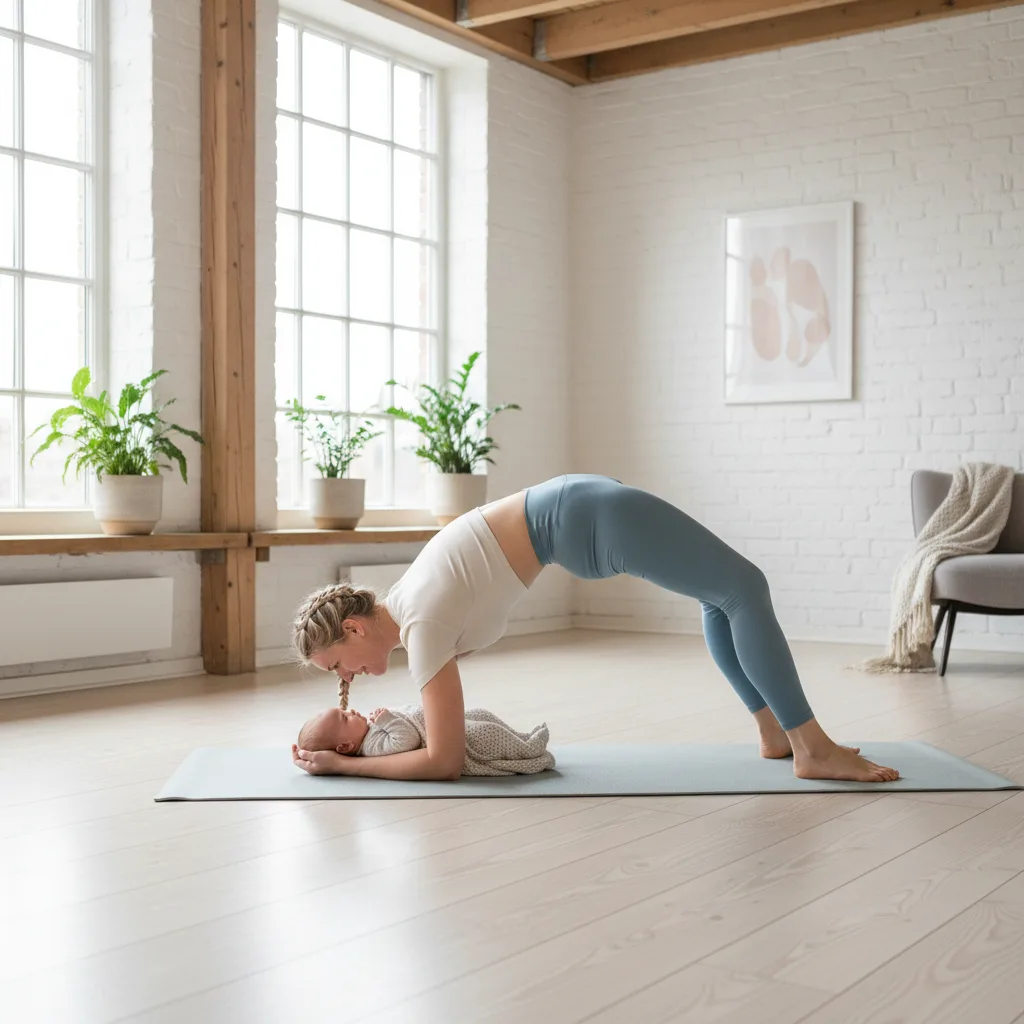
You can run 5 kilometers. Maybe not today. Maybe not next week. But you have already done something much harder, you gave birth to a child.
This guide takes you from walking to your first 5K after birth. The program is based on gradual progression and adapted to the postpartum body.
Why a Dedicated Postpartum Running Program?
You cannot simply pick up where you left off. Even if you ran a marathon before pregnancy.
The postpartum body is fundamentally different:
- The pelvic floor is weakened after 9 months of increased load
- Joints and ligaments are still loose from the hormone relaxin
- Core stability is reduced
- Sleep deprivation affects recovery and coordination
Running is a high-impact activity. Every step sends 2–3 times your body weight through the pelvic floor. Without proper preparation, you risk leaking urine, overuse injuries, or worsening pelvic floor problems.
A structured program protects you. It ensures that your body builds capacity in the right order, and that you do not pay the price for starting too hard.
When Are You Ready to Start?
Health authorities recommend starting exercise when you feel ready. There is no longer a fixed waiting period. But running is a high-impact activity, so it is worth checking that your body can handle the load.
Check these before you start running:
| Exercise | Requirement | What it tests |
|---|---|---|
| Brisk walk | 30 min without symptoms | Basic fitness |
| Single-leg squat | 10 reps per side | Leg strength |
| Jogging in place | 1 minute | Cardio readiness |
| Single-leg hop | 10 reps per side | Shock absorption |
You should be able to answer "no" to all of these:
- Leaking when jumping or coughing
- Heaviness or pressure in the pelvis
- Pain in the pelvis or back
Can you do all of these symptom-free? Then your body is ready for walk/run intervals.
If you have persistent symptoms, had a cesarean section, or a complicated birth, a physiotherapist with expertise in women's health is recommended before starting.
Phase 1: Building the Foundation
Before you take a single running step, build the foundation. This phase may last a few weeks or several months, it is individual.
The First Weeks: Walking and Breathing
- 15–20 minute daily walks
- Pelvic floor exercises 3 times daily
- Deep breathing training (diaphragm and pelvic floor synchronized)
- Gentle core exercises
Longer Walks, More Strength
- 30–45 minute walks
- Glute bridges, squats, lunges
- Stair climbing (up and down, controlled)
- Balance challenges (single-leg standing)
Preparing for Running
- Brisk walking (6–7 km/h or 3.5–4.5 mph)
- Step-ups and jogging in place
- Light jumping on a mini trampoline (low impact)
- Test whether your body is ready using the exercises above
Phase 2: Walk/Run to 5K
You have confirmed that your body can handle the load. Now the real training begins.
The Principles
- Never increase by more than 10% per week (total running time)
- Have at least 1 rest day between running sessions
- Stop at symptoms (leaking, pain, heaviness)
- 2–3 running sessions per week is enough
Weeks 1–2: The First Intervals
Session (3 times/week):
- 5 min warm-up (brisk walk)
- 8 × (30 sec run / 90 sec walk)
- 5 min cool-down (walk)
- Total running time: 4 minutes
Pace? Easy. You should be able to hold a conversation.
Weeks 3–4: Longer Running Intervals
Session:
- 5 min warm-up
- 6 × (1 min run / 1 min walk)
- 5 min cool-down
- Total running time: 6 minutes
Weeks 5–6: The Balance Shifts
Session:
- 5 min warm-up
- 5 × (2 min run / 1 min walk)
- 5 min cool-down
- Total running time: 10 minutes
Weeks 7–8: Continuous Blocks
Session:
- 5 min warm-up
- 3 × (5 min run / 2 min walk)
- 5 min cool-down
- Total running time: 15 minutes
Weeks 9–10: Almost There
Session:
- 5 min warm-up
- 2 × (10 min run / 2 min walk)
- 5 min cool-down
- Total running time: 20 minutes
Weeks 11–12: Your First 5K
Session:
- 5 min warm-up
- 25–30 min continuous running
- 5 min cool-down
- You made it!
Do not focus on pace. Distance and continuity are all that matter in the beginning. Speed will come on its own.
A Typical Training Week
Here is what a week can look like in phase 2 (weeks 5–6):
| Day | Activity | Duration |
|---|---|---|
| Monday | Walk/run intervals | 25 min |
| Tuesday | Rest day or walk | , |
| Wednesday | Strength + pelvic floor | 20 min |
| Thursday | Walk/run intervals | 25 min |
| Friday | Rest | , |
| Saturday | Walk/run intervals | 25 min |
| Sunday | Long walk | 40–60 min |
What to Do When Symptoms Appear
Symptoms are not a failure. They are information.
Mild leaking when running:
- Go back to the previous week's intervals
- Increase pelvic floor training
- Try again after 1–2 weeks
Heaviness or pressure in the pelvis:
- Stop running immediately
- Contact a physiotherapist
- Pelvic floor exercises with a focus on lifting (not just squeezing)
Pain in knees, hips, or back:
- Check your shoes (wear level, cushioning)
- Reduce pace or go back a level
- Consider the running surface (gravel/trail is softer than asphalt)
Tips from Mothers Who Have Done It
"Rest days are more important than training days." Recovery is where the body builds itself up. Especially with sleep deprivation, the body needs more rest than usual.
"I ran with the stroller, it is harder than you think." Running with a stroller is good training, but add extra walking intervals. The stroller changes your running technique.
"It took longer than I had planned. And that was completely fine." Some take 8 weeks from start to 5K. Others take 20. Both are the right pace.
"Pelvic floor exercises were boring, but they saved me." Nobody finds pelvic floor exercises exciting. But those who do them avoid leaking in the long run.
Frequently Asked Questions
Can I run with a stroller from the start?
Wait until the baby is at least 6 months old and has good head control. Use a jogging stroller with suspension. Add extra walking intervals because the stroller increases the load.
What if I have never run before?
The program works just as well for beginners. You start with walks regardless. Many mothers discover running for the first time after birth, and love it.
Does running affect breastfeeding?
Moderate running does not affect the quantity or quality of breast milk. Drink plenty of water, eat enough calories, and consider nursing or pumping before training for comfort.
Do I need special shoes?
Yes, good running shoes matter. Your feet may have changed during pregnancy (many go up half a size). Visit a running store for a gait analysis. Replace shoes every 300–500 miles.
Read More
- Running After Birth. Complete Guide
- Exercise After Birth. Week-by-Week Guide
- Pelvic Floor Training Guide
Sources
- AAP. Postpartum Exercise
- ACOG. Exercise After Pregnancy
- Goom et al. 2019. Returning to Running Postnatal
🔧 Helpful Tools
- Pelvic Floor Trainer. Guided pelvic floor exercises for pregnancy and postpartum
- All Baby Tools. Browse all free tools for pregnancy and baby care