The road trip was planned in meticulous detail, but halfway to grandma's house the little one looks green in the face and the entire back seat needs cleaning. Motion sickness in children is common, frustrating, and fortunately something you can do a lot about.
Children between 2 and 12 years are most susceptible, but babies can also show signs of discomfort in the car. Here you will get an overview of what happens in the body, what you can do to prevent it, and how to handle the situation when it happens.
Why do children get car sick?
Motion sickness (kinetosis) occurs when the brain receives conflicting signals. The eyes see that the surroundings are still (the inside of the car), while the balance organ in the ear detects movement. This conflict causes the brain to interpret the situation as something being wrong, and it responds with nausea.
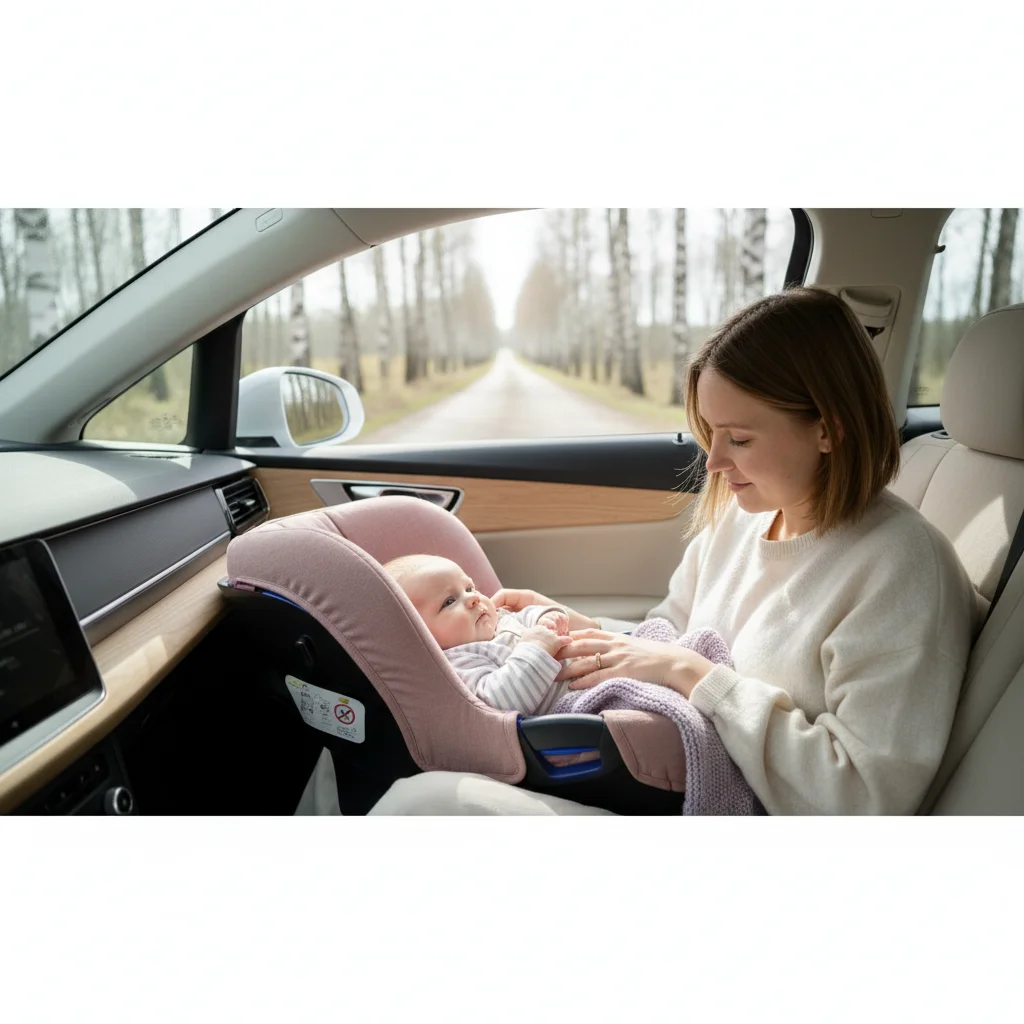
Children are more susceptible than adults because their balance organs are still developing. In addition, they sit low in a rear-facing car seat and can only see the roof or the seat back in front of them, which amplifies the mismatch between vision and balance sense.
Did you know? Babies under 2 years rarely get classic motion sickness because the balance organ is not yet fully developed. But they can still become fussy, cry, and spit up more than usual on car trips.
Signs of motion sickness in children
Young children cannot always put into words what they are feeling. Watch for these signs:
Early warning signals:
- The child goes quiet and stops babbling or talking
- Yawning and paleness
- Increased drooling or swallowing
- Restlessness and irritability without another explanation
Clear signs:
- Cold sweat and pale skin
- Nausea and retching
- Vomiting
- The child wants to sleep (the body is trying to shut out sensory input)
In babies, it often shows up as crying, restlessness, and extra spitting up. They may also sweat on the forehead and seem inconsolable.
How to prevent car sickness
Prevention is much easier than managing a car-sick child in the middle of a highway. Here are the strategies that work.
Plan the trip smartly
Timing: Schedule long car trips for times when your child would normally be sleeping. Motion sickness rarely occurs during sleep because the brain does not process the conflicting signals the same way. Many families therefore travel in the evening or early morning.
Food: Give a light meal 1–2 hours before departure. A completely empty stomach can intensify nausea, but a heavy meal right before departure is not ideal either. Avoid fatty and spicy foods.
Breaks: Stop at least every 1–2 hours. Fresh air and movement give the balance organ a rest. Let the child walk around a bit and look at something in the distance.
In the car
Positioning: Sit in the middle of the back seat if possible, where the child's gaze can be directed forward toward the road. When the child is old enough for a forward-facing car seat, motion sickness often decreases because the eyes can see the movement the balance organ is detecting.
Fresh air: Keep a comfortable temperature and let fresh air circulate. Overheating worsens nausea.
Avoid screens: Tablets and books fix the eyes on something stationary inside a moving car, the worst combination for motion sickness. Audiobooks and singing are much better alternatives.
Window tip: Ask your child to look out the window at the horizon or passing landscape. This helps the brain synchronize vision and balance sense. Point out things outside, animals, houses, cars in different colors.
Driving style
The driver's style has a surprisingly big impact. Avoid sudden acceleration, hard braking, and sharp turns. A smooth and steady driving style reduces the strain on the balance organ. Use cruise control on the highway where possible.
Winding roads are the biggest challenge. If the route allows it, choose a highway over a winding country road, even if it takes a little longer.
What helps when your child is already nauseous?
Sometimes nausea comes despite all precautions. Then you need to act quickly.
Stop the car as soon as safely possible. Fresh air and solid ground underfoot help surprisingly fast. Let the child stand or sit still for a few minutes with their eyes directed toward the horizon.
Cool cloth on the forehead or neck can ease nausea. Always have a small pack of wet wipes available.
Small sips of water help, but avoid large amounts of fluid.
Ginger may have a nausea-relieving effect according to the AAP and WHO. For older children (over 2 years), ginger chews or ginger crackers may be worth trying. Talk to your pediatrician about an appropriate dose for your child's age.
Motion sickness medications: Anti-nausea medications are generally not recommended for children under 2 years. For older children, over-the-counter options exist, but always talk to your doctor or pharmacist about dosage and suitability for your child's age and weight. Some preparations cause drowsiness.
The emergency kit for road trips
Always keep a motion sickness kit in the car:
- Bags (plastic or paper bags with closures)
- Extra clothes for the child
- Towel or liner on the child's lap
- Wet wipes and disposable gloves
- Water bottle with fresh water
- Light snacks like plain crackers or pretzels
Good preparation means you can handle the situation without panic and without having to search for cleaning supplies at the nearest gas station.
When should you contact a doctor?
Normal motion sickness is harmless and passes when the movement stops. But contact your pediatrician if:
- The child vomits repeatedly without any connection to travel
- Dizziness or nausea occurs without movement
- Symptoms last for hours after the trip is over
- You are concerned about dehydration (few wet diapers, dry mouth)
Frequently asked questions
Can babies under 1 year get car sick?
Babies under 2 years rarely get classic motion sickness, but they can become fussy and spit up more than usual on car trips. The balance organ is not yet fully developed, which actually protects them. If your baby seems very uncomfortable in the car, try to schedule trips during nap time.
Do acupressure wristbands help against motion sickness in children?
Acupressure wristbands (Sea-Band) are safe to use, but the scientific evidence is limited. Some families experience good results, and since they have no side effects, they may be worth trying for children over 3 years.
Do children grow out of motion sickness?
Most children grow out of motion sickness during their teen years. The balance organ matures and the brain gets better at handling conflicting sensory signals. In the meantime, prevention and good routines can make car trips much better for the whole family.
Is it safe to give children motion sickness tablets?
For children over 2 years, over-the-counter anti-nausea medications are available. Talk to your pharmacist or doctor about what is appropriate for your child's age and weight. Most preparations should be taken 30–60 minutes before departure to be effective.
Read more
- Road trip with a baby: Practical tips. Everything about long car trips with young children
- Car seats: Rules and safety. Safety guide for car seats
- Travel checklist for families. Everything you need to remember
Sources
🔧 Helpful Tools
- Baby Milestones Tracker. Track your baby's developmental milestones
- All Baby Tools. Browse all free tools for pregnancy and baby care
📖 Related Articles
- Food on the Go with Baby and Toddler: Practical Guide. How to manage meals on trips, travel, and outings with a baby or toddler. Packing tips, shelf-stable snacks, and meal ideas that work away from home.
- Traveling Abroad With a Baby or Toddler: Complete Guide. Planning an international trip with a baby? Here's everything about passports, insurance, health tips, packing, and the best travel destinations for families.
- May 17th with baby and toddlers: Complete guide to Norway's National Day. How to celebrate May 17th with baby and toddlers. Tips for the children's parade, traditional costumes, food, and a stress-free day.