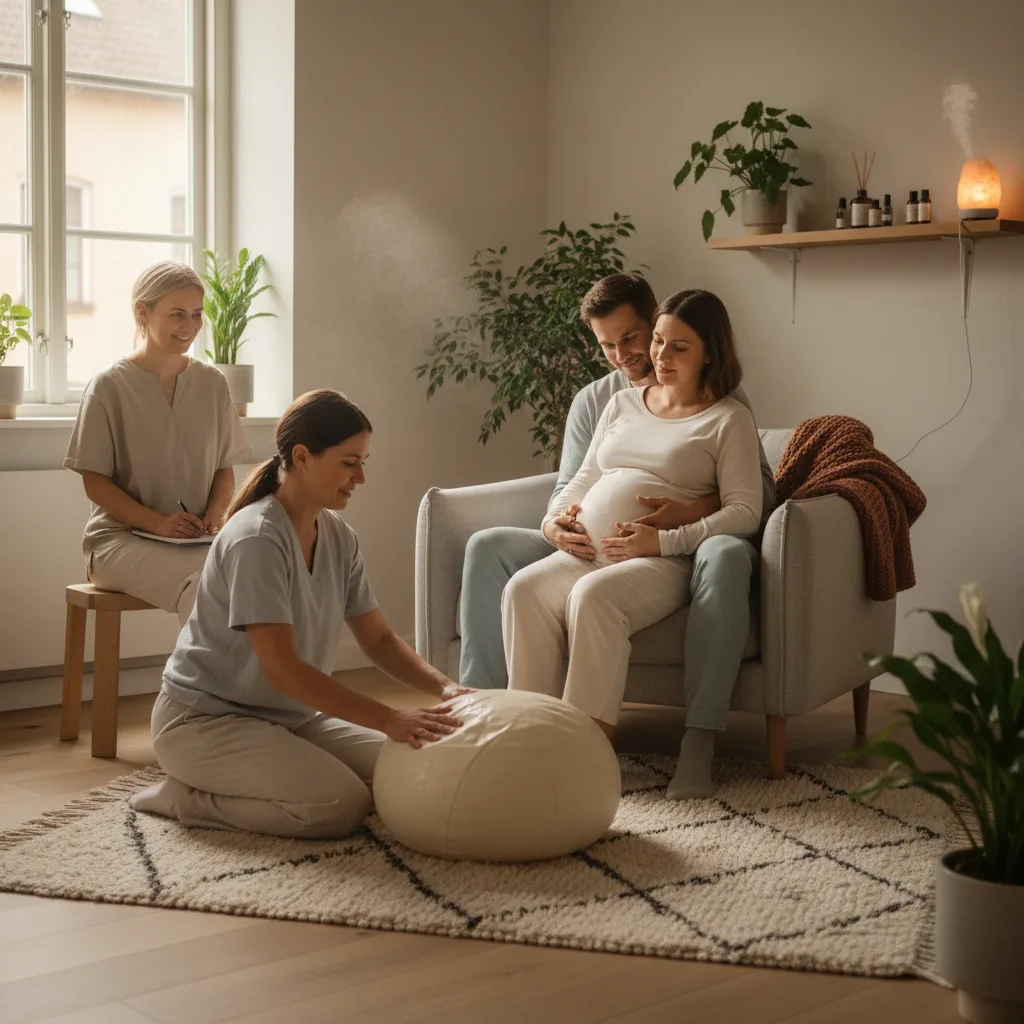
Heart pounding. Thoughts racing. You Google "birth videos" at two in the morning and immediately regret it. Sound familiar?
Birth anxiety affects many pregnant people, and there's nothing to be ashamed of. Research suggests that around 10–15% of pregnant women experience significant fear of childbirth. For some, it's mild nervousness. For others, it's an all-consuming anxiety known as tokophobia.
Here are 7 methods with documented effectiveness. You don't need to use all of them, find what works for you.
1. Breathing Exercises and Relaxation
Breathing is the simplest and most accessible tool you have. When anxiety takes hold, your body releases stress hormones that make everything worse. Controlled breathing breaks this cycle.
The 4-7-8 Technique
- Breathe in through your nose for 4 seconds
- Hold your breath for 7 seconds
- Breathe out through your mouth for 8 seconds
- Repeat 3–4 times
Practice this technique daily, not only when anxiety hits. Your body needs to recognize the pattern for it to work under pressure.
Progressive Muscle Relaxation
Start from your toes and work your way up:
- Tense your toes for 5 seconds, release
- Tense your calves for 5 seconds, release
- Tense your thighs, glutes, abdomen, hands, arms, shoulders
- Finish with the muscles in your face
After a full round, most people feel a noticeable difference in tension levels.
Practice for 10 minutes daily. Relaxation is a skill that improves with training. Many people find that the same techniques work during labor itself.
2. Write Down Your Thoughts
Anxiety feeds on vague, circular thoughts. Writing them down strips away some of their power.
Try this:
- Sit down with a piece of paper
- Write down all your thoughts and worries about birth, no filter
- Read through them. Sort them into two categories: "Things I can influence" and "Things I can't control"
- For things you can influence: make a concrete plan
- For things you can't control: practice letting them go
Many people find that seeing their worries on paper makes them more manageable. What felt enormous in your head can look more workable in writing.
3. Write a Birth Plan
A birth plan gives you a sense of control. You don't get to decide everything that happens during labor, but you can communicate your preferences and your fears.
A good birth plan includes:
- Who you want with you
- What kind of pain relief you want (and what you'd prefer to avoid)
- What staff can do to help you manage anxiety
- Which scenarios worry you most
Talk through your birth plan with your midwife or OB at a prenatal appointment. Writing it down is valuable not just for the staff, but for you, the process of thinking it through can reduce anxiety significantly.
4. Birth Preparation Classes
Knowledge is one of the most powerful tools against anxiety. When you understand what's happening in your body during labor, it becomes less frightening.
Most hospitals and birth centers offer prenatal classes covering:
- The stages of labor from start to finish
- Pain relief options and breathing techniques
- Your partner's role
- Breastfeeding and postpartum recovery
Additional options worth exploring:
- Hypnobirthing, self-hypnosis and relaxation techniques
- Prenatal yoga, combines movement and breath (see our prenatal yoga guide)
- Online birth preparation courses, useful if in-person options aren't accessible
Ask for a tour of the labor ward. Most hospitals offer this. Seeing the rooms, meeting the midwives, and becoming familiar with the environment beforehand can significantly reduce anxiety. The unknown becomes a little more known.
5. Talk to Your Midwife or OB About Your Anxiety
Your care provider is trained to handle birth anxiety. Say it directly: "I'm scared of giving birth." You're far from the first person to say this.
What Your Provider Can Do
- Listen, let you put your fear into words without dismissing it
- Inform, explain what actually happens during labor
- Adapt, create a plan that takes your anxiety into account
- Refer, to a psychologist or specialist if anxiety is severe
Dedicated Anxiety Consultations
Many hospitals and birth centers now offer specific consultations for pregnant people with significant birth anxiety. Ask your care provider whether this is available. These conversations can be incredibly effective.
If you have severe tokophobia: If fear of birth is taking over your daily life, you're avoiding thinking about it, having nightmares, or reconsidering having more children, ask for a referral to a psychologist. Severe tokophobia is a condition that can be treated effectively. You don't have to manage it alone.
6. Visualization
The brain struggles to distinguish between a vivid imagined experience and a real one. Visualization uses this to your advantage.
How to Do It
- Sit or lie down comfortably
- Close your eyes and breathe slowly
- Picture the birth the way you hope it will go
- Imagine the details: the room, the people, the sounds, the sensations
- See yourself breathing calmly through contractions
- Picture your baby being placed on your chest
Do this for 10–15 minutes daily in the final weeks of pregnancy. Many women find that visualization gives them a mental "map" to follow during labor.
7. Movement and Physical Activity
Exercise releases endorphins that counteract anxiety and stress. You don't need to run a marathon, a daily walk can make a significant difference.
Activities That Are Especially Good for Anxious Pregnant People
- Swimming, the buoyancy of water eases the body and creates a sense of weightlessness
- Yoga, combines movement, breath, and mindfulness. See our prenatal yoga guide
- Nature walks, fresh air and natural environments reduce stress hormones
- Prenatal fitness classes, structured, safe exercise tailored for pregnancy
Exercise during pregnancy is safe for the vast majority of people. The WHO recommends at least 150 minutes of moderate activity per week throughout pregnancy. Talk to your midwife or OB if you have any concerns. Read more in our pregnancy exercise guide.
When You Need More Help
Sometimes self-help isn't enough, and that's completely okay. Seek professional support if:
- Anxiety is preventing you from sleeping or functioning day to day
- You're having panic attacks related to childbirth
- You're considering a cesarean solely because of anxiety
- You experienced a traumatic previous birth
- Anxiety has persisted throughout your entire pregnancy without improvement
Treatment options include:
- Talk therapy with a psychologist experienced in birth anxiety
- Cognitive behavioral therapy (CBT), well-documented effectiveness for specific phobias
- EMDR, can help if anxiety is connected to a previous trauma
- Medication in rare cases, in consultation with your doctor
Your Partner's Role
Your partner can make a real difference. Tips for the support person:
- Listen without minimizing. "You don't need to be scared" doesn't help
- Learn the breathing exercises together. Then you can guide during labor
- Attend classes and prenatal appointments. Show that you take the anxiety seriously
- Read up on birth. The more you know, the better you can provide support
Frequently Asked Questions
Is it normal to be afraid of giving birth?
Yes. Most pregnant people feel some degree of fear or nervousness about birth. It's a natural response to something unknown. It only becomes tokophobia when that fear takes over daily life.
Can birth anxiety affect the actual birth?
Strong anxiety can cause the body to tense up, which may make contractions more painful and labor longer. That's why working on anxiety beforehand is an investment in a smoother birth.
Can I request a cesarean because of anxiety?
Policies vary by country and provider. Many hospitals offer anxiety consultations and accommodations that make vaginal birth feel safer. If anxiety is severe and documented by a mental health professional, it is typically factored into the care plan. Talk to your care provider openly.
What if I had a traumatic previous birth?
A previous traumatic birth is the most common cause of birth anxiety in a subsequent pregnancy. Ask for a review of your previous birth with your midwife or OB. Many hospitals offer this, and it can provide answers and closure that ease the anxiety.
Read More
Sources
- WHO. Mental health aspects of women's reproductive health
- AAP. Supporting mental health during pregnancy
- Postpartum Support International
- ACOG. Approaches to limit intervention during labor and birth
🔧 Helpful Tools
- Due Date Calculator. Calculate your estimated due date
- Contraction Timer. Track your contractions during labor
- All Baby Tools. Browse all free tools for pregnancy and baby care
📖 Related Articles
- Fear of Childbirth: How to Cope with Birth Anxiety and Tokophobia. Birth anxiety and tokophobia affect many pregnant people. Learn about the symptoms, treatments, and how to get the support you need to feel safer about giving birth.
- Parenting Anxiety: When Worry Takes Over. Constantly worried about your baby? Parenting anxiety is common, but it doesn't have to run your life. Learn the signs, causes, and what actually helps.