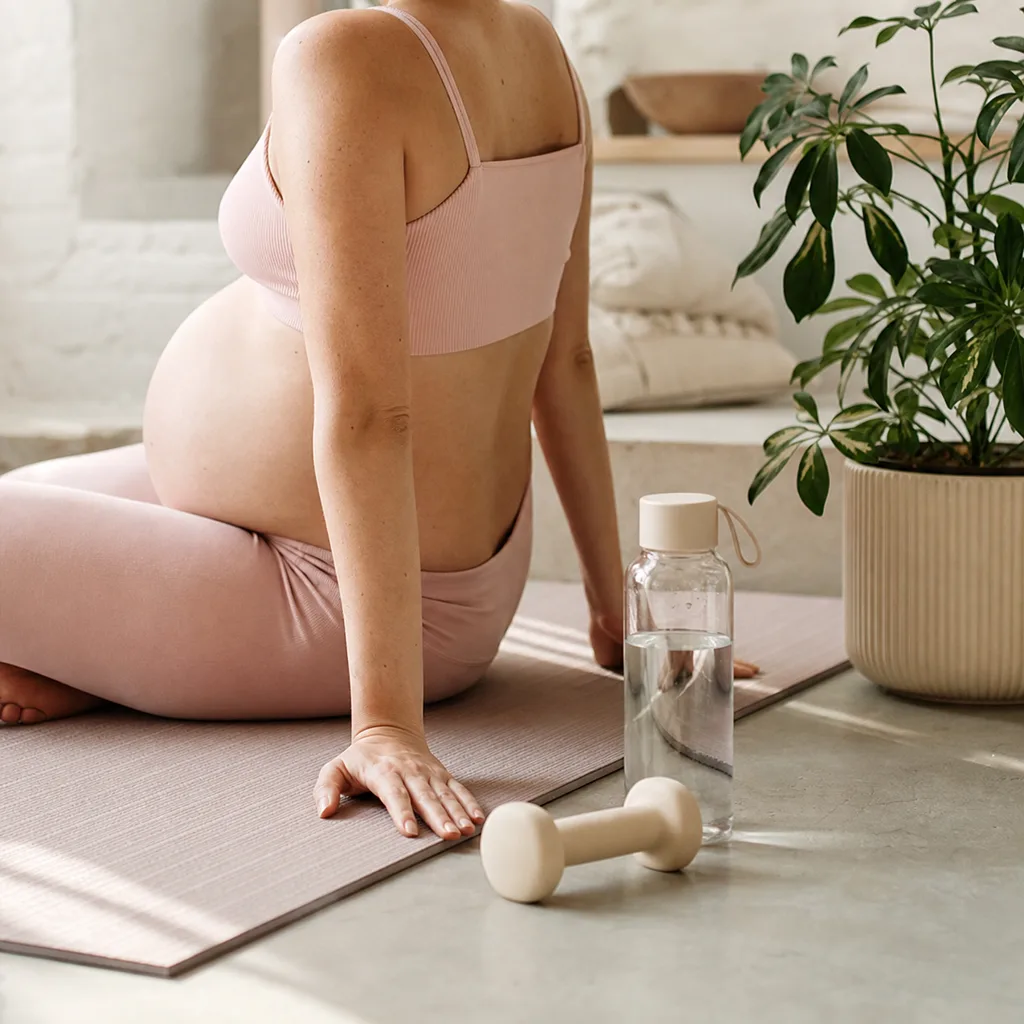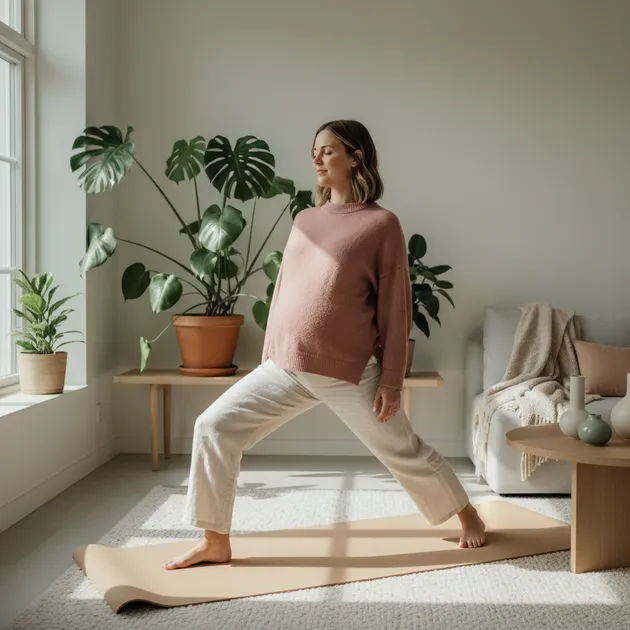
You can feel your body changing week by week, and you might be wondering whether yoga is safe now that you're pregnant. The short answer is yes, yoga is one of the most recommended forms of exercise during pregnancy.
WHO and leading health organizations recommend that pregnant women get at least 150 minutes of moderate-intensity physical activity per week. Yoga fits perfectly into this, and additionally gives you tools for relaxation and breathing control that are valuable during labor.
Why is yoga good during pregnancy?
Yoga combines movement, breath, and relaxation in a way that is gentle on the body. Research shows that pregnant people who practice yoga report fewer pregnancy-related discomforts.
Benefits of yoga during pregnancy:
- Less back and pelvic pain, strengthens the muscles that support the back
- Better sleep, relaxation exercises help you wind down in the evening
- Less stress and anxiety, breathing exercises calm the nervous system
- Better posture, counteracts the increased strain on the back
- Preparation for labor, you learn breathing techniques and body awareness
Many childbirth preparation classes incorporate yoga elements. Ask your midwife or pediatrician about classes in your area.
First trimester (weeks 1–12)
In the first trimester, you can largely continue with your regular yoga practice, with some adaptations.
Good exercises:
- Cat/cow pose for spinal mobility
- Standing balance exercises (with support if needed)
- Gentle side bends to open the chest
- Leg stretches and lunges at an easy pace
Adapt:
- Avoid intense twists that compress the belly
- Skip hot yoga and Bikram yoga
- Listen to your body, nausea and fatigue are common
Many experience nausea and exhaustion in the first trimester. It's completely fine to take things easier or switch to only breathing exercises and relaxation on tough days.
Second trimester (weeks 13–27)
The second trimester is often when most pregnant people feel their best. The body has adjusted, and the belly isn't yet large enough to restrict movement.
Good exercises:
- Yoga squat (malasana), opens the hips and strengthens the pelvic floor
- Warrior II pose, strengthens the legs and improves balance
- Side plank with knee on the ground, gently strengthens the core
- Bound angle pose (Baddha Konasana), opens the hips
Adapt:
- Avoid exercises on your belly from week 16
- Use cushions and blocks for support
- Don't lie flat on your back for extended periods after week 20
From week 20, avoid lying flat on your back for extended periods. The growing uterus can press on the vena cava (large vein) and reduce blood flow. Instead, lie on your side or use cushions under your upper body.
Third trimester (weeks 28–40)
Now your belly is large and your balance shifts. Adapt exercises so they feel comfortable.
Good exercises:
- Wall-supported squat, safe and effective
- Cat/cow on all fours, relieves back pain
- Hip openers in a seated position
- Breathing techniques, practice slow exhales
- Pelvic floor exercises integrated into yoga
Adapt:
- Use a chair or wall for support when needed
- Shorter sessions are perfectly fine (20–30 minutes)
- Focus more on breath and relaxation than strength
Breathing exercises you can use during labor
One of the greatest benefits of prenatal yoga is that you learn breathing techniques that are directly useful during labor.
Deep belly breathing: Inhale through the nose, feel the belly expand. Exhale slowly through the mouth. This calms the nervous system and can be used between contractions.
Ujjayi breath: Inhale and exhale through the nose with a slight constriction in the throat. Creates a soothing sound and helps you maintain focus.
Counted exhale: Inhale for 4 counts, exhale for 6–8 counts. The longer exhale activates the parasympathetic nervous system.
What should you avoid?
Even though yoga is safe, there are some things to steer clear of during pregnancy:
- Hot yoga/Bikram, excessively high body temperature can be harmful
- Deep twists, can compress the uterus
- Intense abdominal exercises, crunches and similar
- Inversions (headstands, shoulder stands), unless you are very experienced
- Exercises that cause pain, always stop if something hurts
- Jumping and rapid movements, joints are looser during pregnancy
The hormone relaxin makes your joints looser during pregnancy. This means you should be careful with deep stretches, even if they feel easy. Overextension is often not felt until afterwards.
Finding a prenatal yoga class
Most cities offer prenatal yoga classes. Here are some tips for finding the right class:
- Ask your midwife or pediatrician about local options
- Look for certified instructors with experience in prenatal yoga
- Many hospitals and birth centers offer affordable or free classes
- Online classes can be a good alternative if nothing is available nearby
Combine yoga with other exercise such as walking and swimming for best effect.
Frequently asked questions
Is yoga safe throughout the entire pregnancy?
Yes, adapted yoga is safe throughout pregnancy for healthy pregnant people. Health guidelines recommend physical activity during pregnancy. Talk to your midwife if you're unsure, or if you have complications that may require tailored exercise.
Can I start yoga even if I've never done it before?
Absolutely! Prenatal yoga classes are adapted for beginners. Start gently, listen to your body, and don't compare yourself to others. Tell the instructor that you're a beginner and pregnant.
How often should I do yoga?
2–3 sessions per week of 30–60 minutes is a good start. Shorter daily sessions with breathing exercises are also valuable. The most important thing is consistency, not duration.
Should I stop yoga if I have pelvic girdle pain?
Not necessarily, but you should adapt the exercises. Avoid asymmetric movements and deep wide-legged positions. A physiotherapist or experienced prenatal yoga instructor can help you with modifications.
Sources
- American College of Obstetricians and Gynecologists (ACOG). Exercise during pregnancy
- WHO. Physical activity guidelines for pregnant women
- Mayo Clinic. Prenatal yoga: What you need to know
🔧 Helpful Tools
- Due Date Calculator. Calculate your estimated due date
- Contraction Timer. Track your contractions during labor
- All Baby Tools. Browse all free tools for pregnancy and baby care
📖 Related Articles
- Exercise During Pregnancy: Safe and Effective. Exercise during pregnancy is safe and recommended. A complete guide to what's safe, trimester-by-trimester adaptations, and what to avoid.
- Back Pain During Pregnancy: Causes, Prevention, and Relief. Back pain while pregnant? Here are the causes, exercises that help, and when to contact your doctor. Safe measures for all trimesters.
- Pelvic Girdle Pain in Pregnancy: Symptoms, Exercises, and Treatment. Experiencing pelvic pain during pregnancy? Learn about the symptoms of pelvic girdle pain, exercises that help, and when to seek treatment.