Your back aches, your lower back throbs, and you're wondering if this is normal. The answer is yes, back pain affects up to 70 percent of all pregnant women. But there is a lot you can do to relieve and prevent it.
Why Do You Get Back Pain During Pregnancy?
Several factors play a role, and most are related to natural changes in the body.
Hormonal Changes
The hormone relaxin softens the joints and ligaments in the pelvis to prepare the body for birth. This loosening also affects the back and makes it more susceptible to strain.
Shift in Center of Gravity
As your belly grows, your center of gravity shifts forward. The back compensates with an increased curve in the lower back (lordosis), which puts strain on the back muscles.
Weakening of Abdominal Muscles
The rectus abdominis muscles stretch and weaken throughout pregnancy. Since these muscles normally support the back, the back muscles have to work harder.
Weight Gain
The natural weight gain of 22–35 lbs (10–16 kg) places increased load on the spine, especially in the third trimester.
Back Pain vs. Pelvic Pain. What Is the Difference?
It's important to distinguish between ordinary back pain and pelvic girdle pain (symphysis pubis dysfunction).
| Back Pain | Pelvic Pain | |
|---|---|---|
| Location | Lower back, upper back | Front (pubic symphysis), back (SI joints) |
| When | Worst after long periods in the same position | Worst when walking, climbing stairs, or twisting |
| Type | Aching, stiff | Sharp, stabbing |
| Treatment | Exercises, heat, activity | Physical therapy, support belt, lifestyle adjustments |
Pelvic girdle pain requires its own approach. If the pain is at the front of your pelvis or at the sides of your lower back, ask your midwife or OB for a referral to a physical therapist. Read more in our article on pelvic girdle pain in pregnancy.
Exercises That Relieve Back Pain
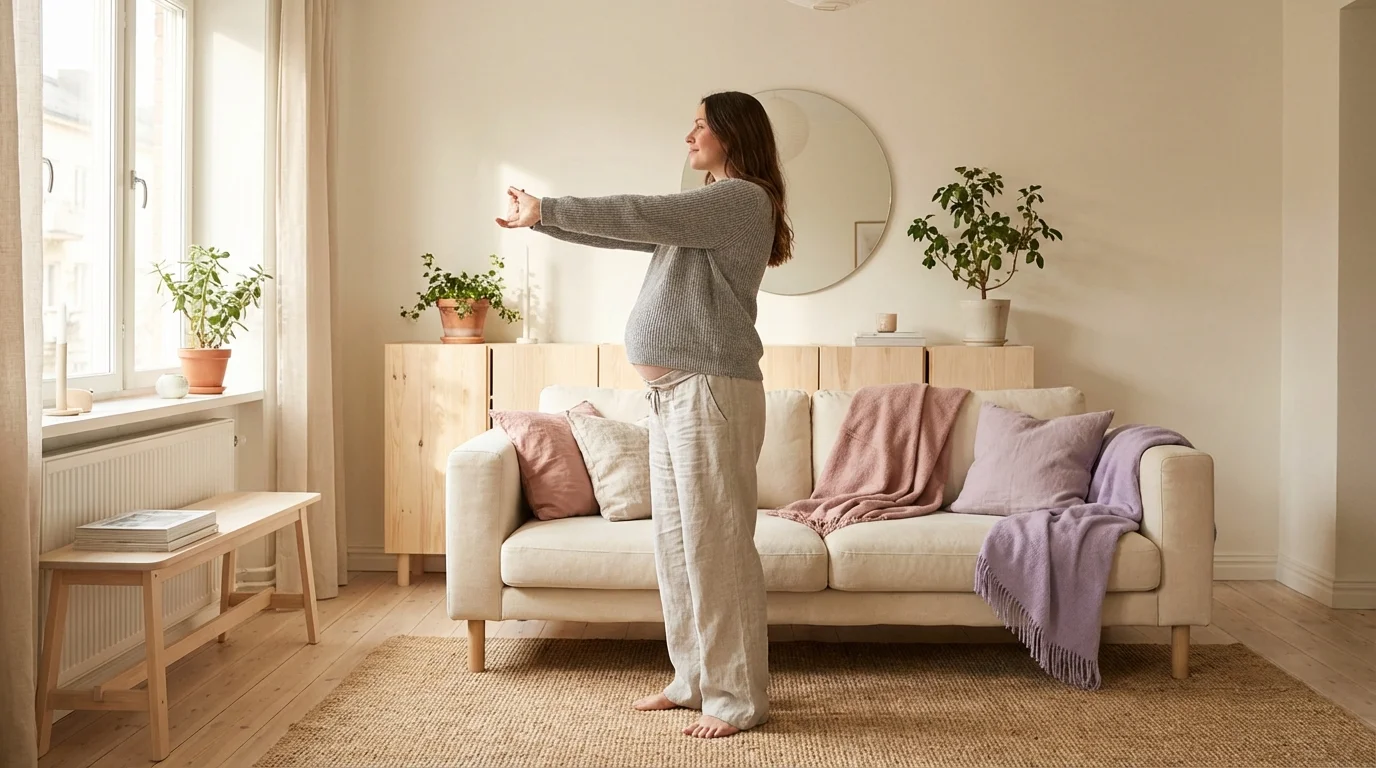
Gentle exercise is one of the most effective remedies for back pain in pregnancy. The WHO and AAP recommend 150 minutes of moderate activity per week for pregnant women.
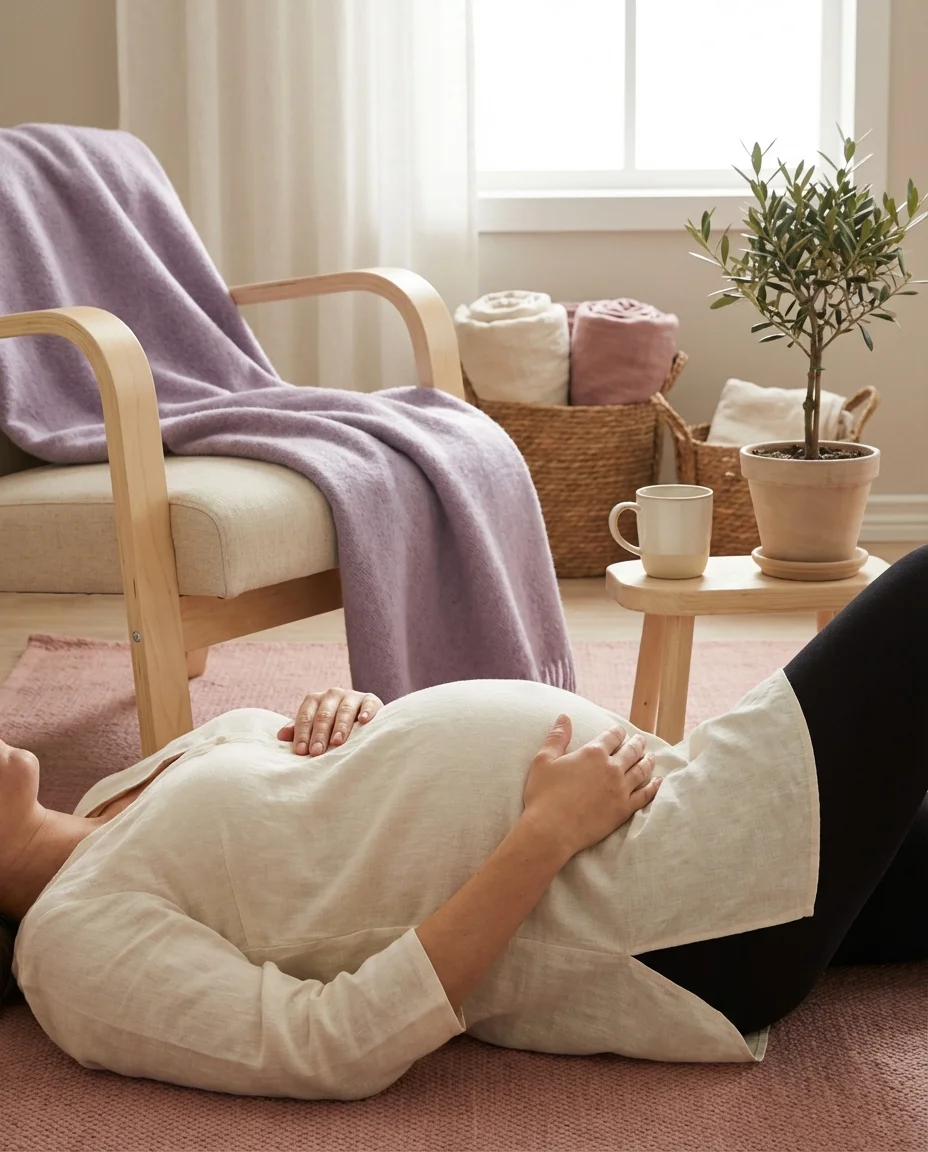
Pelvic Tilts
- Lie on your back with knees bent (fine in first and second trimester)
- Press your lower back down toward the floor
- Hold for 5 seconds, release
- Repeat 10 times
Cat-Cow Stretch
- Get on all fours with a flat back
- Round your back upward like a cat, letting your head drop
- Hold for a few seconds
- Gently let your back sink back down
- Repeat 10 times
Side-Lying Stretch
- Lie on your side with a pillow between your knees
- Extend the top leg backward
- Hold for 15–20 seconds
- Switch sides
Swimming is excellent for pregnant women with back pain. The buoyancy of the water takes the load off your back and lets you move freely without strain. Read more about swimming during pregnancy.
Everyday Tips That Make a Big Difference
Small adjustments in daily life can significantly reduce back pain.
How to Sit Correctly
- Use a small cushion in the lower back
- Keep your feet flat on the floor
- Don't sit for too long in the same position, get up every 30 minutes
- An exercise ball can replace the desk chair periodically
How to Sleep Better
- Lie on your side with a pillow between your knees
- A long body pillow along your body provides good support
- Avoid lying on your back after week 20 (the uterus can press on blood vessels)
How to Lift Safely
- Bend your knees, not your back
- Keep objects close to your body
- Avoid heavy lifting, ask for help
- Be extra careful with older siblings who want to be picked up
Shoes and Clothing
- Choose shoes with a low heel and good grip
- A support belt under the belly can relieve the lower back
- Maternity pants with belly support are better than tight waistbands
Treatments That Are Safe During Pregnancy
Not all treatments are safe for pregnant women. Here is an overview.
Safe Measures
- Heat: A heating pad or heat pack on the lower back (not too hot, not on the belly)
- Physical therapy: Can be referred by your midwife or OB
- Massage: Gentle massage of the back and shoulders is safe. Avoid deep tissue massage in the first trimester
- Acupuncture: Some research shows an effect on back pain in pregnancy
Use Caution With
- Pain medication: Acetaminophen (Tylenol) can be used when needed, but avoid ibuprofen (Advil, Motrin) after week 20. Always talk to your doctor first
- Chiropractic care: Can be helpful, but choose a practitioner with experience treating pregnant women
Contact your doctor or midwife if: The pain is very severe, you have numbness or tingling in your legs, the pain comes in waves (may be contractions), or you also have a fever.
Trimester by Trimester
First Trimester (Weeks 1–12)
Back pain is uncommon, but some women already notice changes due to relaxin. Prevent it with good posture and light exercise.
Second Trimester (Weeks 13–27)
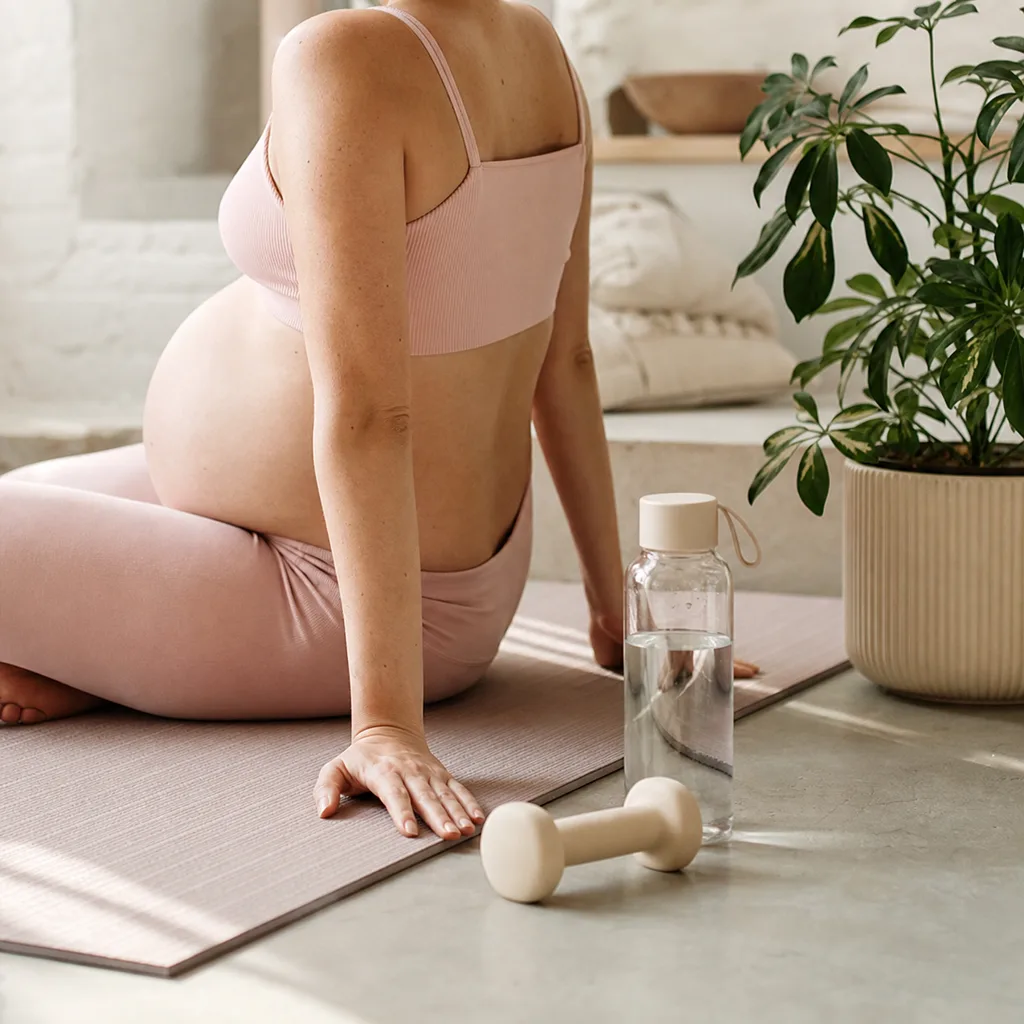
The belly begins to grow and the center of gravity shifts. Start with the exercises above. Prenatal yoga is especially effective during this period.
Third Trimester (Weeks 28–40)
Pain is most common now. Focus on reducing load, correct sleeping positions, and light activity such as walking and swimming. Prepare your body for birth.
Can Back Pain Be Prevented?
You may not be able to avoid it entirely, but you can greatly reduce the risk.
- Stay active from the start of pregnancy, walking, swimming, yoga
- Strengthen your core with adapted exercises
- Maintain healthy weight gain in line with recommendations
- Train your pelvic floor, it supports the entire pelvis and back. Start with pelvic floor exercises
Frequently Asked Questions
Is back pain dangerous during pregnancy?
Ordinary back pain is not dangerous for you or your baby. It's caused by natural changes in the body. But contact your doctor if the pain is very severe, comes in waves, or you have other symptoms.
When in pregnancy is back pain worst?
Most women experience the most pain in the third trimester (weeks 28–40), when the belly is largest and the center of gravity most shifted. Some experience pain as early as the second trimester.
Can I exercise with back pain?
Yes, gentle exercise is recommended. Avoid heavy lifting and exercises that worsen the pain. Swimming, yoga, and walking are safe activities for pregnant women with back pain.
Will back pain go away after birth?
For most women, back pain disappears within a few weeks to months after delivery. Read about postpartum exercise to strengthen your back again.
Can I use a support belt?
Yes, a support belt under the belly can relieve the lower back and provide good support. Talk to your midwife about the right type and fit.
Summary
Back pain is common, but you don't have to just endure it. Start with the exercises above, adjust your daily habits, and don't hesitate to ask for help from a physical therapist.
Follow your pregnancy week by week with our pregnancy timeline and use pelvic floor exercises to strengthen the pelvis that supports your back.
Sources: WHO. Physical Activity During Pregnancy, AAP. Exercise During Pregnancy
Sources
- ACOG. Clinical guidance on pregnancy and women's health
- WHO. Global recommendations for maternal health
- Mayo Clinic. Evidence-based pregnancy health information
🔧 Helpful Tools
- Due Date Calculator. Calculate your estimated due date
- Contraction Timer. Track your contractions during labor
- All Baby Tools. Browse all free tools for pregnancy and baby care
📖 Related Articles
- Pelvic Girdle Pain in Pregnancy: Symptoms, Exercises, and Treatment. Experiencing pelvic pain during pregnancy? Learn about the symptoms of pelvic girdle pain, exercises that help, and when to seek treatment.
- Exercise During Pregnancy: Safe and Effective. Exercise during pregnancy is safe and recommended. A complete guide to what's safe, trimester-by-trimester adaptations, and what to avoid.
- Prenatal Yoga: Safe Exercise for Pregnant Women. Yoga is safe and beneficial during pregnancy. Learn which exercises suit each trimester and what to avoid.