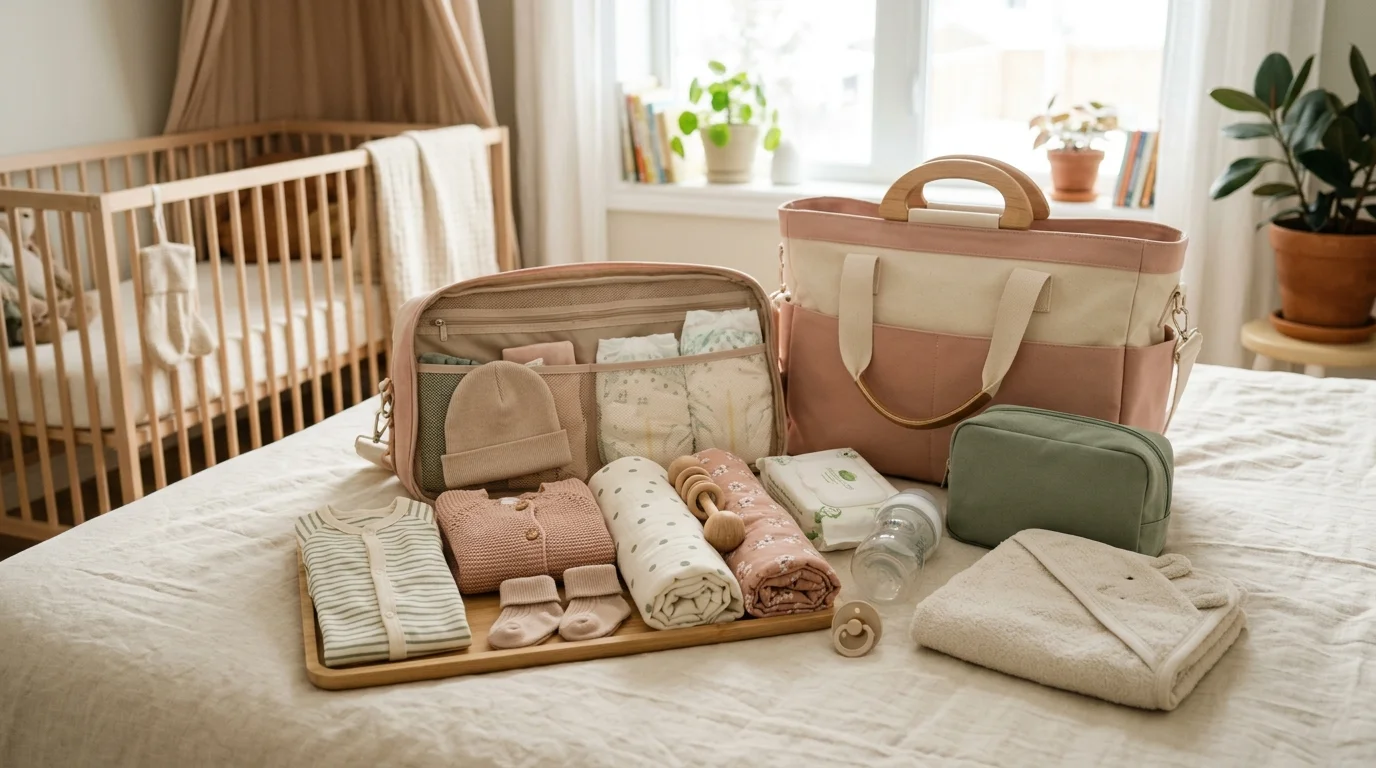
You are 36 weeks pregnant, the hospital bag list is open on your phone, and the tote bag by the door is somehow both too full and missing half the things you need.
Find your due date.
Enter the first day of your last period, the day you ovulated, or an IVF transfer date.
Calculate your due dateA tote bag can work beautifully for pregnancy and hospital packing if it is structured, easy to carry, and organized with smaller pouches. This guide covers what size to choose, what to pack, when to pack it, and how to avoid turning one big bag into a black hole.
In short
- Best tote bag style: Choose a structured tote with a wide opening, comfortable straps, wipeable lining, and at least a few internal pockets.
- Best hospital setup: Use one tote for labor essentials and a second small bag or packing cube for postpartum and baby items.
- When to pack: Cleveland Clinic suggests packing about one month before your due date, while the NHS says at least 3 weeks before.
- Safety note: Keep the tote light enough to carry comfortably, especially in the third trimester when back pain and posture changes are common.
- After birth: The same tote can become a car bag, diaper overflow bag, or pumping-work bag, but it may not replace a hands-free diaper backpack.
What kind of tote bag should I bring to the hospital?
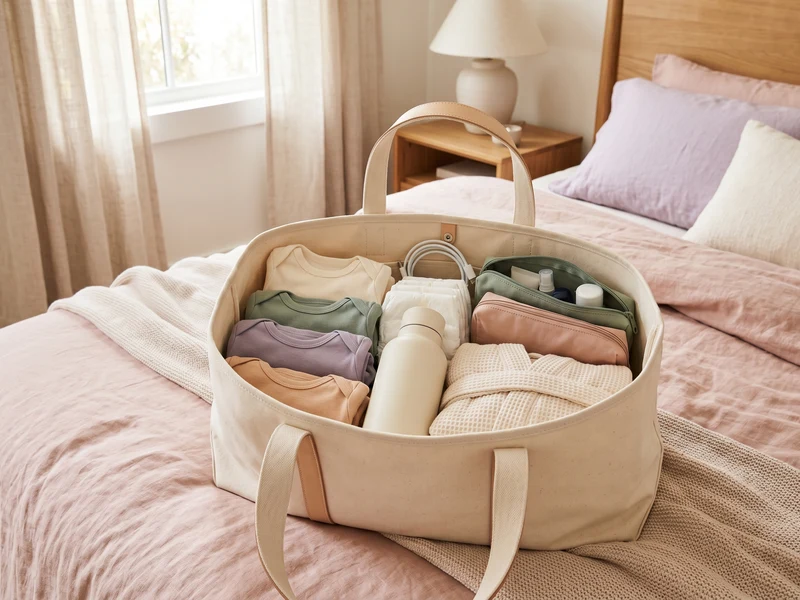
Bring a tote bag that stands open, has comfortable shoulder straps, and is easy to clean. The hospital room is not the place for a beautiful floppy bag that collapses every time you reach for lip balm.
The best hospital tote has:
- A wide top opening: You can see the charger, snacks, documents, and clothes without unpacking everything.
- A structured base: The bag stays upright beside the bed or in the car.
- Comfortable straps: Soft or padded straps matter when the bag is full.
- Wipeable interior: Leaks happen. So do snacks, lotion, and mystery hospital-floor moments.
- Separate pouches: One for labor, one for postpartum, one for baby, one for documents and chargers.
If you already own a large tote you like, start there. You do not need a special maternity-branded bag unless it solves a real problem.
Is a tote bag big enough for a hospital bag?
A tote bag is big enough if you pack it like a system, not like a laundry basket.
Cleveland Clinic describes the hospital bag as three sets of items: one for the laboring parent, one for the support person, and one for the baby. The NHS suggests dividing things into a labor bag and an after-birth bag so the urgent items are easier to find.
That is the better approach with a tote. Keep your labor essentials in the main tote and put the overflow in a second small bag, packing cube, or car bag.
A practical setup looks like this:
- Main tote: ID, insurance card, birth plan, phone charger, hair ties, lip balm, water bottle, snacks, socks, nursing bra, going-home clothes.
- Baby pouch: Newborn outfit, hat, blanket, diapers if your hospital asks for them, and car-seat cover if needed for weather.
- Postpartum pouch: High-waist underwear, toiletries, nipple cream, breast pads, and a soft robe or pajamas.
- Partner pouch: Snacks, charger, clean shirt, medications, and anything they need overnight.
For a full item-by-item list, use the hospital bag checklist or build your own with the Babysential checklist tool.
When should I pack my pregnancy tote bag?
Pack your pregnancy tote bag between 32 and 37 weeks, with earlier packing if you have a higher chance of early delivery.
There is not one universal date. Cleveland Clinic recommends packing about one month before your due date. The NHS says to pack at least 3 weeks before your due date and notes that only 1 in 20 babies arrive on their exact due date (NHS, 2024).
A simple timeline:
- 30-32 weeks: Make the list and buy anything missing.
- 33-35 weeks: Pack the main tote and wash baby clothes.
- 36-37 weeks: Add toiletries, chargers, snacks, and documents.
- After 37 weeks: Keep the tote near the door or in the car, not buried in a closet.
ACOG also recommends leaving the packed bag in a handy place before labor begins. This is one of those boring details that feels extremely smart when contractions start at 2 a.m.
What size tote bag works best for pregnancy?
For hospital packing, choose a large tote or weekender-style tote around 30-45 liters. For everyday pregnancy errands, a medium tote is usually enough.
Bigger is not automatically better. A giant tote gets heavy fast, and pregnancy already changes how weight feels on your body.
Mayo Clinic explains that pregnancy shifts your center of gravity forward as your belly grows, which can strain the lower back. Pregnancy hormones also relax connective tissue, especially around the pelvis. That does not mean you cannot carry a bag, but it does mean the bag should not turn into a weighted workout.
Use this size rule:
- Small tote: Daily essentials, water bottle, snacks, documents, and a cardigan.
- Medium tote: Prenatal appointments, work, pumping gear, or a light hospital-labor bag.
- Large tote: Hospital bag, postpartum stay, or first newborn outings.
- Oversized tote: Useful only if it will mostly live in the car or room, not on one shoulder all day.
If the full tote makes you lean to one side, it is too heavy for shoulder carry. Move overflow into a second bag or suitcase.
Backpack vs tote bag for hospital: which is better?
A tote bag is better for quick access. A backpack is better for hands-free carrying and weight distribution.
For labor and delivery, quick access matters. You want the charger, lip balm, water bottle, and ID right there. A tote does that well because it opens wide and sits upright.
For walking through parking lots, airports, or long hospital corridors, a backpack can feel better because the weight sits across both shoulders. If you are dealing with back pain, pelvic pain, or a very heavy load, a backpack or rolling carry-on may be kinder to your body.
The best answer for many families is not tote versus backpack. It is tote plus one small backup bag.
Use the tote for items you need during labor. Put heavier or less urgent items in a backpack, duffel, or small rolling suitcase.
Can I use a tote bag as a diaper bag after birth?
Yes, a tote bag can work as a diaper bag after birth, especially as a car bag or outing bag. It is less ideal as your only daily diaper bag if you need hands-free carrying.
A newborn tote setup should include:
- 4-6 diapers
- Wipes and diaper cream
- Changing pad
- Spare baby outfit
- Burp cloth
- Feeding supplies
- Wet bag for soiled clothes
- Pacifier or comfort item, if used
- Parent pouch with keys, wallet, and phone
The trick is pouches. Without them, tiny baby items disappear to the bottom.
For stroller walks, check your stroller's storage guidance before loading the basket. Avoid hanging heavy bags from stroller handles because uneven weight can make a stroller less stable. Our diaper bag guide covers bag types in more detail.
What should I put in my pregnancy tote bag for appointments?
For pregnancy appointments, keep the tote lighter than your hospital bag. The goal is comfort, hydration, and not forgetting the one paper you suddenly need.
A good appointment tote includes:
- Water bottle
- Snack with protein or fiber
- Phone charger or power bank
- Insurance card and ID
- Pregnancy notes or hospital paperwork
- Small notebook or notes app list of questions
- Medication list
- Comfortable cardigan or scarf
- Lip balm and hair tie
- Backup underwear or panty liner if discharge or leaking is an issue
If you are using public transportation or walking a lot, keep the bag on the lighter side. CDC guidance says healthy pregnant and postpartum people can safely do moderate activity, but comfort and balance still matter.
What tote bag features are worth paying for?
Pay for structure, comfort, and cleanability before you pay for branding.
Features worth having:
- Structured sides: Easier to find items one-handed.
- Zipper or secure closure: Helpful for hospital, travel, and car storage.
- Wipeable lining: Better for toiletries, bottles, and postpartum supplies.
- Luggage sleeve: Useful if you pair it with a rolling suitcase.
- Padded straps: More comfortable when packed.
- Lightweight material: The bag itself should not be the heaviest item.
Features you can skip:
- Too many tiny pockets: They look organized until you forget where everything went.
- Heavy leather: Pretty, but often impractical for hospital and newborn mess.
- Open-only design: Fine for the car, less ideal for hospital corridors or travel.
- Trend-first logos: Buy the bag for the job, not the algorithm.
If affiliate shopping is your goal later, look for three practical tiers: budget canvas tote, structured washable tote, and premium weekender tote. Each should have a clear tradeoff, not just a prettier product photo.
Common tote bag packing mistakes
The most common mistake is packing for every possible scenario in one bag. That creates weight, clutter, and stress.
Avoid these:
- Packing full-size toiletries: Use travel sizes unless you know you will stay longer.
- Bringing too many baby outfits: Two or three are usually enough unless your hospital asks for more.
- Forgetting your own comfort: Pack socks, lip balm, snacks, and a soft outfit for you.
- Skipping documents: ID, insurance card, and hospital paperwork should be easy to grab.
- Overloading one shoulder: If the tote is heavy, split the load.
Hospitals often provide items like mesh underwear, pads, peri bottles, diapers, and wipes, though this varies by location. Leave some room to bring supplies, paperwork, and gifts home.
Frequently Asked Questions
What kind of tote bag should I bring to the hospital for delivery?
Bring a structured tote with a wide opening, comfortable straps, wipeable lining, and smaller pouches inside. It should stand upright and be easy to search with one hand.
Is a tote bag big enough for a hospital bag?
Yes, if you organize it with pouches and keep overflow in a second small bag. Use the tote for labor essentials and pack postpartum or baby extras separately.
When should I pack my hospital tote bag?
Most parents do well packing between 32 and 37 weeks. Cleveland Clinic suggests about one month before your due date, while the NHS recommends at least 3 weeks before.
Can I use a tote bag as a diaper bag?
Yes, especially for car trips and outings. Add pouches for diapers, wipes, feeding supplies, spare clothes, and parent essentials so small items do not disappear.
Bottom line
A tote bag can be a great pregnancy and hospital bag when it is structured, light enough to carry, and organized into smaller zones.
Do not overthink the perfect bag. Choose one that opens wide, cleans easily, feels comfortable on your shoulder, and helps you find the charger before everyone is stressed.
Ready to pack it without guessing? Start with the hospital bag checklist, then customize it with the Babysential checklist tool for your due date, hospital, and support plan.
This article is for informational purposes only and does not replace guidance from your OB-GYN, midwife, pediatrician, or other clinician. Ask your care team what your specific hospital or birth center provides and what they want you to bring.
Sources
- Cleveland Clinic - What To Pack In Your Hospital Bag: A Checklist
- NHS - Hospital Bag Checklist: What to Pack for You and Your Baby
- Mayo Clinic - Back Pain During Pregnancy: 7 Tips for Relief
- Mayo Clinic - 3rd Trimester Pregnancy: What to Expect
- CDC - Pregnant & Postpartum Activity: An Overview
- CDC/NIOSH - About Physical Job Demands and Reproductive Health
- ACOG - How to Tell When Labor Begins
Helpful tools
- Baby Checklist Tool - Build a practical hospital, newborn, or diaper-bag packing list.
Related articles
- Hospital Bag Checklist - What to pack for labor, postpartum, baby, and your support person.
- Diaper Bag Guide - How to choose and organize a diaper bag for newborn days.
- Baby Registry Checklist - What you actually need before baby arrives.