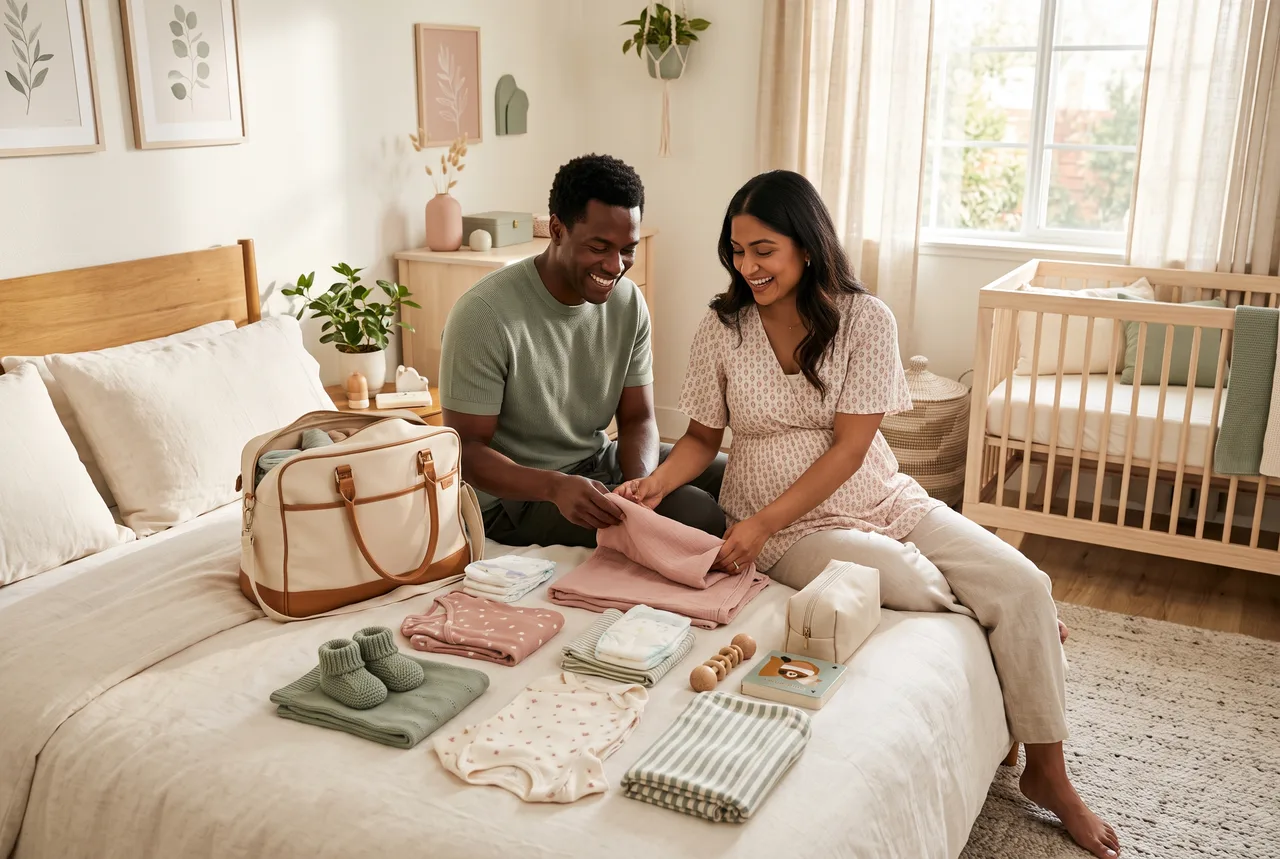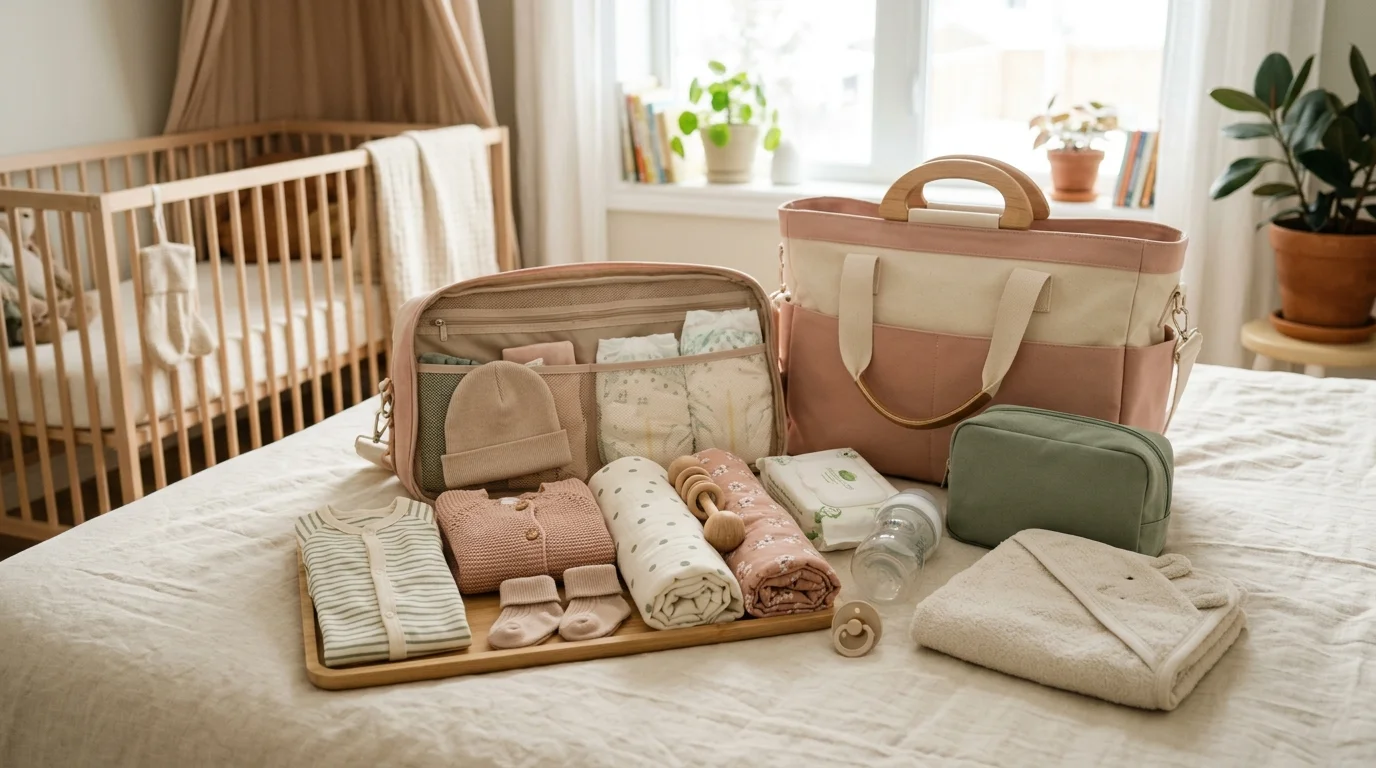
You are 36 weeks pregnant. The nursery is almost ready, your body feels heavy, and the reality of labor is getting closer. One thing you can fully control right now: packing your hospital bag.
This checklist covers exactly what you need for labor, recovery, baby, and your partner. Nothing extra. Nothing missing.
When to Pack Your Hospital Bag
Pack between week 35 and 36. About 10% of babies arrive before 37 weeks, according to the CDC. Having your bag ready removes one layer of stress if labor starts earlier than expected.
Keep it somewhere easy to grab. By the front door, in the car, or next to your bed. If your partner knows where it is, even better.
Most hospital stays last 24 to 48 hours for a vaginal delivery and 2 to 4 days for a cesarean. Pack for that window, not for a week.
For the Birthing Parent
Documents and Essentials
- Photo ID and insurance card (or health card, depending on your country)
- Birth plan if you have one, printed in two copies
- Hospital registration paperwork if pre-registration is available
- Phone charger with a long cord so you can reach it from bed
Comfort During Labor
- Comfortable robe or loose nightgown that opens in the front
- Grip socks or slip-on shoes for walking the halls during early labor
- Hair ties and a headband to keep hair off your face
- Lip balm because your lips will get dry, especially if you are breathing through contractions
- Pillow from home in a distinctive pillowcase so it does not get mixed with hospital linens
Burt's Bees Lip Balm Multipack
Moisturizing lip balm 4-pack. Dry lips are universal during labor. Toss one in your bag and one in your partner's pocket.
Snacks and Drinks
Many hospitals now allow light eating during labor, in line with updated ACOG guidelines. Pack things that give quick energy without heavy digestion:
- Granola bars, dried fruit, honey sticks
- Coconut water, electrolyte drinks, or a reusable water bottle
- Hard candy or lollipops for when solid food does not appeal
Recovery After Delivery
- 3 to 4 pairs of comfortable underwear you do not mind staining, or disposable postpartum underwear
- Maternity pads (super absorbent). The hospital provides some, but having your own brand feels better.
- Nursing bra or soft bralette if you plan to breastfeed
- Breast pads for early leaking
- Loose going-home outfit because your belly does not disappear overnight
- Toiletries: toothbrush, toothpaste, deodorant, shampoo, face wash, your own towel
Frida Mom Postpartum Recovery Essentials Kit
Includes perineal foam, cooling pad liners, and disposable underwear. Covers the recovery basics in one box.
For Baby
Your newborn needs surprisingly little for those first days. Most hospitals provide diapers, wipes, and basic blankets during your stay.
- 2 to 3 onesies or bodysuits in newborn size (pack one in 0 to 3 months too, just in case)
- A warm hat for temperature regulation
- A going-home outfit that is easy to put on a floppy newborn (think zip-up, not buttons)
- A swaddle blanket or muslin wrap
- Car seat installed and ready in the car before you leave for the hospital. Most hospitals will not let you leave without one.
If formula feeding, pack ready-to-feed bottles. Hospitals typically do not have facilities to prepare powdered formula, according to NHS guidelines.
For Your Partner or Support Person
The support person often gets forgotten. But they may be at the hospital just as long as you.
- Snacks and a refillable water bottle
- Phone charger
- Change of clothes including comfortable layers (hospitals can be cold)
- Cash or card for the hospital cafeteria and parking
- Something to pass the time during early labor or if you rest with an epidural
- Pillow or travel blanket because hospital chairs are not built for sleeping
S'well Stainless Steel Water Bottle (24oz)
Keeps water cold for 24 hours. Your partner will drink more water than they expect.
Things to Leave at Home
Overpacking is real. Hospital rooms have limited space, and you will use less than you think. Leave behind:
- Jewelry and valuables except your phone
- Too many outfit options for you or baby
- Large pillows or blankets that take up half the bag
- Books or laptops (you will not use them)
- Expensive skincare that might get lost in the shuffle
Digital Checklist Tips
A paper list works. But if you want to check things off on your phone, track what is packed, and share the list with your partner, try our interactive checklist tool. It saves your progress and sends a reminder at 35 weeks.
A Note on Flexibility
You may pack the perfect bag and still forget something. That is fine. Hospitals have the essentials covered. Your partner can always run home. The most important thing you bring to the hospital is yourself.
Pack early. Keep it simple. Then stop thinking about it.
Sources: NHS - Pack your bag for labour, ACOG prenatal care guidelines, CDC preterm birth statistics.
Sources
- ACOG. Clinical guidance on pregnancy and women's health
- WHO. Global recommendations for maternal health
- Mayo Clinic. Evidence-based pregnancy health information
🔧 Helpful Tools
- Due Date Calculator. Calculate your estimated due date
- Contraction Timer. Track your contractions during labor
- All Baby Tools. Browse all free tools for pregnancy and baby care
📖 Related Articles
- Hospital Bag Checklist: What to Pack for Labor and Delivery. The complete hospital bag checklist for labor and delivery. What to pack for mom, baby, and partner, nothing forgotten.
- Third Trimester: Everything You Should Do Now. Complete overview of everything to prepare in the third trimester, from hospital bag to birth plan and practical preparations.
- What to Pack in Your Hospital Bag for Labour and Birth. A complete hospital bag checklist for labour, birth, and postpartum recovery, including what to pack for mum, birth partner, and baby.