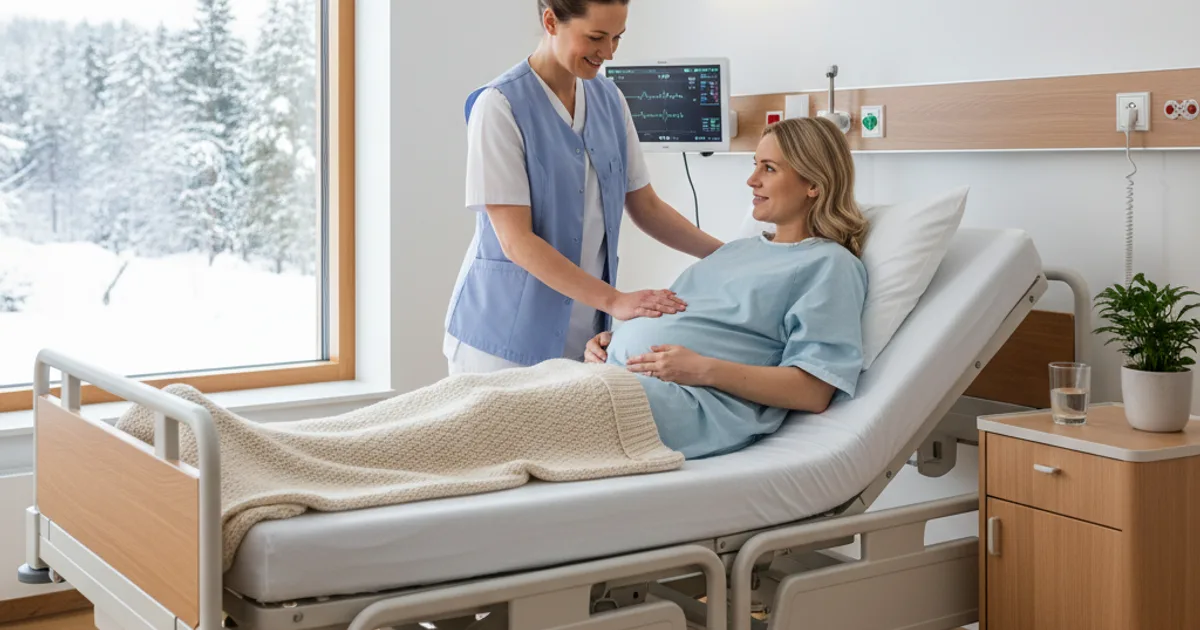
Many pregnant people worry about tearing during childbirth. That is completely natural. Knowing what can happen, how it is treated, and how you recover can make it feel a little less daunting. Most tears are small and heal well.
How Common Are Tears?
Perineal tears are very common, especially with a first birth. According to research published by ACOG (American College of Obstetricians and Gynecologists), around 85 percent of first-time birthers experience some form of perineal tear. The rate is lower with subsequent births.
Most tears are first or second degree, which are superficial and heal quickly.
Degrees of Tearing
Tears are classified by how deep they are:
First Degree. Superficial Tear
- Only the skin and mucous membrane of the perineum or vagina
- Often so small that it heals on its own without stitches
- Discomfort for the first few days, but passes quickly
Second Degree. Muscle Tear
- Extends deeper into the muscle of the perineum
- Sutured with dissolvable stitches immediately after birth
- Healing time: usually 2–4 weeks
- The most common type of tear
Third Degree. Sphincter Tear
- Extends to the anal sphincter muscle
- Subdivided into 3a, 3b, and 3c depending on how much of the muscle is involved
- Sutured by an experienced obstetrician, often in an operating room
- Requires closer follow-up during the postpartum period
Fourth Degree. Full Thickness Tear
- The tear extends through the sphincter and into the rectal mucosa
- Rare (under 1 percent of all births)
- Repaired surgically by a specialist
- Requires thorough follow-up and rehabilitation
Third and fourth degree tears occur in around 2–3 percent of first-time birthers, according to ACOG. Hospitals and birthing centers have focused significantly on reducing occurrence, and rates have declined in recent years.
What Is an Episiotomy?
An episiotomy is a surgical incision made in the perineum by a midwife or doctor during birth. It is done under local anesthesia and usually during a contraction, so you barely feel it.
When is an episiotomy performed?
- When the baby needs to be born quickly (signs the baby is in distress)
- With instrumental delivery (vacuum or forceps)
- If the perineum is very tight and there is a risk of an uncontrolled tear
Episiotomy is not performed routinely. Guidelines from the WHO and ACOG recommend that the procedure only be done when there is a clear medical indication. Research shows that routine episiotomy does not prevent severe tears.
Can Tears Be Prevented?
Not all tears can be prevented, but certain things can reduce the risk:
Perineal Massage
From weeks 34–36 onward, you can massage the perineum with oil daily. Studies show this can reduce the risk of tearing, especially with a first birth.
How to do it:
- Wash your hands and use a neutral oil (sweet almond oil, olive oil)
- Insert one or two thumbs about 3–4 cm into the vagina
- Press gently downward and to the sides for 1–2 minutes
- Do this daily for 5–10 minutes
During Birth
- Slow pushing, your midwife or doctor guides you to push gently as the head emerges
- Warm compresses, many care providers apply warm compresses to the perineum
- Birth position, some positions (side-lying, kneeling) put less strain on the perineum
- Breathing the baby out, short, controlled pushes give tissue time to stretch
Talk with your midwife or doctor about perineal support during the crowning phase, a technique where the care provider actively supports the perineum as the baby's head emerges. This practice has been shown to reduce severe tears.
Pelvic Floor Exercises During Pregnancy
A strong and flexible pelvic floor can help during birth. Muscles that can stretch and relax in a controlled way tolerate the strain better.
Start pelvic floor training early in pregnancy with Babysential's pelvic floor program.
Healing After a Tear
First and Second Degree Tears
Most minor tears heal within 2–4 weeks. The first few days it is normal to experience:
- Soreness and swelling in the area
- Stinging when urinating
- Discomfort when sitting
Tips for faster healing:
- Keep the area clean, rinse with lukewarm water after using the toilet
- Change pads frequently
- Avoid sitting for long periods, lie down when you can
- Use a donut-shaped cushion to relieve pressure when sitting
- Eat fiber-rich foods to avoid constipation (straining makes discomfort worse)
Third and Fourth Degree Tears
Healing takes longer, usually 6–12 weeks. You will receive closer follow-up:
- Check-up with a doctor 6–8 weeks after birth
- Possible referral to a pelvic floor physical therapist
- Antibiotics are often prescribed to prevent infection
- Stool softeners for the first few weeks to avoid hard stools
Contact your midwife or doctor if you experience increasing pain, fever, foul-smelling discharge, or difficulty controlling gas or bowel movements. These can be signs of infection or that healing is not progressing as it should.
Pelvic Floor Exercises After a Tear
Regardless of the degree of tearing, pelvic floor exercises are important for rehabilitation. But start gently and listen to your body.
After first and second degree tears:
- Begin gentle Kegel exercises in the first few days after birth
- The exercises improve blood circulation and promote healing
- Gradually increase intensity over the first weeks
After third and fourth degree tears:
- Wait until your doctor gives the green light, usually after the 6-week check-up
- Start with very gentle exercises
- Follow up with a pelvic floor physical therapist if you are unsure
Babysential's pelvic floor program has adapted exercise programs for the postpartum period. The tool guides you through exercises in the right sequence and at the right intensity.
Long-Term Effects
The vast majority of people who experience tears during birth recover fully. But some may experience longer-term issues:
- Painful intercourse, common in the first months, gradually improves
- Scar tissue that can feel tight or uncomfortable
- Urinary incontinence, difficulty controlling urine when coughing, sneezing, or exercising
- Anal incontinence, difficulty controlling gas or bowel movements (rare, mostly with third and fourth degree tears)
If you experience ongoing problems, seek help. A pelvic floor physical therapist can make a significant difference. You are entitled to a referral from your doctor.
Frequently Asked Questions
Does Tearing Hurt a Lot?
During the birth itself, you are so focused on pushing that most people do not feel the actual tear. Stitches are sutured under local anesthesia. The discomfort comes in the days afterward, but is manageable with pain relievers (acetaminophen/paracetamol and ibuprofen are both safe while breastfeeding).
Will I Tear Again Next Time?
The risk is lower with a second birth. The tissue has already been stretched once, and labor often progresses faster. But there are no guarantees, discuss any concerns with your midwife or doctor during pregnancy.
When Can We Have Sex Again?
There is no fixed rule. Wait until the tears have healed (usually 4–6 weeks) and until you feel ready. Many experience dryness and soreness at first, especially while breastfeeding. Lubricant can help. If things do not improve, speak with your doctor.
Read More
- Pelvic Floor Program, get started after birth
- Create Your Birth Plan, write down your wishes for birth
- Time Contractions With the Timer, when labor starts
- The Stages of Labor, from contractions to birth
- Cesarean Section, the alternative to vaginal birth
- Diastasis Recti After Birth, abdominal muscles after birth
- The Postpartum Period, what to expect
Sources
- ACOG. Obstetric Lacerations Prevention and Repair
- WHO. Care of girls and women living with female genital mutilation
- AAP. Postpartum Care
🔧 Helpful Tools
- Due Date Calculator. Calculate your estimated due date
- Contraction Timer. Track your contractions during labor
- All Baby Tools. Browse all free tools for pregnancy and baby care