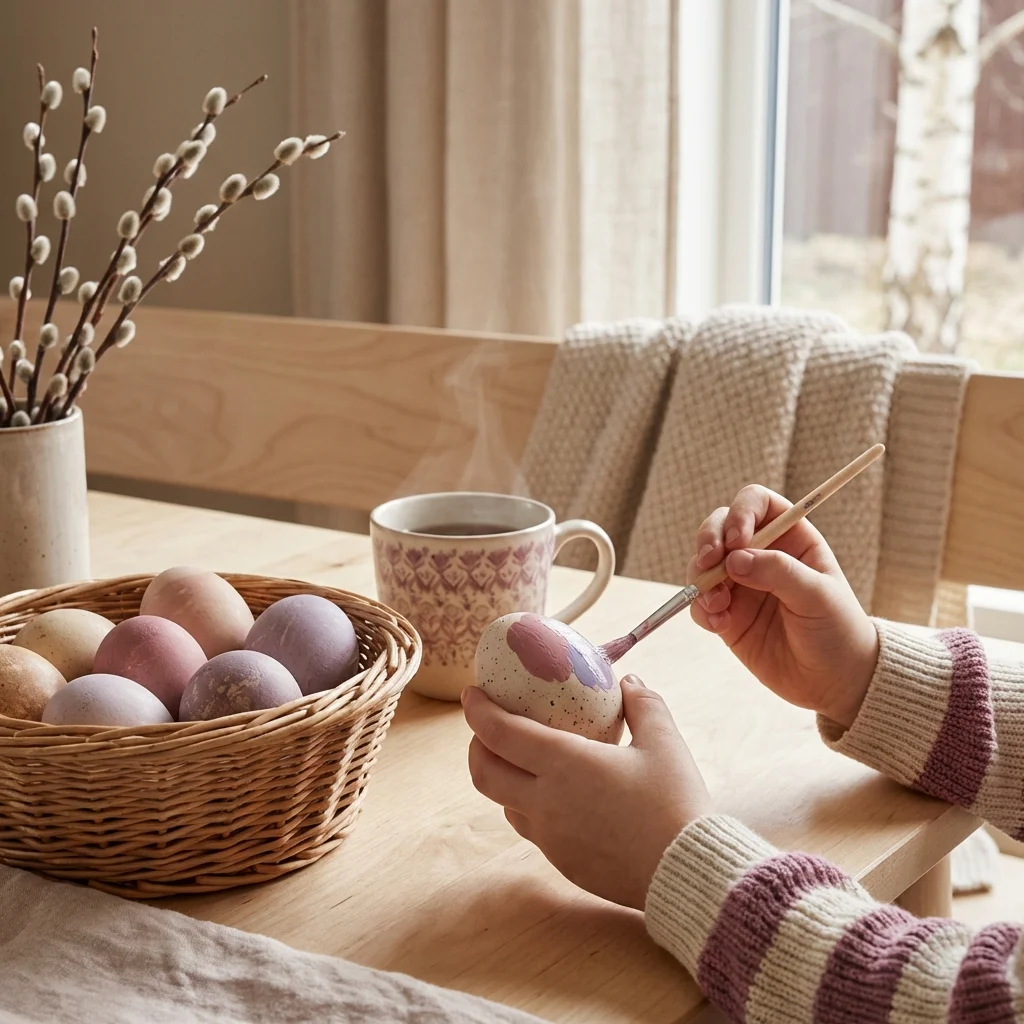
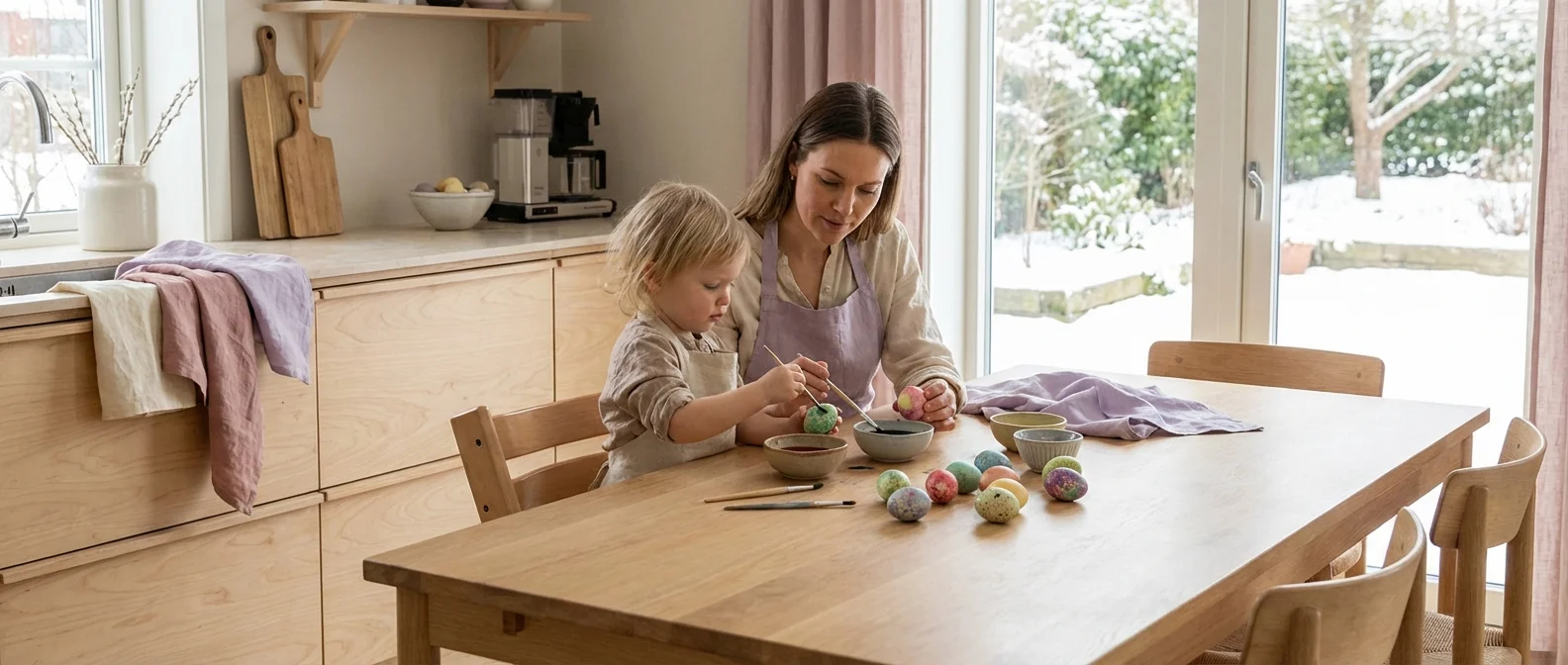
Fluffy chicks, chocolate eggs hidden in the grass, and cress sprouting in eggshells. Easter is perfect for the little ones. No holiday offers as many opportunities for sensory play, exploration, and outdoor fun as Easter.
Whether you're planning a getaway with the whole family or a relaxing Easter at home in the garden, we've gathered everything you need. From age-appropriate activities and egg hunts to food, decorations, scavenger hunts, and packing lists, here's the complete Easter guide for families with children from 0 to 3 years.
Easter Activities by Age
Children develop enormously in the first three years. An activity that's perfect for a two-year-old may be completely wrong for a baby. Here are the best Easter activities, sorted by age.
0–12 Months: Sensory Easter Fun
Your baby doesn't understand Easter, but they love new sensory experiences. Use Easter as an opportunity to explore colors, textures, and scents together.
Try this:
- Cress in eggshells. Let baby touch the soft sprouts with their fingers. Completely safe and fascinating for little hands.
- Easter eggs to hold. Large, colorful plastic eggs to grasp, roll, and bang. Perfect motor skill practice.
- Fingerprint chick. Dip baby's finger in non-toxic yellow paint and make prints on paper. Draw on a beak and legs, finished artwork.
- Colors on the windowsill. Set up yellow, green, and orange objects where baby can see them. Easter napkins, plastic flowers, and eggshells with cress.
- Nature walk in the stroller. A calm walk where you point out signs of spring: crocuses, streams, birds. Baby hears your voice and takes in nature.
Babies under one year don't need organized Easter activities. The best experiences are the calm ones, sitting in your lap feeling a boiled egg, looking at yellow tulips, or hearing you sing.
1–2 Years: First Easter Experiences
Now the fun really begins. A one-year-old understands the concept of "finding things" and loves to point, grab, and explore. Two-year-olds can begin with simple creative play.
Try this:
- Simple egg hunt. Place 5–8 large, colorful eggs clearly visible around the room or garden. Point and say "Look! There's an egg!" One-year-olds need help; two-year-olds manage increasingly on their own.
- Finger-painting eggs. Boiled eggs + non-toxic paint + baby's hands = Easter art. Lay down newspaper underneath. Expect mess, that's half the fun.
- Glue chick. Cut out a chick shape from yellow paper. Let the child glue on feathers, eyes, and a beak with a glue stick. Great for fine motor skills.
- Picture-based scavenger hunt. For the older children in this group: Lay out 3–4 pictures (egg, chick, bunny) around the room. The child "finds" the pictures and matches them with identical pictures you have.
- Egg and spoon race. Place a (hard-boiled!) egg on a large spoon. Let the child try to walk without dropping it. Plenty of laughter guaranteed.
2–3 Years: Full Easter Fun
Two and three-year-olds are ready for everything. They understand clues, can paint with a brush, and love treasure hunts. Here's where you can really go all out.
Try this:
- Treasure hunt with clues. Draw simple pictures as clues (a tree means "go to the tree," a couch means "look under the couch"). 5–6 stations are enough.
- Painting eggs with a brush. Watercolors, stickers, and glitter. Let the child decorate freely. The result will be unique and beautiful.
- Easter workshop. Make chicks from paper plates, bunnies from toilet paper rolls, flowers from cupcake liners. Simple supplies, big creativity.
- Scavenger hunts. Simple picture clues where the child finds the next station. More on this further down in the article.
- Egg races and competitions. Balance eggs on spoons, roll eggs down a hill, toss eggs into a bucket. Small competitions with lots of cheering.
- Bake Easter buns. Let the child help knead dough and shape buns.
Children of all ages like different things. Some two-year-olds love painting, others prefer running around outside. Adapt the activities to your child, not to the age chart.
Egg Hunt. How to Organize the Perfect One
An egg hunt is the highlight of Easter for many children. With a little planning, you can create an experience your child will talk about for weeks.
Indoors or Outdoors?
Outdoors is best when weather permits. The garden, park, forest edge, or a cabin provide natural hiding spots. Indoors works great for babies and on rainy days, use the living room, bedroom, and hallway.
How Many Eggs?
- Under 1 year: 3–5 eggs. The child needs help with everything but loves holding the finds.
- 1–2 years: 5–10 eggs. Large, colorful eggs that are easy to spot.
- 2–3 years: 10–15 eggs. A mix of easy and slightly trickier hiding spots.
How to Hide Properly
Adjust difficulty to the child's age:
- 1-year-olds: Place eggs fully visible, on the floor, on a chair, in the grass. Point and help the child.
- 2-year-olds: Half-hidden eggs, sticking out behind a pillow, sitting on a low shelf, partially covered by a leaf.
- 3-year-olds: Properly hidden, inside a shoe, behind a flower pot, up in a tree branch. Here you can challenge them.
Clue Systems
For children from 2 years, you can create a simple clue system:
- Picture clues. Draw or print pictures of the next hiding spot. A picture of a shoe means "look in the shoe rack."
- Color coding, "Find the yellow egg by something that is also yellow" (sunflower, banana, lemon).
- Hot/cold. Say "hot!" and "cold!" while the child searches. Works from about 2.5 years.
What to Put in the Eggs?
Think in four categories: healthy snacks, classic candy, small toys, and activities.
Painting Easter Eggs
Egg painting is a classic Easter tradition that suits all ages, just adapt the technique.
Natural Dyes From the Kitchen
You don't need to buy synthetic egg dye. Your kitchen has everything:
- Onion skins. Boil eggs with brown onion skins for a warm, golden color
- Beet. Creates beautiful pink to deep red
- Turmeric. Bright yellow color
- Red cabbage. Surprisingly: blue-purple
- Blueberries. Dark purple
Boil the vegetables/spices in water for 20 minutes, strain, and place the boiled eggs in the dye water. The longer they sit, the deeper the color.
Safe for All Ages
- Under 1 year: Use non-toxic finger paint. Let baby touch the eggs with their hands. Everything goes in the mouth, choose paint labeled safe for babies.
- 1–2 years: Finger paint and large stickers. Expect mess. Use old clothes.
- 2–3 years: Watercolors and thin brushes. The child can paint patterns, dots, and stripes. Add glitter with a glue stick for extra magic.
Easter Crafts and Workshop
You don't need fancy supplies to make beautiful Easter decorations with toddlers. Here are ten simple projects using things you have at home.
10 Easy Easter Workshop Ideas
- Paper plate chick. Paint a paper plate yellow, glue on eyes, beak, and feathers
- Toilet roll bunnies. Cut ears from cardboard, glue on a cotton ball tail
- Cress eggs. Fill half an eggshell with wet cotton, sprinkle on cress seeds
- Fingerprint flowers. Dip fingers in paint, make flowers on paper
- Egg carton chick. Cut out a cup from an egg carton, paint yellow, add feathers
- Easter wreath. Ring of cardboard + glued-on paper flowers and eggs
- Feather painting. Use feathers instead of brushes for painting
- Easter garlands. Cut out eggs from colored paper, string them on a cord
- Bunny stamp. Cut a potato in half, carve a bunny shape, use as a stamp
- Nature collage. Collect twigs, moss, leaves, and glue onto cardboard
All projects suit children from 1.5 years with a little help.
Easter Scavenger Hunt
A scavenger hunt is a treasure hunt where the child follows clues from station to station until they find a "treasure" at the end. It's a beloved Easter tradition that kids love.
For 2–3 Years: Picture-Based Scavenger Hunt
Small children can't read, but they understand pictures. Here's how to make a simple scavenger hunt:
- Draw the clues. Draw what the child should find the next station at. Example: a tree, a chair, a shoe, a door.
- Lay the clues in order. Station 1 (by the door) has a picture of a tree. Station 2 (by the tree) has a picture of a chair. And so on.
- Treasure at the last station. An Easter egg with a small surprise, or a basket with fruit and candy.
- Keep it short, 4–6 stations is perfect for the youngest.
Example scavenger hunt for a 2.5-year-old:
- Start: "Look under the pillow on the couch!" (there you find a picture of a tree)
- Station 2: By the tree in the garden is a picture of the sandbox
- Station 3: In the sandbox is a picture of the mailbox
- Station 4: In the mailbox is a golden Easter egg with a small surprise
Filling Easter Eggs. Healthy, Fun, and Free Alternatives
What do you put in Easter eggs? Here's a quick overview of the best categories.
Healthy Snacks
Raisins, dried mango, banana chips, carrot sticks, small grapes (cut lengthwise for children under 3). Toddlers don't care if it's candy or fruit, the packaging is the exciting part.
Classic Candy
Chocolate eggs, jelly candy, marshmallows. Everything in moderation. For children under 1 year: Skip candy entirely, they don't need it.
Free and Creative Alternatives
Drawings, homemade "coupons" (an extra book at bedtime, choosing dinner, pajama day), stickers you already have, small stones you've painted faces on.
Small Toys
Rubber ducks, bouncy balls, chalk, bubbles, hair clips, small cars. Anything inexpensive works.
The best Easter egg for a child under 3? A large, colorful egg with something that makes noise inside. Rice, beans, or small bells in a sealed egg becomes a homemade rattle.
Easter Food for the Little Ones
The Easter table is full of temptations. Here's what the youngest can eat, and what to avoid.
Eggs. The Perfect Easter Food
Eggs are nutritious, affordable, and perfect for Easter. According to AAP guidelines, babies can eat eggs from 6 months of age. Start with hard-boiled egg yolk, which is easier to digest.
- 6–8 months: Hard-boiled egg yolk, mashed with a little breast milk or water
- 8–12 months: Whole hard-boiled eggs, cut into pieces or strips
- 1–3 years: Eggs in all forms, boiled, scrambled, omelet, in pancakes
Does your child have a known egg allergy? Then naturally avoid it. But for most children, eggs are a safe and healthy part of the Easter table.
Lamb for Toddlers
Roast lamb is an Easter tradition for many families. It's safe for children from 6 months, but adjust the consistency:
- 6–8 months: Mashed or pureed lamb with vegetables
- 8–12 months: Soft pieces the child can hold themselves
- 1–3 years: Small-cut pieces with sauce
Healthy Easter Snacks
- Carrot sticks (steamed for the youngest)
- Cucumber sticks
- Banana pancakes shaped like chicks
- Fruit skewers (without sharp tips for those under 3)
- Easter buns without too much sugar
Watch out for choking hazards. Whole grapes, nuts, popcorn, round candies, and raw carrots are dangerous for children under 3. Always cut grapes lengthwise and cut round foods.
Holiday Getaway vs. Easter at Home
What suits your family best? Both can be wonderful, it's about planning right.
Holiday Getaway With Toddlers
Advantages:
- Fresh air and nature experiences
- A break from everyday routine
- Snow, sledding, and outdoor play
- Quality time without daily distractions
Challenges:
- Sleep in a new environment (bring familiar bedding and stuffed animals)
- Packing all the gear
- Long car rides with small children
- Cold and sun require extra clothing layers
Easter at Home With Toddlers
Advantages:
- Familiar surroundings and routines
- All the gear is available
- Child sleeps in their own bed
- Cheaper and less stressful
Challenges:
- Easier to fall into everyday mode
- Less of a "vacation feeling"
Quick Packing List for a Trip
- Extra clothes in layers (wool, fleece, outerwear)
- Sunscreen SPF 50 and sunglasses with UV protection
- Favorite book and stuffed animal for bedtime
- Simple Easter craft supplies
- Baby food and snacks for the journey
- Baby carrier or lightweight stroller
Wherever you celebrate Easter: Keep routines as normal as possible. Same bedtime, same rituals, same comfort items. Children who sleep well enjoy their waking hours more.
Easter Outfits for the Little Ones
Spring weather can be unpredictable. Sunshine one day, rain or snow the next. Dress your child wisely.
The Layering Principle
Dress the child in layers so you can easily adjust:
- Base layer. Merino wool or cotton against the skin
- Middle layer. Wool sweater or fleece
- Outer layer. Wind- and waterproof suit or jacket
Remember
- Sun hat or cap with a brim (spring sun can be strong)
- Extra mittens/gloves in reserve (the cold can come quickly)
- An extra change of clothes in the car (it gets messy)
Easter Traditions for Kids
Easter comes with many beloved traditions that are perfect for toddlers.
Cress in Eggshells
The simplest Easter tradition. Fill half an eggshell with wet cotton, sprinkle on cress seeds, and set in the windowsill. After 4–5 days you'll have green sprouts. Kids love watching something grow, and cress is edible and safe.
Egg Tapping
An ancient game. Two people tap their hard-boiled eggs against each other, whoever cracks the other egg without cracking their own wins. Even one-year-olds can hold an egg and tap. Prepare for eggshell chaos.
Easter Egg Dyeing
A tradition in many cultures. Dyeing eggs together, whether with natural dyes from your kitchen or store-bought kits, is an activity the whole family can enjoy.
Easter Treasure Hunt
Create your own mystery hunt where the child has to figure out who "stole the Easter egg." Lay out clues with footprints (drawn with chalk) and traces (feathers, yellow yarn).
Decorating With Spring Branches
Branches decorated with colorful feathers and small eggs are classic Easter decor. Let the child help attach feathers to the branches.
Why Do We Eat So Many Eggs at Easter?
The tradition originates from the fasting period before Easter, when eggs weren't eaten. The hens kept laying, so by Easter, people had accumulated piles of eggs that needed to be used up. That's how eggs became the quintessential Easter food.
Easter on a Budget. Free and Affordable Ideas
You don't need to spend a lot of money to create a magical Easter for your child. The best Easter memories are about time together, not expensive purchases.
Completely Free
- Nature walk with spring bingo. Make a simple list: crocus, bird, stream, moss, bud. The child checks them off (or you help).
- Painting eggs with food coloring. You probably have food coloring in the pantry already.
- Hide-and-seek with household items. Hide 5–10 ordinary things (shoe horn, teaspoon, mitten) and let the child search.
- Easter songs and dancing. YouTube has free Easter songs for kids. Dance together in the living room.
- Building a nest. Collect twigs and moss outside and build a "bird's nest" with stones as eggs.
Under $5
- Cress seeds and cotton
- Non-toxic finger paint
- Egg dye from the grocery store
- Feathers from a craft store
- Yellow pipe cleaners to shape into chicks
The best thing you can give your child at Easter is your time. Your two-year-old won't remember the Easter egg that cost a few dollars. But they will remember that you sat on the floor and painted eggs together.
Frequently Asked Questions About Easter With Kids
Can babies eat Easter eggs?
Yes. According to AAP guidelines, babies can eat eggs from 6 months of age. Start with hard-boiled egg yolk. Egg yolk is rich in iron, zinc, and vitamin D. If you suspect an egg allergy, talk to your pediatrician first.
When do children understand egg hunts?
From about 1 year, a child can "find" eggs that are clearly visible. From 2 years, they begin to understand the concept of "searching" and "hiding." From 2.5–3 years, they can follow simple clues and picture cards.
How much Easter candy can toddlers have?
Health guidelines recommend limiting sugar intake for children. For children under 1 year: avoid candy entirely. For 1–3 years: a little chocolate at Easter is fine, but make it a clearly limited treat, not an all-day affair.
What do you do with a baby at a cabin over Easter?
Keep the routines. Put the child to bed at the same time as at home. Bring familiar bedding, stuffed animals, and a night light. The first nights may be restless in a new environment, that's normal.
Can you paint eggs with a 1-year-old?
Yes, with non-toxic finger paint. The one-year-old will mostly want to touch and taste the paint. Choose paint that's safe to ingest and cover the area with newspaper. The result will be abstract art, and a great memory.
Is it safe to let toddlers play with eggshells?
Yes, but supervise. Eggshells can break into sharp pieces. For the youngest (under 1 year), it's safest to use whole, boiled eggs or plastic eggs. From about 1.5 years, the child can help with cress planting in eggshells under supervision.
Summary. Your Easter Plan
Easter with toddlers doesn't need to be perfect. It just needs to be present. Paint some eggs, hide some surprises, bake buns together, and go for a walk in the spring sunshine. That's all it takes.
Happy Easter from the Babysential team!
Sources: AAP (eggs and infant nutrition), WHO (dietary guidelines for infants and toddlers)
Sources
- AAP. Infant and toddler nutrition guidelines
- WHO. Global infant feeding recommendations
- CDC. Infant and toddler nutrition resources
🔧 Helpful Tools
- All Baby Tools. Browse all free tools for pregnancy and baby care
📖 Related Articles
- Easter Egg Hunt with Kids: How to Set Up the Perfect Hunt. Complete guide to Easter egg hunts for children aged 1–3. Indoors, outdoors, at the cabin, with tips on hiding spots, clues, and age-appropriate difficulty.
- Painting Easter Eggs with Kids: Natural Dyes and Fun Techniques. How to paint Easter eggs with babies and toddlers. Natural dyes from onion skins, beetroot, and turmeric - safe techniques for all ages.
- Painting Easter Eggs with Kids: Natural Dyes and Fun Techniques. How to paint Easter eggs with babies and toddlers. Natural dyes from onion skins, beets, and turmeric, safe techniques for all ages.