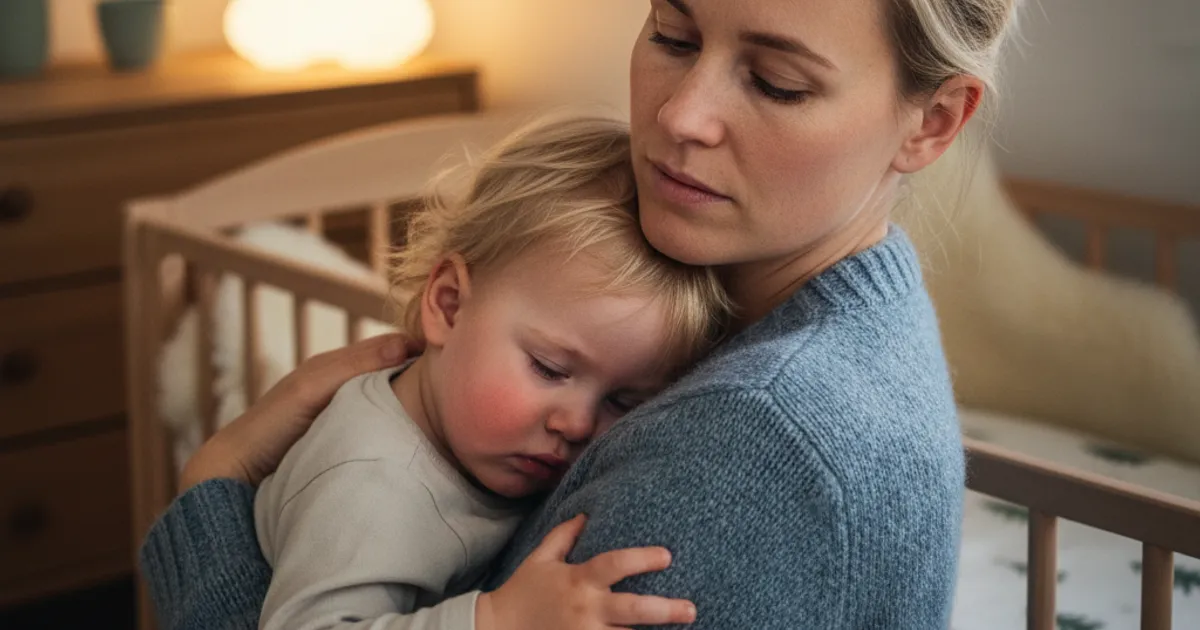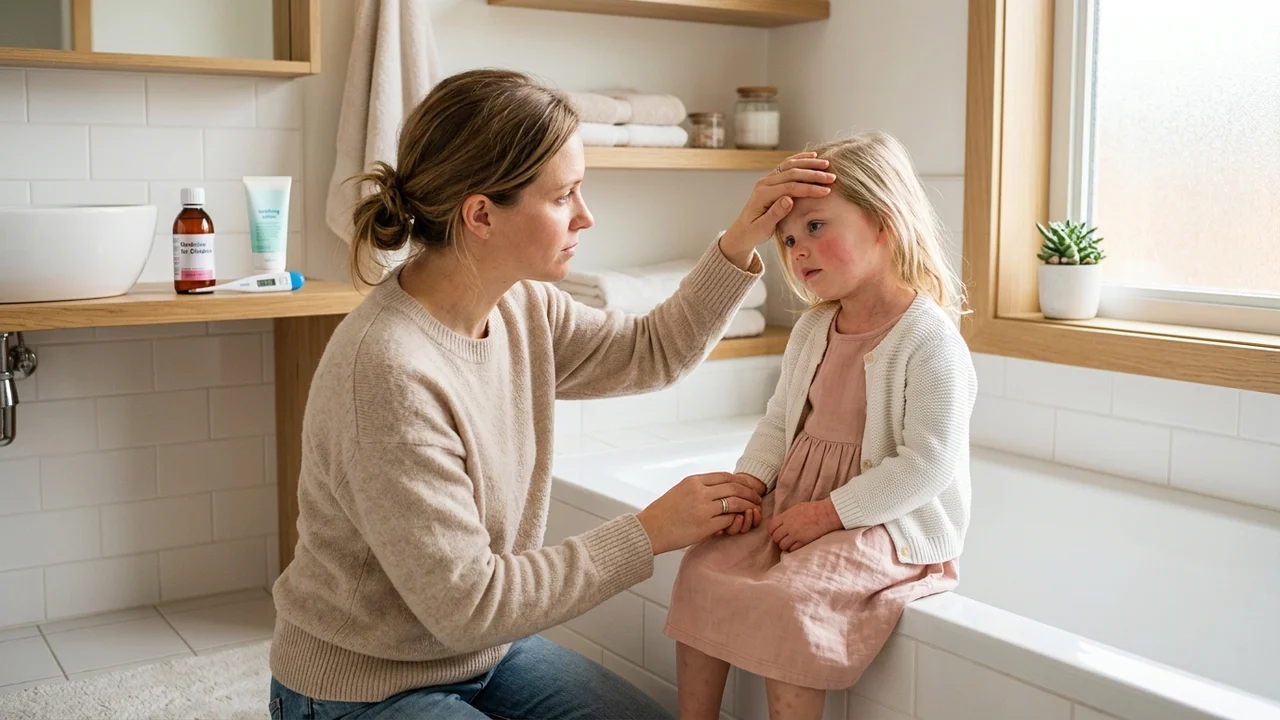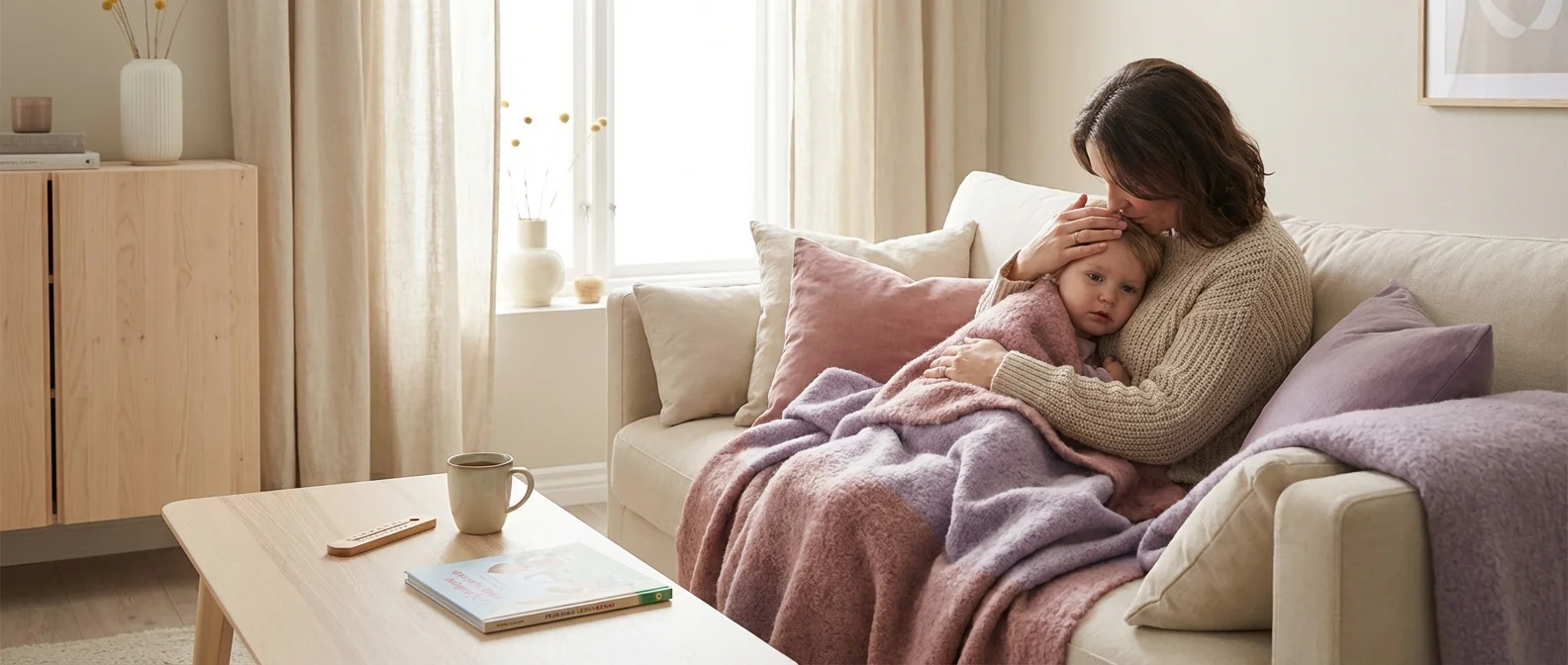
Daycare calls. Your child has a fever and needs to be picked up. Again. It's the third time this month, and you feel the stress mounting: how do you take time off work? What does your child actually need?
Young children get sick up to 8–10 times a year, often more in their first year of daycare or preschool. That means a lot of sick days. Here's a practical guide to everything from care and medication to your rights as a parent and everyday logistics.
Basic care: what your child needs most
A sick child needs three things: fluids, rest, and closeness. It sounds simple, and it is.
Fluids are the priority
Sick children often lose fluids through fever, vomiting, or diarrhea. Offer drinks frequently, small sips are better than large amounts at once.
For babies under 12 months: Breast milk or formula is best. Offer the breast or bottle more often than usual. Babies over 6 months can also have small sips of water.
For children 1–3 years: Water, diluted juice, and broth are good choices. Avoid soda and sugary drinks, which can worsen diarrhea.
Signs of dehydration: Fewer wet diapers than usual (fewer than 4 in 24 hours), dry lips, sunken eyes, lethargy, or crying without tears. Contact a doctor immediately if you notice these signs.
Rest, but don't force it
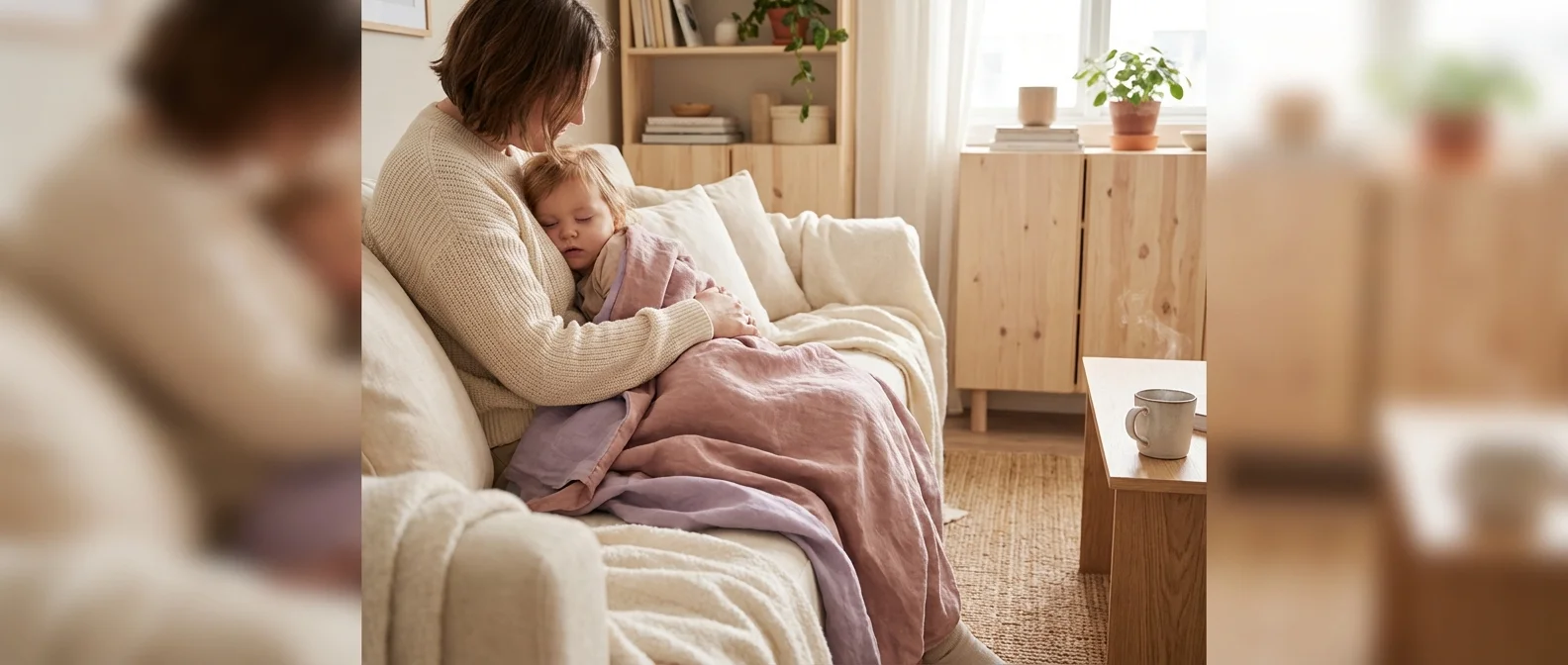
Sick children need rest, but they don't have to lie in bed all day. Let your child rest on the sofa with a blanket, watch a calm movie, or listen to an audiobook. Young children regulate their own rest.
Closeness and comfort
Children who are sick need extra cuddles. It's completely fine to let go of all routines. Carry your baby more than usual, let your toddler sleep with you, and give lots of hugs.
Fever management
Fever is the body's natural defense against infections. You don't need to treat fever with medication unless your child is clearly uncomfortable.
When to give fever reducers?
Give fever-reducing medication when your child is uncomfortable, not based on a specific number on the thermometer. A child with 102°F (39°C) who is happily playing doesn't need medication. A child with 101°F (38.5°C) who is exhausted and irritable may benefit from it.
Acetaminophen dosing
Acetaminophen dosing should always be based on your child's weight, not age. Read the package instructions carefully. The standard dose is 10–15 mg per kilogram of body weight per dose, maximum 4 doses per day with at least 4–6 hours between doses. Ask your pharmacist if you're unsure.
Acetaminophen (Tylenol) comes as suppositories, liquid, and dissolving tablets. Suppositories are practical for babies who won't swallow.
Ibuprofen (Advil, Motrin) can be used from 6 months of age. It is especially effective for ear infections and other pain. Do not give ibuprofen for chickenpox or to children with stomach illness.
Other measures for fever
- Dress your child lightly, don't bundle them up
- Keep the room temperature comfortable (around 68°F / 20°C)
- Offer plenty of fluids
- Wipe the face with a cool damp cloth
Read our complete fever in children guide for more detailed information.
Symptoms that require a doctor's call
Most childhood illnesses are harmless and pass on their own. But sometimes you need to contact a doctor, quickly.
Call your pediatrician or urgent care if your child:
- Is under 3 months and has a fever over 100.4°F (38°C)
- Has difficulty breathing (fast breathing, drawing in of the chest, belly breathing)
- Is unusually limp, difficult to wake, or unresponsive
- Refuses to drink for an extended period
- Has a rash that doesn't fade when pressed (do the glass test)
- Has a fever lasting more than 3 days
- Has a stiff neck or is sensitive to light
- Has had a febrile seizure
Call 911 (or your emergency number) if your child:
- Is not breathing normally or has a bluish color
- Is unconscious or unresponsive
- Is having a severe allergic reaction (swelling of face or throat)
When in doubt, call. Your pediatrician or nurse helpline can help you assess whether your child needs to be seen. It's better to call once too many than once too few.
Food for sick children
Sick children often eat less than usual. This is completely normal and not dangerous for a few days. Don't force food on your child.
Good choices for sick children:
- Broth (easy and provides fluids)
- Toast or plain crackers
- Banana and other soft fruit
- Yogurt
- Oatmeal
For vomiting and diarrhea: Avoid fatty and spicy food. Start with small amounts of bland food (plain crackers, dry toast) and build up gradually. Read more about stomach bugs in children.
Entertainment for sick days
A sick child who starts getting bored is a good sign. It means they are recovering.
Calm activities
- Audiobooks and music, many streaming services have free children's content
- Drawing and coloring books, effortless and relaxing
- Stickers, children love them, zero energy required
- Reading, read aloud to your child, favorite books over and over
- Simple board games, easy puzzles, memory games for toddlers
Screen time on sick days
Yes, it's completely fine to allow more screen time on sick days. A sick child lying on the sofa watching TV is doing exactly what they should. Don't feel guilty about it.
When can your child return to daycare or school?
The general rule
Your child should be fever-free for at least 24 hours without fever-reducing medication before returning to daycare or school. Many settings require 48 hours.
Other situations
- Cold without fever: Your child can go back with a runny nose as long as they are otherwise feeling well
- Vomiting/diarrhea: Your child should have kept down food and drink normally for at least 48 hours
- Pink eye: Your child can return when treatment has started (check with your child's school)
- Hand, foot, and mouth disease: Your child can return when they are in good general health, even if blisters remain. Read more about hand, foot, and mouth disease
Check your daycare or school's own infection control rules. They may vary. Some settings have stricter rules than the general recommendations.
Preventing the spread of illness at home
When one child is sick, you want to avoid the whole family going down. Here are the most important measures.
Handwashing. Wash hands frequently, after diaper changes, before meals, after coughing and sneezing. Use soap and water for at least 20 seconds.
Separate towels. Give the sick child their own towel and washcloth. Change daily.
Cough and sneeze into the elbow. Teach your child to sneeze and cough into the crook of their arm, not their hands.
Clean surfaces. Wipe door handles, light switches, and toys your child uses. Viruses can survive on surfaces for hours.
Make sure you have what you need in your home medicine cabinet. A well-stocked medicine cabinet makes sick days much easier to manage.
Time off work: your rights as a parent
In the United States
The FMLA (Family and Medical Leave Act) provides up to 12 weeks of unpaid, job-protected leave per year for qualifying reasons, which includes caring for a child with a serious health condition. For routine illnesses, your options depend on:
- Your employer's sick leave or personal day policies
- State laws (some states have paid sick leave laws that include care for sick family members)
- Your employer's specific policies on caregiver leave
Many employers allow you to use your own sick days to care for a sick child. Check your employee handbook or ask HR.
How many days do you typically get?
This varies by employer and state. Some useful benchmarks:
- Many US states with paid sick leave allow you to use accrued sick time to care for a sick child
- Check your state's specific laws. California, New York, New Jersey, and others have broad family care provisions
- Parents of chronically ill children may be entitled to additional accommodations
Both parents can generally take time off to care for a sick child, you don't have to coordinate to avoid using the same day. This can be especially helpful for medical appointments.
Self-certification vs. doctor's note
For short absences, most employers accept a self-certification. For longer absences, your employer may request a doctor's note. Check your employer's specific policy.
Frequently asked questions
How long does a typical cold last in children?
A cold typically lasts 7–10 days. A cough can linger for up to 2–3 weeks. Nasal discharge that changes from clear to yellow or green is normal and doesn't necessarily indicate a bacterial infection. Read more in our cold in babies guide.
Can I give my child acetaminophen and ibuprofen at the same time?
You can alternate between acetaminophen and ibuprofen, but shouldn't give both simultaneously as a standard approach. Talk to your pediatrician or pharmacist about dosing if one medication isn't providing enough relief. Remember that dosing is always based on weight, not age.
Should my child bathe when they have a fever?
A lukewarm bath can feel soothing, but avoid cold baths which can cause shivering. Shivering actually raises core temperature. Let your child decide if they want to bathe.
My child seems to have a cold constantly, is that normal?
Yes, it's completely normal. Children in daycare or preschool can have 8–12 respiratory infections per year. It may feel like your child is "always sick," but this is their immune system building up. It gradually improves after the first year. Read more about your child's immune system.
When is my child contagious?
Most viral infections are most contagious in the days just before and the first few days after symptoms appear. Your child can spread illness as long as they have symptoms, but the risk of contagion decreases after the first couple of days.
Sources
- AAP. Fever in Children: healthychildren.org
- CDC. When to Keep Your Child Home: cdc.gov
- WHO. Child health: who.int
- US Department of Labor. FMLA: dol.gov
🔧 Helpful Tools
- Baby Milestones Tracker. Track your baby's developmental milestones
- All Baby Tools. Browse all free tools for pregnancy and baby care
📖 Related Articles
- Cold vs. Flu in Children: How to Tell the Difference. Learn how to tell a cold from the flu in children. Symptoms, home treatment, and when to call the doctor.