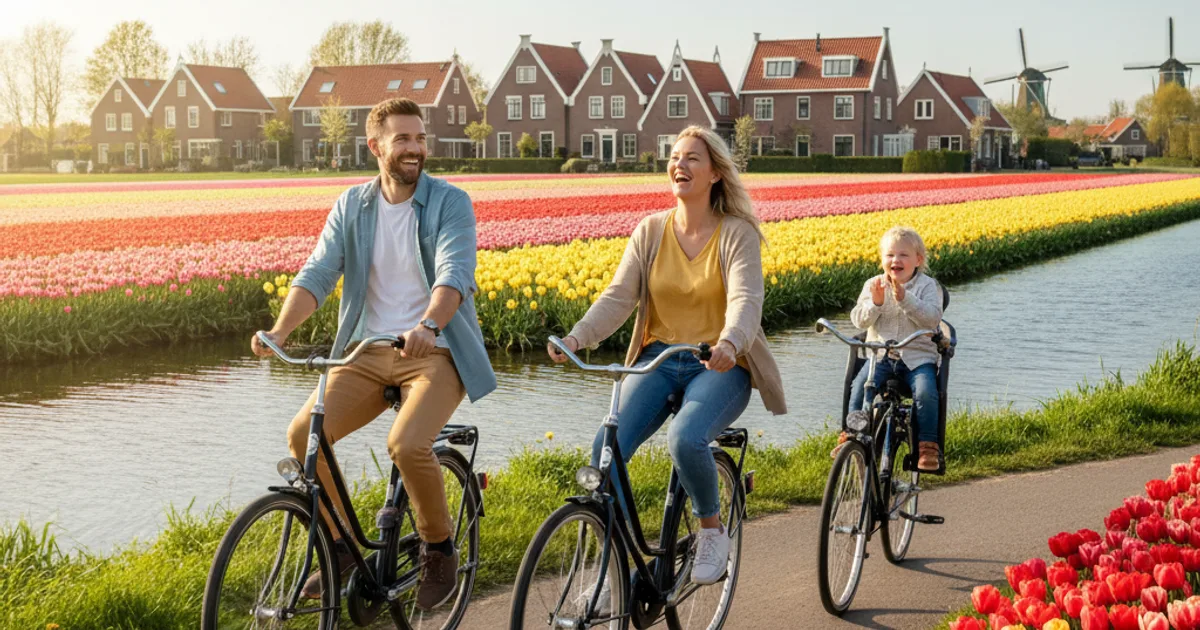
When UNICEF measures children's wellbeing, the Netherlands consistently comes out on top. What do the Dutch do that the rest of the world doesn't?
Part-Time Work Is the Norm, for Both Parents
Perhaps the most important factor is something surprising: Dutch parents work less. The Netherlands leads the world in part-time work, and this applies to both genders. Over half of Dutch mothers and a quarter of fathers work part-time, not because they have to, but because the culture values time with family over career advancement.
The result is that children spend more time with their parents. Family dinner is sacred in Dutch culture, and it's common for at least one parent to be home when children return from school.
Bikes, Freedom, and Hagelslag for Breakfast
Dutch children cycle to school from a young age, often alone. This independence gives children a sense of mastery and freedom that researchers believe is crucial for their quality of life. The infrastructure of safe cycle paths makes it possible.
Another tradition that contributes to happiness: hagelslag. The Dutch eat chocolate sprinkles on bread for breakfast, and children love it. This may sound trivial, but research shows that small everyday pleasures like this create positive associations with family life.
Schools also have a different approach. Grades are rarely given in primary school, and the focus is on collaboration, creativity, and social interaction rather than achievement and testing.
Less Helicopter Parenting
Dutch parents are known for giving children more freedom than parents in many other Western countries. Children play outside without constant adult supervision, they're allowed to make their own choices early on, and expectations for academic achievement at an early age are low. Researchers believe this relaxed approach actually makes children more resilient and confident.
What Can Parents Around the World Learn?
The Dutch model isn't something you can copy wholesale, it depends on infrastructure, cultural norms, and social policy. But there are key principles that any parent can embrace:
- Protect family time. Even in busy schedules, treat shared meals and unscheduled time as non-negotiable
- Give age-appropriate independence. Let children walk to a neighbor's house, play in the garden alone, make small decisions
- Don't over-schedule. Free, unstructured play is as important as structured activities
- Reduce performance pressure. Focus on effort and enjoyment, not grades and rankings
Children in many countries can thrive with the right combination of care, freedom, and time. Track your child's development with our milestone tracker and find age-appropriate activities to strengthen everyday joy and a sense of mastery.
Read More
- Japan: Why Japanese Children Sleep Differently
- Sweden: The Science Behind "Friluftsliv" (Outdoor Life)
- Finland: Why Finnish Children Start School Later
Sources
- AAP. Infant and toddler nutrition guidelines
- WHO. Global infant feeding recommendations
- CDC. Infant and toddler nutrition resources
🔧 Helpful Tools
- All Baby Tools. Browse all free tools for pregnancy and baby care