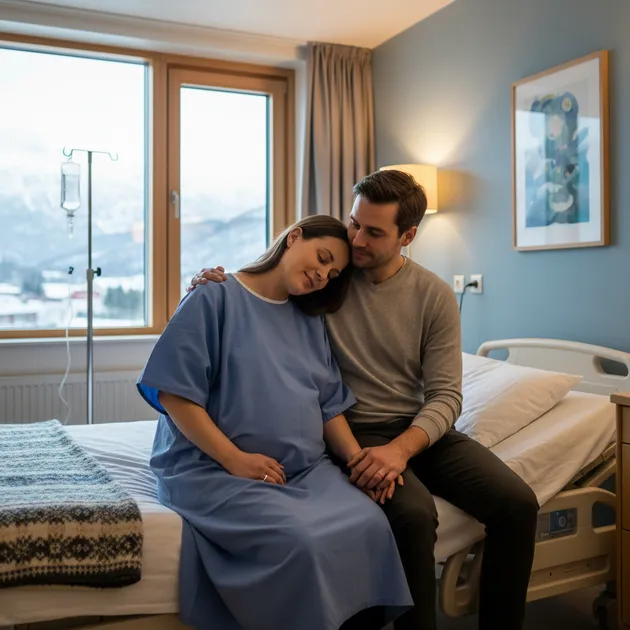
You have been told you will have a planned cesarean section. Perhaps it is medically necessary, perhaps it is your own decision together with your doctor. Whatever the reason, it is normal to have many questions. Here is a thorough walkthrough of the entire process, from preparation to recovery.
What is a planned c-section?
A planned cesarean section (elective cesarean) is a scheduled surgery in which the baby is born through an incision in the abdomen and uterus. Unlike an emergency cesarean, it is decided in advance, and you have time to prepare.
About 1 in 3 births in the United States is by cesarean section, and many of these are planned. A planned c-section is typically scheduled around weeks 38–39 of pregnancy.
Common reasons for a planned c-section
- Breech presentation, the baby is positioned bottom-down and does not turn
- Placenta previa, the placenta is covering the cervix
- Previous cesarean sections, especially if you have had two or more
- Multiple pregnancy, twins or more, depending on position
- Medical condition in the mother, for example, severe preeclampsia
- Large baby, where vaginal birth is considered risky
- Mother's own preference, after thorough information and discussion with the doctor
You have the right to be involved in the decision about birth method. Talk with your doctor about the benefits and risks of cesarean versus vaginal birth in your situation. Write down your questions so you have them ready for the conversation.
Before the surgery: How to prepare
Consultation with your doctor
A few weeks before the surgery, you will have a consultation with your doctor or midwife. You will go through:
- The reason for the cesarean
- Timing of the surgery
- Anesthesia method (spinal or epidural)
- What to expect during the procedure
- Blood tests and blood typing
- Information about skin-to-skin contact and breastfeeding
Practical preparations
Days before the surgery:
- Pack your hospital bag well in advance
- Plan who will drive you to the hospital
- Arrange for family or friends who can help at home after discharge
- Make sure you have loose, comfortable clothing to wear afterward
- Organize childcare for any older siblings
The evening before:
- You will be told when to arrive at the hospital (usually early in the morning)
- Fast from midnight (no food or drink), the hospital will give you exact instructions
- Shower with regular soap
- Try to relax and get a good night's sleep
The day of the surgery
You arrive at the maternity or surgical ward at the agreed time. The following steps will happen:
- Check-in and preparation. You receive a hospital gown and wristband
- Blood tests. Final check of blood values
- Fetal monitoring. The baby's heartbeat is checked
- Urinary catheter. Inserted, usually after the anesthesia takes effect
- Consultation with anesthesiologist. Review of anesthesia
- Compression stockings. To prevent blood clots
Anesthesia: Spinal or epidural
For a planned c-section, regional anesthesia is almost always used. This means you are awake during the surgery but feel no pain from the chest downward.
Spinal anesthesia
Spinal anesthesia is the most common method for planned cesarean sections.
- Given as a single injection in the lower back
- Takes effect within 5–10 minutes
- You lose sensation and movement from the chest down
- Lasts 2–3 hours
- You are fully awake and can experience the birth
Epidural anesthesia
Less commonly used for planned c-sections, but may be chosen if you already have an epidural from an attempted vaginal birth.
- A thin catheter is inserted into the back
- Anesthesia is administered through the catheter
- Can be topped up as needed
- Duration can be controlled
It is normal to feel pressure, pulling, and movement during the surgery, even though you feel no pain. Many describe it as someone "rummaging around" inside the abdomen. Tell your anesthesiologist if you feel discomfort, they can adjust the anesthesia.
General anesthesia
General anesthesia is very rarely used for planned c-sections. It may be considered if:
- Spinal anesthesia does not work or cannot be administered
- It is medically necessary for other reasons
Under general anesthesia, you are asleep throughout the surgery and are not awake when the baby is born.
During the surgery: What happens step by step
The entire surgery usually takes 30–60 minutes. The actual birth of the baby takes only 5–10 minutes. The rest of the time is spent closing the incision.
1. Preparation (10–15 minutes)
- Anesthesia is administered and tested
- The skin is cleaned with antiseptic
- A sterile drape is hung at chest level so you cannot see the procedure
- Your partner or support person sits at your head
- The anesthesiologist stays by your side throughout
2. The surgery itself (5–10 minutes until the baby is out)
- The surgeon makes a horizontal incision (bikini cut) low on the abdomen, approximately 10–15 cm long
- The layers of the abdominal wall are gently opened
- An incision is made in the uterus
- The baby is lifted out
- The umbilical cord is cut, the partner is often invited to cut it
3. After the baby is out (20–30 minutes)
- The placenta is removed
- The uterus is stitched closed layer by layer
- The skin is closed with sutures or staples
4. Immediate skin-to-skin contact
Most hospitals place the baby on the mother's chest for skin-to-skin contact right in the operating room. If the mother cannot receive the baby (for example, under general anesthesia), the partner can have skin-to-skin contact instead.
Skin-to-skin contact after a c-section is just as important as after a vaginal birth. It regulates the baby's temperature, breathing, and heart rate, and promotes bonding and breastfeeding. The AAP and WHO both recommend immediate skin-to-skin when possible.
Recovery after a c-section
Keep in mind that a cesarean section is major abdominal surgery. Recovery takes time, and it is important to be kind to yourself.
The first few hours
- You are monitored in the recovery room for 1–2 hours
- The anesthesia wears off gradually, feeling returns to your legs
- You receive pain relief (acetaminophen, ibuprofen, and possibly stronger medication)
- The urinary catheter usually stays in until the next day
- You can breastfeed as soon as you feel ready
The first days in hospital
You typically stay 2–3 days in hospital after a planned c-section.
- Day 1: You are encouraged to stand up and walk a little, this prevents blood clots and promotes bowel function. It hurts, but it is important
- Day 2: The urinary catheter is removed. You can shower carefully. Movement becomes easier
- Day 3: Most people are ready for discharge. You receive information about wound care and follow-up
The first weeks at home
- Pain: Expect soreness for 1–2 weeks, especially with movement. Take pain relief regularly, don't wait until it hurts
- Activity: Avoid heavy lifting (over about 10–12 lbs apart from the baby) for 4–6 weeks
- Driving: Not recommended for the first 2–3 weeks, or until you can brake quickly without pain
- Exercise: Gentle walking from day one. Pelvic floor exercises can begin carefully after 2–3 weeks. More intensive exercise after 8–12 weeks
- The scar: The incision is approximately 10–15 cm. It heals over several weeks and fades over months
Contact your doctor immediately if you experience: fever above 100.4°F (38°C), increasing redness, swelling, or pain around the surgical wound, foul-smelling discharge, heavy bleeding, pain in the calf (may be a blood clot), or difficulty breathing.
Full recovery
Full recovery after a c-section typically takes 6–8 weeks. Some women need longer. Remember that the body needs time to heal after major surgery.
- 6 weeks: Check-up with your doctor. Most people can resume normal activities
- 8–12 weeks: Gradual return to exercise
- 6–12 months: The scar matures and fades
Breastfeeding after a c-section
Breastfeeding after a c-section is completely possible, but may require a little extra patience.
- Milk production may take a few hours longer to come in compared to vaginal birth
- Breastfeeding positions: Try the football hold (baby tucked under the arm) or side-lying position to avoid pressure on the incision
- Skin-to-skin as much as possible in the first days promotes milk production
- Ask for help from your nurse or midwife at the postpartum ward
Speak with a lactation consultant if you have concerns about milk supply or latch after your c-section.
Benefits and risks of a planned c-section
Benefits
- Predictable timing, you know when the baby is coming
- Controlled situation, no surprises
- Avoids risks associated with prolonged labor
- May be medically necessary for a safe birth
Possible risks
- Infection at the surgical site (3–5%)
- Bleeding
- Blood clots (prevented with compression stockings and early mobilization)
- Longer recovery compared to uncomplicated vaginal birth
- May affect future pregnancies (scar tissue in the uterus)
- Slightly higher risk of transient breathing difficulties in the newborn
After a c-section: Next pregnancy
If you are planning more children, it is worth knowing that vaginal birth after cesarean (VBAC) is possible. Many hospitals support this.
- It is generally recommended to wait at least 12–18 months before the next pregnancy
- The chance of successful vaginal birth after one cesarean is 60–80%
- Discuss your options with your doctor early in the next pregnancy
Frequently asked questions
Will it hurt?
During the surgery you will not feel pain thanks to the anesthesia. You may feel pressure and movement. After the surgery you will have soreness, but this is managed with pain relief. Most people find that the pain is manageable after the first few days.
Can my partner be there?
Yes, for a planned c-section with spinal anesthesia, your partner can be present in the operating room. Your partner sits at your head and can often cut the umbilical cord. If the surgery is done under general anesthesia, the partner usually cannot be present during the procedure itself.
How long will I be in hospital?
Typically 2–3 days after a planned c-section. Some go home after 2 days, others need 4 days. It depends on how you and the baby are doing.
Can I choose a c-section without medical reason?
In many countries, you can request a cesarean and discuss it with your doctor. Your doctor will provide thorough information about the benefits and risks before any decision is made. Policies vary by country and healthcare system, speak with your OB or midwife.
Will I have a scar?
Yes, but the incision is placed low (at the bikini line) and is horizontal. The scar is approximately 10–15 cm and fades significantly over time. After several months it is often barely visible.
Sources
- ACOG - Cesarean Birth
- WHO - Caesarean section rates
- AAP - Skin-to-skin care for term and preterm infants
- CDC - Births: Method of Delivery
🔧 Helpful Tools
- Due Date Calculator. Calculate your estimated due date
- Contraction Timer. Track your contractions during labor
- All Baby Tools. Browse all free tools for pregnancy and baby care
📖 Related Articles
- Cesarean Section: Preparation, Procedure, and Recovery. Everything about cesarean sections: planned vs emergency, preparation, what happens during the procedure, and recovery week by week. Based on medical guidelines.
- Emergency C-Section: What Happens and What You Should Know. What happens during an emergency c-section? Causes, how fast it goes, anesthesia, and what your partner can expect. Reliable information for expectant parents.
- Emergency C-Section: What Happens and What You Should Know. What happens during an emergency c-section? Causes, how quickly it happens, anesthesia options, and what your partner can expect. Reassuring information for expecting parents.