You had friends you did everything with. Now you barely have time to reply to a text. Those without kids don't understand why you're canceling again. Those who have kids understand, but they're just as busy.
Friendship after kids is different. Not necessarily worse, but definitely different.
Why Friendships Change
The first months with a baby are a social earthquake. Suddenly your entire life revolves around feeding, sleep, and diapers. Your conversation topics change. Your availability is radically different.
It's About Time and Energy
You don't want friends any less. You have less capacity. Spontaneous evening visits have been replaced by feedings at three in the morning. Weekend brunch plans collide with the baby's nap schedule.
This isn't something you chose, it's just the reality of a life stage where a tiny human is completely dependent on you.
Some Friendships Can Handle It, Others Can't
The friends who understand that you're unavailable for a while without taking it personally, they're gold. Those who demand the relationship stay the same as before can become a burden you don't have the capacity for.
It's sad, but it's normal. And it doesn't mean the friendship is over forever. Many friendships experience a renaissance when the kids get a little older.
Research has shown that social isolation and loneliness negatively affect mental health. Maintaining social relationships is an important part of parental well-being.
Parent Groups. Your New Tribe
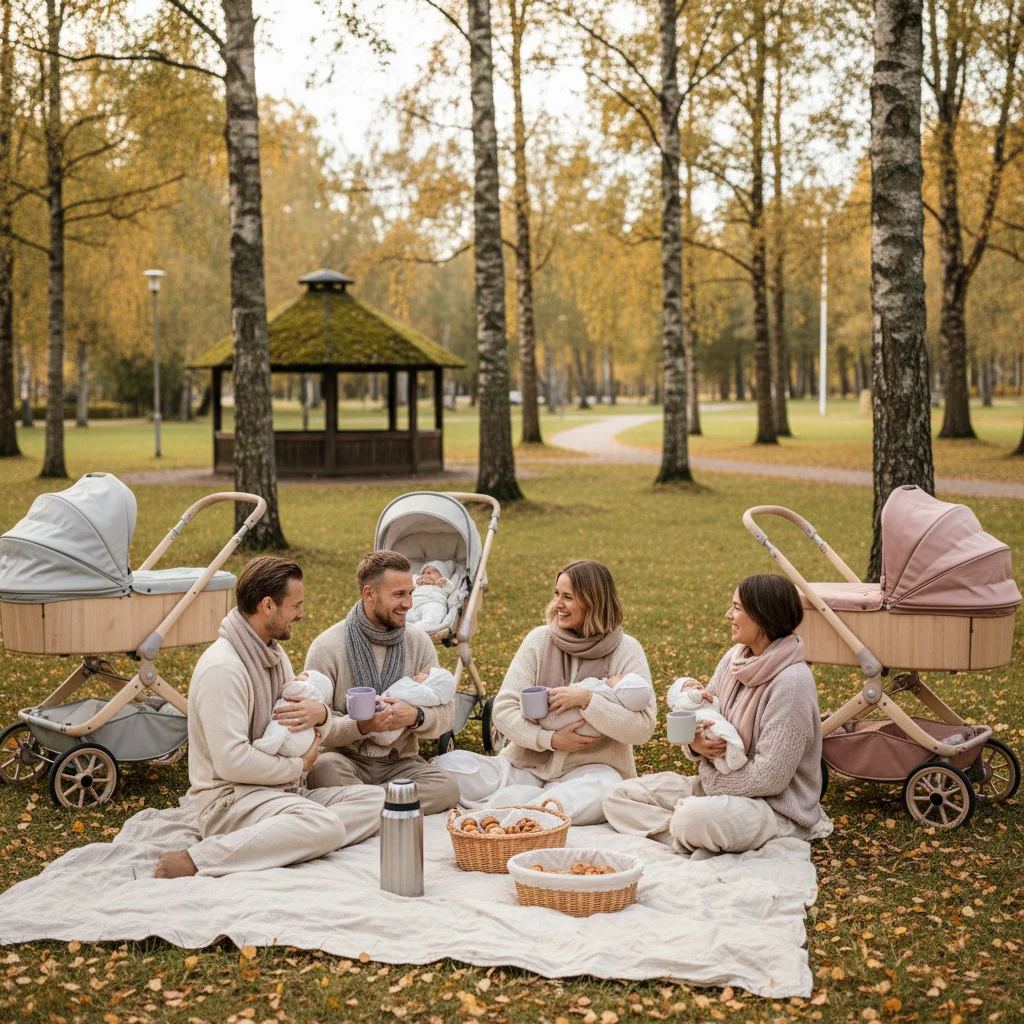
Many communities offer new parent groups through pediatrician offices, hospitals, or family centers. You're placed together with others who had babies around the same time, in the same neighborhood.
Why Parent Groups Work
- You're in the same situation. No one needs to explain why they're tired.
- The kids are the same age. You share the same challenges, starting solids, sleep training, first teeth.
- It's low-key. No one expects you to be lively and funny. Just showing up is enough.
- It builds a local network. These parents live nearby. That makes spontaneous meetups easier.
Tips for Getting the Most Out of Your Parent Group
Give it time. The first meetings can feel a bit awkward, you're strangers who only have in common that you've had babies. But after a few sessions, many parent groups develop into real friendships.
Be honest. If you're struggling, say so. Chances are others in the group feel the same way. Honesty builds trust faster than small talk about baby sleep.
Exchange numbers and create a group chat. The digital group often lives longer than the in-person meetings, becoming a place to ask "is this normal?" questions at two in the morning.
If your area doesn't offer a parent group, ask your pediatrician or local family center if they can connect you with other new parents nearby. Many communities also have open meetups at family centers.
Keeping Old Friends
Lower Expectations. Both Ways
You don't need to meet as often as before. A text now and then, a phone call while the baby sleeps in the stroller, a quick coffee. Quality over quantity.
Say it like it is: "I'm exhausted, but I miss you. Can we find a small window?" Most friends appreciate honesty over radio silence.
Include Them in Your New Life
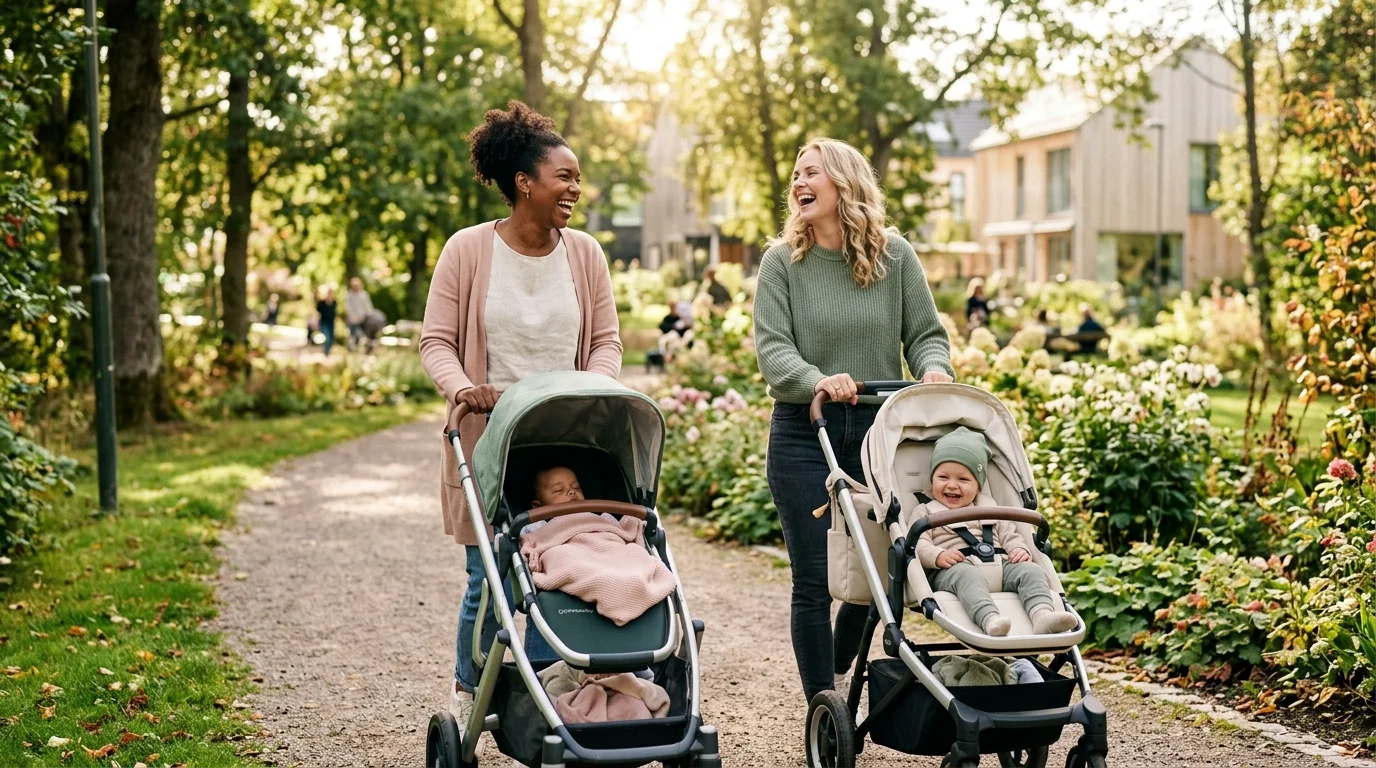
Some friends without kids feel unsure about whether they fit into your new life. Invite them along for a stroller walk. Let them hold the baby. Show them they still have a place, it just looks a little different.
Accept That Some Friendships Change
Not all friendships survive major life changes. It's painful, but it's part of life. Some friends come back later. Others don't. Both are okay.
New Friends as a Parent
Parent Meetups and Open Gathering Spaces
Most communities have family centers, drop-in playgroups, or parent cafes. These are free, informal, and a great place to meet other parents.
Your pediatrician's office can give you an overview of what's available in your area.
Activities With the Kids
Baby music classes, baby swimming, stroller fitness, activities with kids give you a natural reason to meet other parents regularly. It's easier to build friendships when you're doing something together.
Digital Communities
Groups on Facebook, forums, and apps can fill some of the need for connection, especially at night when everyone else is asleep. But digital communities don't replace physical contact. Use them as a supplement, not a replacement.
If you feel persistently lonely and isolated over time, talk to your doctor or pediatrician. Sustained loneliness can affect mental health and should be taken seriously.
For the Friend Without Kids
If you're reading this as a friend of a new parent: Your friend misses you. They're just exhausted. Some things that help:
- Send a message without expecting a quick reply
- Offer concrete help: "Can I bring dinner over on Tuesday?"
- Accept cancellations without assigning blame
- Show interest in the baby, it's what the parent thinks about 90% of the time
- Be patient. This phase will pass.
Frequently Asked Questions
Is it normal to lose friends after having kids?
Yes. Research shows that friend circles often shift during major life transitions, and becoming a parent is one of the biggest. Some friendships grow stronger, others weaken. Over time, things stabilize.
How do I find other parents to become friends with?
Parent groups, meetups at family centers, baby music classes, baby swimming, and local parent groups on social media are great starting points. It takes a bit of initiative at first, but many parents find they make lifelong friends through these channels.
What if my partner is my only social contact?
It's common in the early days, but not sustainable long-term. Your partner can't fill all your social needs. Try to build at least one independent social connection, a parent group, a neighbor with kids, a colleague who also became a parent.
Should I force myself to go out even when I don't feel like it?
Don't force it, but give yourself a little push. Often the hardest part is getting out the door. Once you're actually sitting in the parent group or at the parent cafe, it usually feels better than expected.
Your friendships are in a transition period, not a crisis. Some relationships will grow, some will rest, and new ones will appear in the most unexpected places. Give it time.
Related reading:
Sources
- CDC - Mental Health and Social Connectedness
- AAP - Social Support and Parenting
- WHO - Family and Parental Well-being
🔧 Helpful Tools
- Baby Milestones Tracker. Track your baby's developmental milestones
- All Baby Tools. Browse all free tools for pregnancy and baby care
📖 Related Articles
- Building a New Friend Network: How to Find Other Parents. Missing friendships after your baby arrived? Here are practical tips for finding other parents, building a support network, and combating loneliness as a new parent.
- Building a New Friend Network: How to Find Other Parents. Missing friendships after your baby arrived? Here are practical tips for finding other parents, building a support network, and combating loneliness as a new parent.
- New Parent Groups: How to Find Yours and Get the Most Out of It. How to find a new parent group and get the most out of the community. Tips for new parents who need a support network.