You used to do everything with your friends. Now you can barely respond to a text. The ones without kids don't understand why you're canceling again. The ones with kids understand, but they're just as swamped.
Friendship after having a baby is different. Not necessarily worse, but definitely different.
Why Friendships Change
The first months with a baby are a social earthquake. Suddenly your entire life revolves around feeding, sleep, and diapers. Your conversation topics shift. Your availability changes completely.
It's about time and energy
You don't want friends less. You have less capacity. Spontaneous evening visits are replaced by 3 AM feeding sessions. Weekend brunch plans clash with nap schedules.
This isn't something you chose, it's just the reality of a life stage where a tiny person is completely dependent on you.
Some friendships can handle it, others can't
The friends who understand that you're unavailable for a while without taking it personally, they're gold. The ones who need things to be exactly as they were before can become a weight you don't have the bandwidth for.
That's painful, but it's normal. And it doesn't mean those friendships are over forever. Many go through a quieter period and come back stronger once the kids get a little older.
Research consistently shows that social isolation and loneliness negatively affect mental health. Maintaining social connections is an important part of parenting well, you can't pour from an empty cup.
New Parent Groups: Your New Tribe
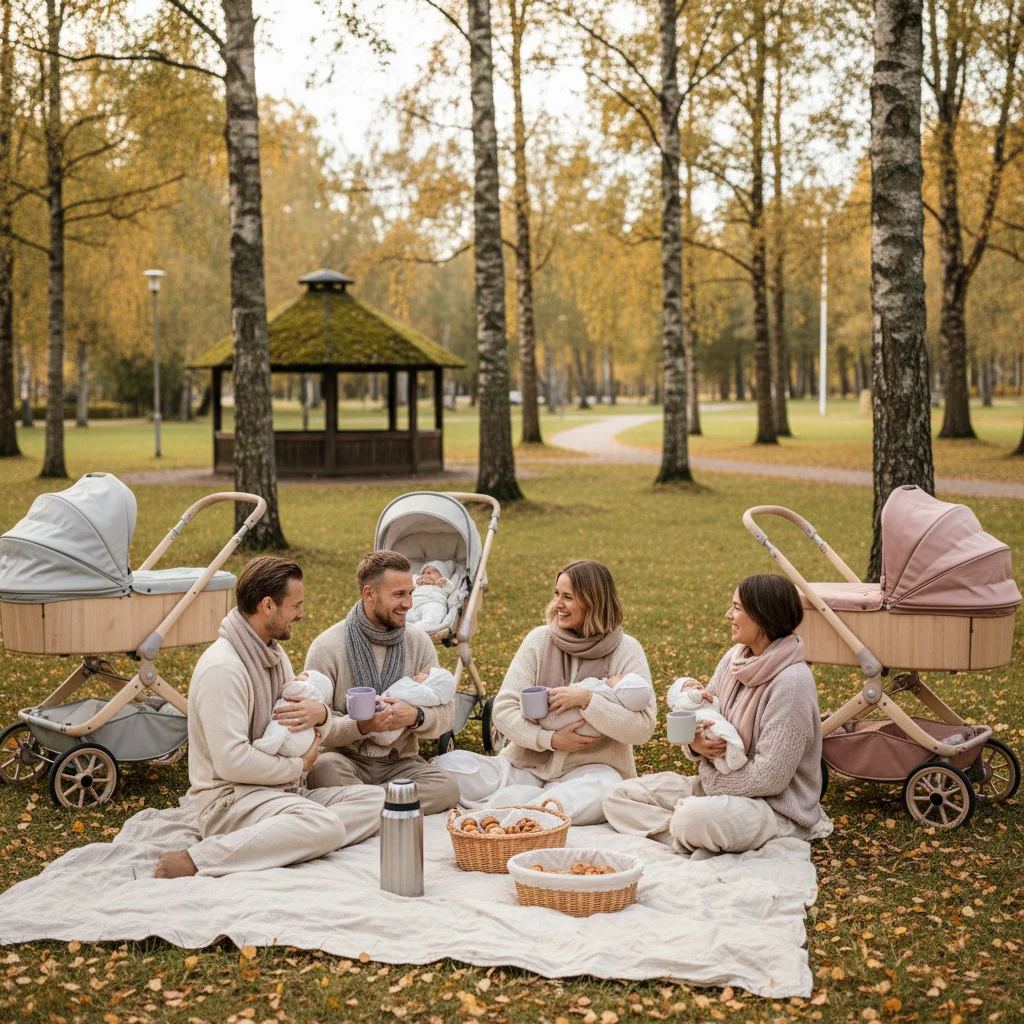
Many hospitals, community centers, and pediatricians' offices offer postnatal groups for new parents. You're placed with others who had babies around the same time, often in the same neighborhood.
Why they work
- You're in the same situation. No one needs to explain why they're exhausted.
- The babies are the same age. You share the same challenges, starting solids, sleep regressions, first teeth.
- The bar is low. No one expects you to be sharp and funny. Showing up is enough.
- It builds local community. These parents live nearby. That makes spontaneous meetups much easier.
Getting the most out of parent groups
Give it time. The first few sessions can feel a bit awkward, you're strangers who only have in common that you've recently had a baby. But after a few meetups, many groups develop into genuine friendships.
Be honest. If you're struggling, say so. The odds are good that others in the group feel exactly the same way. Honesty builds trust faster than small talk about baby sleep.
Exchange numbers and start a group chat. The digital group often outlasts the formal meetings and becomes the place where you post "is this normal?" questions at 2 AM.
If your pediatrician or healthcare provider doesn't offer a postnatal group, ask if they can connect you with other new parents in the area. Many community centers also host open parent meetups.
Holding On to Old Friends
Lower expectations, on both sides
You don't need to see each other as often as before. A text here and there, a phone call while the baby naps in the stroller, a quick coffee. Quality over quantity.
Say it plainly: "I'm really tired, but I miss you. Can we find even a short window?" Most friends appreciate honesty over radio silence.
Include them in your new life
Some friends without children are unsure whether they still fit into your new reality. Invite them to join you on a stroller walk. Let them hold the baby. Show them that they still have a place, it just looks a little different now.
Accept that some friendships will change
Not all friendships survive major life transitions. That's painful, but it's part of life. Some friends come back later. Others don't. Both outcomes are okay.
Making New Friends as a Parent
Open play groups and community spaces
Most communities have family centers, library programs, or parent cafes. These are usually free, informal, and a good place to meet other parents without any pressure.
Your pediatrician's office can often point you to what's available locally.
Activities with the babies
Baby music classes, baby swim, stroller fitness, activities with your children give you a natural reason to see the same people regularly. It's easier to build friendships when you're doing something together.
Online communities
Facebook groups for local parents, online forums, and parenting apps can fill some of the gap for connection, especially late at night when everyone else is asleep. But they're a supplement, not a replacement. Use them to find people, then meet in person.
If you feel persistently lonely and isolated over time, talk to your doctor or midwife. Ongoing loneliness can significantly affect your mental health and is worth taking seriously. Postpartum depression often has a social isolation component.
For the Friend Without Kids
If you're reading this as the friend of a new parent: they miss you. They're just exhausted. Some things that help:
- Send a message without expecting a quick reply
- Offer concrete help: "Can I bring dinner on Tuesday?"
- Accept cancellations without guilt-tripping
- Show interest in the baby, that's 90% of what's on their mind
- Be patient. This phase passes.
Frequently Asked Questions
Is it normal to lose friends after having a baby?
Yes. Research shows that social circles commonly shift during major life transitions, and becoming a parent is one of the biggest. Some friendships grow stronger, others fade. Over time, things settle into a new equilibrium.
How do I find other parents to befriend?
Postnatal groups, community family centers, baby classes, baby swim, and local parent groups on social media are all good starting points. It takes a little initiative at first, but many parents find lifelong friends through these spaces.
What if my partner is my only social contact?
That's common in the early days, but it's not sustainable long-term. Your partner can't fill all your social needs, nor should they have to. Try to build at least one independent social connection: a parent group, a neighbor with a baby, a colleague who also became a parent recently.
Should I push myself to go out even when I don't feel like it?
Don't force it, but do give yourself a gentle nudge. Often the hardest part is getting out the door. Once you're there, at the parent group, the coffee meetup, the playground, it usually feels better than you expected.
Your friendships are in a transition, not a crisis. Some relationships will grow, some will rest for a while, and new ones will appear in the most unexpected places. Give it time.
Read also:
Sources
- Postpartum Support International. Isolation and Loneliness
- American Psychological Association. Social Connection and Health
- CDC. Mental Health and Social Support
🔧 Helpful Tools
- Baby Milestones Tracker. Track your baby's developmental milestones
- All Baby Tools. Browse all free tools for pregnancy and baby care
📖 Related Articles
- Building a New Social Network After Having a Baby. Feeling lonely after your baby arrived? Here are concrete tips for finding other parents, building community, and overcoming isolation during the postpartum period.