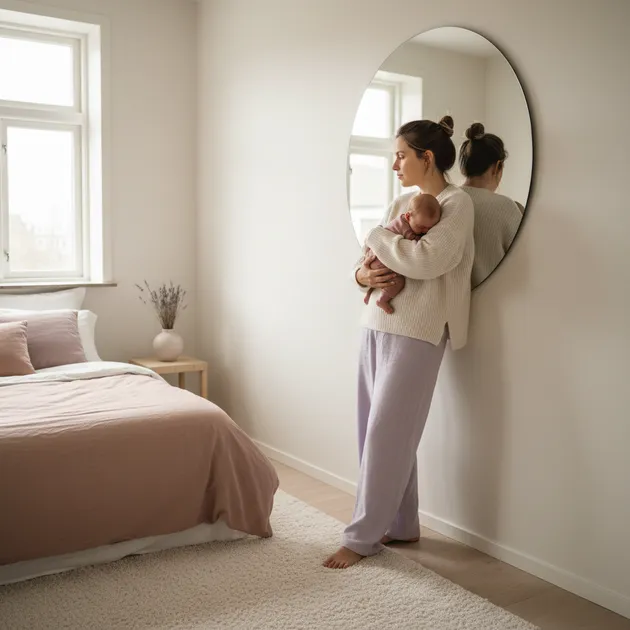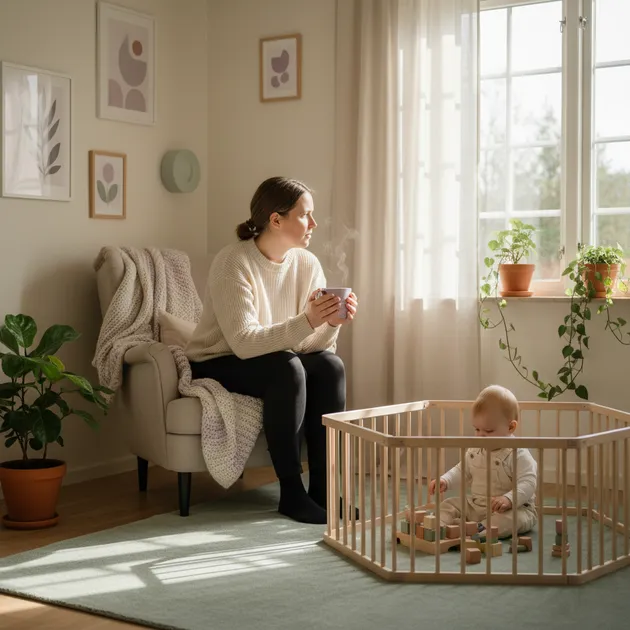
You became a dad. Everyone congratulates you. Everyone asks how mom is doing. And you? You smile and say you're fine.
But maybe you're not. Maybe you feel distant, irritable, empty, or overwhelmed. And maybe you have no idea that what you're experiencing has a name, and that it's more common than you think.
Postpartum Depression in Men Is Real
Yes, men can get postpartum depression. Research shows that around 8–10 percent of new fathers experience depression in the first year after their child's birth. Some studies put the number even higher.
It is not a sign of weakness. It is a reaction to an enormous life upheaval, combined with sleep deprivation, new roles, and changed relationships.
Why Is It So Rarely Talked About?
- The focus after birth is naturally on mother and baby
- Men are socialized to "endure" and "push through"
- Healthcare rarely screens men for mental health issues after birth
- Many men don't recognize their own symptoms as depression
The CDC confirms that fathers have an elevated risk of mental health issues in the first year after birth. Yet there is no systematic screening of fathers in most healthcare systems. You have to ask for help yourself, and that takes courage.
Do You Recognize Yourself?
Depression in men often looks different than in women. It doesn't necessarily involve crying and sadness.
Common Signs
- Irritability and anger: Short fuse, frustration over small things, outbursts
- Withdrawal: Working more, spending time alone, avoiding the family
- Numbness: Feeling nothing, not even joy about the baby
- Physical complaints: Headaches, stomach aches, tension with no medical cause
- Sleep problems: Not just because the baby wakes up, but because you can't fall asleep
- Concentration difficulties: Forgetful, unfocused, unable to work as before
- Increased alcohol use: More drinks than usual, needing to "take the edge off" evenings
- Loss of interest: Things you used to enjoy no longer bring pleasure
It's Not "Just Stress"
Many men explain away their symptoms as stress, sleep deprivation, or adjustment. And yes, all of that plays a role. But when it lasts over time and affects your daily life, your relationship with your child, or your partnership, that's something more.
Why Does It Happen Now?
Role Uncertainty
Mom often has a clearer role from the start, especially if she's breastfeeding. Dad can feel redundant, unsure of what to contribute, or shut out of the mother-baby bubble.
Sleep Deprivation
Sleep deprivation affects the brain's ability to regulate emotions. Prolonged sleep deprivation increases the risk of depression and anxiety in both parents.
Read more: Sleep deprivation as a new parent
Relationship Change
The relationship with your partner changes dramatically. Less time together, less intimacy, more conflict over practical matters. For many men, their partner is their primary emotional support, and when that relationship shifts, it can hit hard.
Identity Change
Who are you now? The friend who was always up for anything? The career-driven person? The outdoors type? All those identities must be renegotiated alongside the new role of father.
Read also: Identity after having children
Financial Pressure
Many men feel an increased sense of financial responsibility after becoming a father, regardless of whether it's rational. Money worries can become a constant background noise.
What You Can Do
1. Acknowledge That Something Is Wrong
The hardest step. You don't need to diagnose yourself. You just need to admit: "I'm not doing well." To yourself. That is the starting point.
2. Talk to Someone
A friend. Your partner. Your own father. A colleague you trust. You don't need to use words like "depression" if that feels too big. "I'm struggling a bit" is more than enough.
3. Use Your Body
Physical activity is well-documented as effective against mild to moderate depression. Running, strength training, a brisk walk. Not because it fixes everything, but because it gives the body an outlet for what the mind can't process.
4. Take Part in Caregiving
Research shows that fathers who are actively involved in childcare from the start have a lower risk of depression. Not because caregiving is therapy, but because it builds attachment and a sense of mastery.
Change diapers. Take night shifts. Carry the baby. Give baths. The more you do, the more confident you become in your role.
Read: Dad and baby, building attachment
5. Take Parental Leave
Parental leave exists for a reason. Use it. Being home alone with the baby builds confidence, competence, and a relationship that lasts a lifetime.
If you have parental leave remaining, take it consecutively. It gives you the chance to find your own rhythm with the baby, without leaning on your partner. Many fathers describe their leave as a turning point in their relationship with their child.
When You Need Professional Help
Self-help has limits. Seek help if:
- Symptoms last more than two weeks
- You have thoughts that your family would be better off without you
- You are using alcohol or other substances to manage your feelings
- You are completely isolating yourself
- You have anger you cannot control
- You have thoughts of harming yourself
Where to Get Help
- Your doctor: Low threshold, can refer you onward. Say directly: "I think I'm struggling with depression after becoming a father"
- Your child's pediatrician: Even though the focus is often on mom, they should welcome fathers too. Ask for an appointment
- Postpartum Support International Helpline: 1-800-944-4773 (call or text, available 24/7)
- Crisis Text Line: Text HOME to 741741
- A therapist specializing in perinatal mental health: Cognitive therapy is effective. Ask your doctor for a referral
The EPDS (Edinburgh Postnatal Depression Scale) can also be used for fathers. If you haven't been asked to complete it, ask for it at your next appointment.
For Partners: How You Can Help
If you suspect your partner is struggling:
- Ask directly: "How are you really doing?" Men are less likely to open up spontaneously
- Don't diagnose: Avoid "you have depression." Try: "I can see you're not doing well. Can we talk about it?"
- Give space: Some men need time alone to process
- Encourage help: "Maybe you should talk to your doctor?" is a good start
- Take care of yourself: You can't carry both of you. Your own health matters just as much
Frequently Asked Questions
Can postpartum depression in fathers affect the baby?
Yes. Research shows that children of depressed fathers can have an increased risk of behavioral problems and delayed language development. Not because dad is a bad parent, but because depression makes it harder to be present and responsive. Getting treatment helps both you and your child.
Will it get better on its own?
Sometimes, especially if it's mainly about adjustment and sleep deprivation. But persistent depression should be treated. The earlier you seek help, the faster you'll recover.
I'm not breastfeeding, my hormones aren't changing, so why am I struggling?
Men also go through hormonal changes after becoming a father. Testosterone levels drop, and oxytocin and prolactin increase. These changes, combined with sleep deprivation, stress, and role change, can trigger depression.
You are not weak because you're struggling. You are a human being standing in the middle of one of life's greatest upheavals. Asking for help is the strongest thing you can do, for yourself, for your child, and for your family.
Track your baby's day and development with Babysential My Baby. When you're involved in caregiving, you build attachment, and that's good for both of you.
Sources
- CDC. Mental Health
- Postpartum Support International
- WHO. Perinatal Mental Health
- AAP. Paternal Postpartum Depression
🔧 Helpful Tools
- All Baby Tools. Browse all free tools for pregnancy and baby care
📖 Related Articles
- Exercise and Mental Health for New Parents. Exercise can prevent and ease postpartum depression, anxiety, and exhaustion. Here's how to get started, with realistic goals and routines that fit life with a baby.
- Sweden Pilots Mental Health Screening for All Pregnant Women. Region Västmanland in Sweden now screens all pregnant women for mental health issues early in pregnancy. The goal is to identify depression and anxiety before birth.
- Baby Blues vs. Postpartum Depression: When to Seek Help. Learn the difference between the baby blues and postpartum depression. Understand the symptoms, risk factors, and how to find support as a new parent.