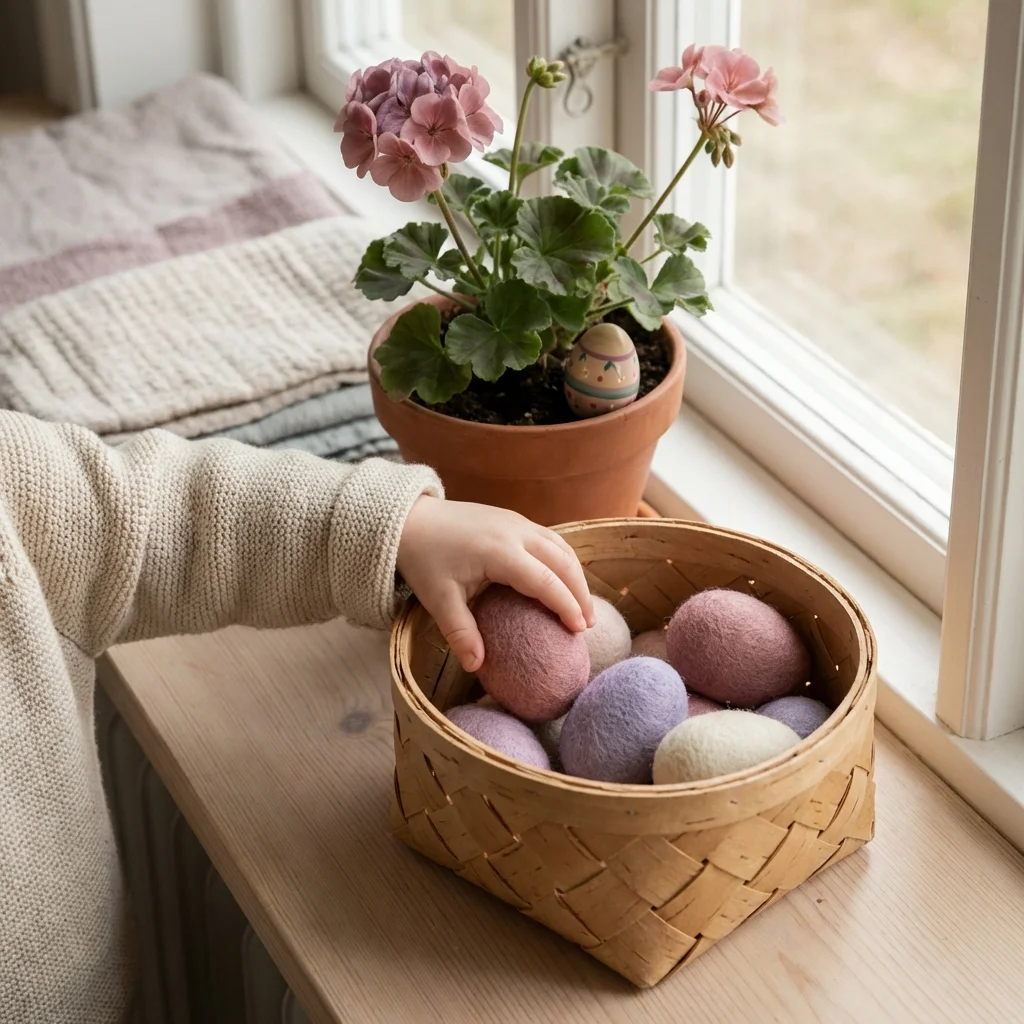
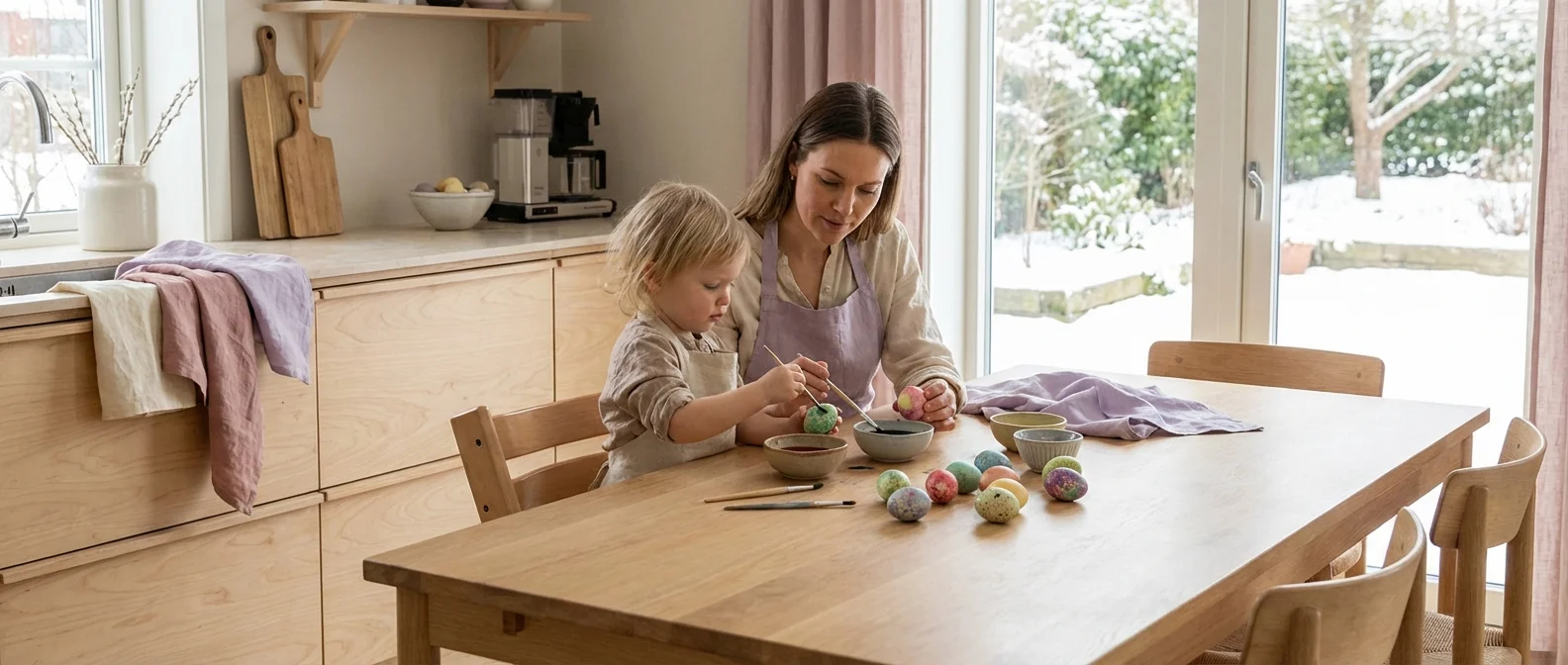
Eyes light up, little legs trot across the grass, "Found one!" An Easter egg hunt is pure magic for young children. The suspense, the discoveries, and the sheer delight at every single egg found make the Easter hunt one of the year's true highlights for families with small children.
And the best part? You do not need a big garden or an elaborate setup. An egg hunt can happen in a small living room, on a balcony, in a yard, or at a holiday cabin. All you need are some colorful eggs, a little creativity, and a child ready for adventure.
When Do Children Understand an Egg Hunt?
Not all children are ready for a full hunt from day one. Here is an honest age guide, so you can tailor the activity and avoid frustrated tears:
- 8–12 months: The child understands nothing of the hunt, but loves picking things up. Place colorful eggs visibly on the floor. This is sensory play, not a hunt, and that is more than enough.
- 12–18 months: Now the child understands "find!" and points enthusiastically. Keep it simple with 3–5 eggs in visible spots. Help throughout and celebrate every single find.
- 18–24 months: The child is starting to understand "searching." 5–8 eggs, some half-hidden behind a cushion or under a table. Expect great excitement and lots of pointing.
- 2–3 years: Full understanding of the concept. 8–12 eggs, well hidden. Can follow simple clues. Ready for a real egg hunt with all it entails.
Lower expectations lead to greater joy. A 1-year-old discovering one single glittery egg on the floor is just as happy as a 3-year-old finding twelve. Adjust the number and difficulty, and let the child set the pace.
Indoor Egg Hunt
Perfect for rainy Easter days, apartments, or young children who need a contained search area. An indoor hunt is underrated, and often the safest option for the very youngest.
The Best Rooms
- Living room: Under cushions, behind curtains, on the bookshelf, on top of a shoe by the TV stand
- Kitchen: In pots (with the lid half on), in the fruit bowl, in the child's rain boot by the door
- Bedroom: In the toy box, under the bed, behind the curtain, inside a toy car
Tips for an Indoor Hunt
- Close doors to rooms NOT included in the hunt, it limits the search area
- Remove items that could break or tip over
- Use plastic eggs indoors (less mess)
- Count the eggs BEFORE you hide them, and write down where you hid them. Otherwise you will be searching yourself for weeks.
- Give the child a small basket, bag, or bowl, it makes the hunt feel official
Outdoor Egg Hunt in the Garden
The classic version. Sunshine, fresh air, and colorful eggs tucked into bushes and flower beds. It does not need to be a large garden, even a small patch of grass works.
The Best Hiding Spots
- In bushes and shrubs (at child height!)
- Under flower pots and garden decorations
- In the sandbox, half-buried in the sand
- On the trampoline or in the swing
- Behind a tree or between roots
- In rain boots by the back door
- In the mailbox (a surprise that always works)
- On garden furniture, under a napkin or a cup
Difficulty Level by Age
- 1 year: Place eggs VISIBLY, the child should discover them, not search. Colorful eggs against green grass provide perfect contrast.
- 2 years: Half-hidden, the egg peeks out slightly from behind a bush or under a slightly shifted flower pot
- 3 years: Properly hidden. Here you can use clues, a map, and hints to turn the hunt into a small adventure.
Egg Hunt at the Cabin or Outdoors in Nature
Many families spend Easter outdoors. An egg hunt in the snow or in nature has its own special charm.
In Snow
- Use bold, contrasting colors that show against white snow, red, yellow, and green work best
- Mark hiding spots with sticks or colored tape nearby so you can find them again
- Avoid chocolate eggs in the cold, they become rock-hard and difficult for children to eat
- Clearly define the search area (between the cabin and the flagpole, for example)
- Hide the eggs just before the hunt, snow can cover tracks quickly
Without Snow
- The woodpile, under the porch steps, behind the shed, or in the boat
- Along a trail, stay within a 10-meter radius for small children
- Use nature: under stones, at a special tree trunk, in the moss, between roots
Remember sun protection when outdoors at Easter! The sun can be surprisingly strong, especially at higher altitudes with snow reflection. Read our guide on Easter with baby for important advice on sun, food, and sleep when away from home.
Hunting with Multiple Children at Once
When siblings, cousins, or friends hunt together, it can quickly become a competition over eggs. Here are four strategies for a fair hunt without tears:
- Color coding: Each child has their own color. Emma collects pink eggs, Oliver takes blue ones. No one is competing for the same eggs.
- Zones: Split the garden or living room in two. Each child has their own search area.
- Teamwork: Younger children find the visible eggs, older ones search for the tricky ones. Everyone contributes to a shared basket.
- Maximum count: Set a rule, for example, 5 eggs per child. Once you have found your five, you cheer on the others.
Color coding is the simplest solution and works from around age 2, when the child understands "your color is yellow."
Clues That Make the Hunt Extra Fun
For children aged 2–3, clues can lift the egg hunt from fun to unforgettable:
- Colored footprints: Cut out paper footprints in yellow and green, lay them as a trail from the starting point
- Arrow tape: Masking tape arrows on the floor or ground pointing in the right direction
- Hot and cold: Say "warmer!" when the child gets closer, "colder!" when they go the wrong way. The classic that never fails.
- Sound cues: Ring a bell or clap when the child is near an egg
- Simple map: Draw a simple sketch of the living room or garden with X marks where the eggs are (for 3+ years)
The Egg Hunt Step by Step
Here is how to do it, from planning to celebration:
- The evening before: Fill the eggs with contents, count them precisely, and note the hiding spots on a piece of paper. You will thank yourself later.
- Morning preparation: Hide the eggs while the child sleeps or eats breakfast. Be discreet, half the magic is the surprise.
- Start the hunt: Give the child a basket and say something like "The Easter Bunny came last night and hid eggs! Can you find them all?"
- During the hunt: Give hints ("warmer!" and "colder!"), point gently, take photos and videos. These memories are gold.
- After the hunt: Sit down together, open the eggs, count the "catch," and enjoy the contents. The opening itself is half the fun.
What to Put Inside the Eggs?
Here is a quick overview. For a complete list of 50+ ideas, search for egg filler ideas online.
Healthy options:
- Dried fruit (raisins, mango, apricots)
- Corn puffs or rice cakes
- Banana pieces (in the largest eggs)
A little candy:
- Small chocolate pieces
- Jelly beans or gummies
Non-food:
- Stickers with Easter motifs
- Small animal figures (chicks, lambs)
- Art supplies (crayons, colored pencils)
- Natural treasures (pretty stones, pine cones)
Think choking hazard for the youngest. Whole nuts, grape seeds, hard candies, and small toys with loose parts are dangerous for children under 3 years. Read more about choking hazards and safe food for baby.
Safety During the Egg Hunt
A few simple rules that keep the hunt safe:
- Always count eggs before and after the hunt. A forgotten egg with chocolate behind the sofa attracts insects, or gets found by the dog.
- Age-appropriate contents: No small items children can swallow for those under 3.
- Keep an eye on the youngest, especially outdoors near water, stairs, or roads.
- Avoid toxic plants as hiding spots (daffodils, for example, are poisonous if a child puts them in their mouth).
- The 2-hour rule for hard-boiled eggs: Eggs that have been sitting out at room temperature for more than 2 hours should not be eaten, according to food safety guidelines.
- Check that plastic eggs have no sharp edges that could hurt small fingers.
Egg Tapping. A Traditional Easter Game
Did you know that egg tapping is a beloved Easter tradition in many cultures around the world? This simple game has delighted families for generations and is perfect at the Easter table.
Here is how to play:
- Everyone picks their own hard-boiled egg
- Hold the egg with the tip facing up
- Tap the top of your egg against the top of your opponent's egg, whoever stays intact wins
- The winner challenges the next person at the table
- Whoever has an intact egg at the end is the Easter egg tapping champion
Even 1-year-olds can join in, with a little help holding the egg. The child does not need to understand the competition to love the sound and the excitement.
Egg tapping is played in many countries, from Greece to Germany to the Southern United States, and is a fun addition whether you are two or twenty around the table.
Frequently Asked Questions
How many eggs do I need? Plan on 3–5 eggs per child under 2 years, and 8–12 eggs for children between 2 and 3 years. Better to have too many than too few, nothing is worse than a hunt that is over in 30 seconds.
Can you use hard-boiled eggs? Yes, and it is extra fun to color them first. But remember the 2-hour rule: eggs that have been left out in the warmth for more than 2 hours should be discarded. In cool weather (below 40°F / 8°C) they keep longer.
What if the child just wants to eat the eggs right away? That is completely fine! For the youngest, that is exactly the point. Let them open and taste as they go, that is the great reward.
Can you do an egg hunt in an apartment? Absolutely! An apartment of any size is more than enough. See the indoor section above for specific hiding spots. Some of the most memorable egg hunts happen in the smallest homes.
What do we do if it rains? Move the hunt inside. An indoor egg hunt is just as fun, and you avoid muddy eggs and wet children's clothing.
Summary
An egg hunt is one of the finest Easter traditions there is. It requires little, gives a lot, and creates memories that last a lifetime. Whether you hide three eggs on the living room floor for a 1-year-old or set up an elaborate treasure hunt with clues for a 3-year-old, the child's joy is the same.
Start simple, adapt to the age, and remember: it is not about creating the most advanced setup. It is about watching your little one light up when yet another egg appears from its hiding spot.
More Easter Fun for the Family
- Think about Easter activities for your family based on the ages of your children
- Plan sun protection, food, and sleep schedules if you are spending Easter away from home
- Check our guide to age-appropriate Easter gifts for children
Sources
- Food safety guidelines, egg storage and food safety rules
- WHO/AAP, choking hazards and food safety for young children
- Cultural history resources, egg tapping traditions worldwide
Sources
- ACOG. Clinical guidance on labor and delivery
- WHO. Global maternal health recommendations
- Mayo Clinic. Labor and delivery medical guidance
🔧 Helpful Tools
- All Baby Tools. Browse all free tools for pregnancy and baby care
📖 Related Articles
- Easter With Kids: The Complete Guide for Families. Everything you need for Easter with baby and toddlers, activities, egg hunts, decorations, food, scavenger hunts, packing lists, and tips for home and away.
- Creative Play at Home: 20 Activities for Toddlers, 20 simple and fun activities you can do at home with toddlers. Creative play that supports development without expensive equipment.
- Painting Easter Eggs with Kids: Natural Dyes and Fun Techniques. How to paint Easter eggs with babies and toddlers. Natural dyes from onion skins, beetroot, and turmeric - safe techniques for all ages.