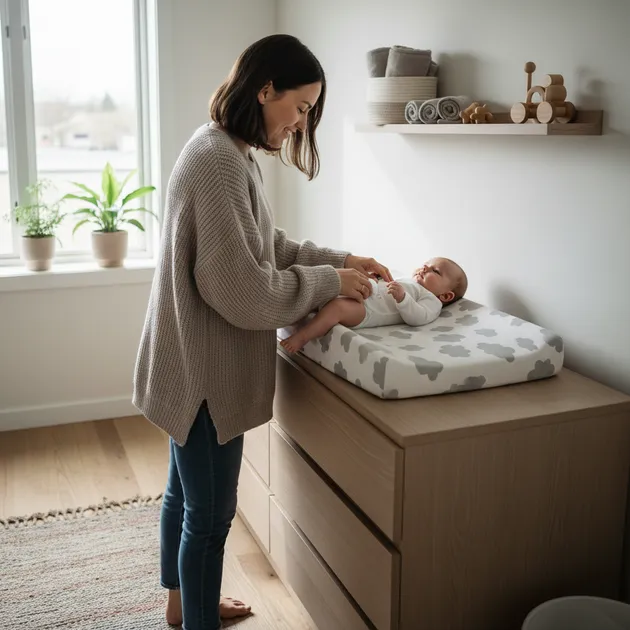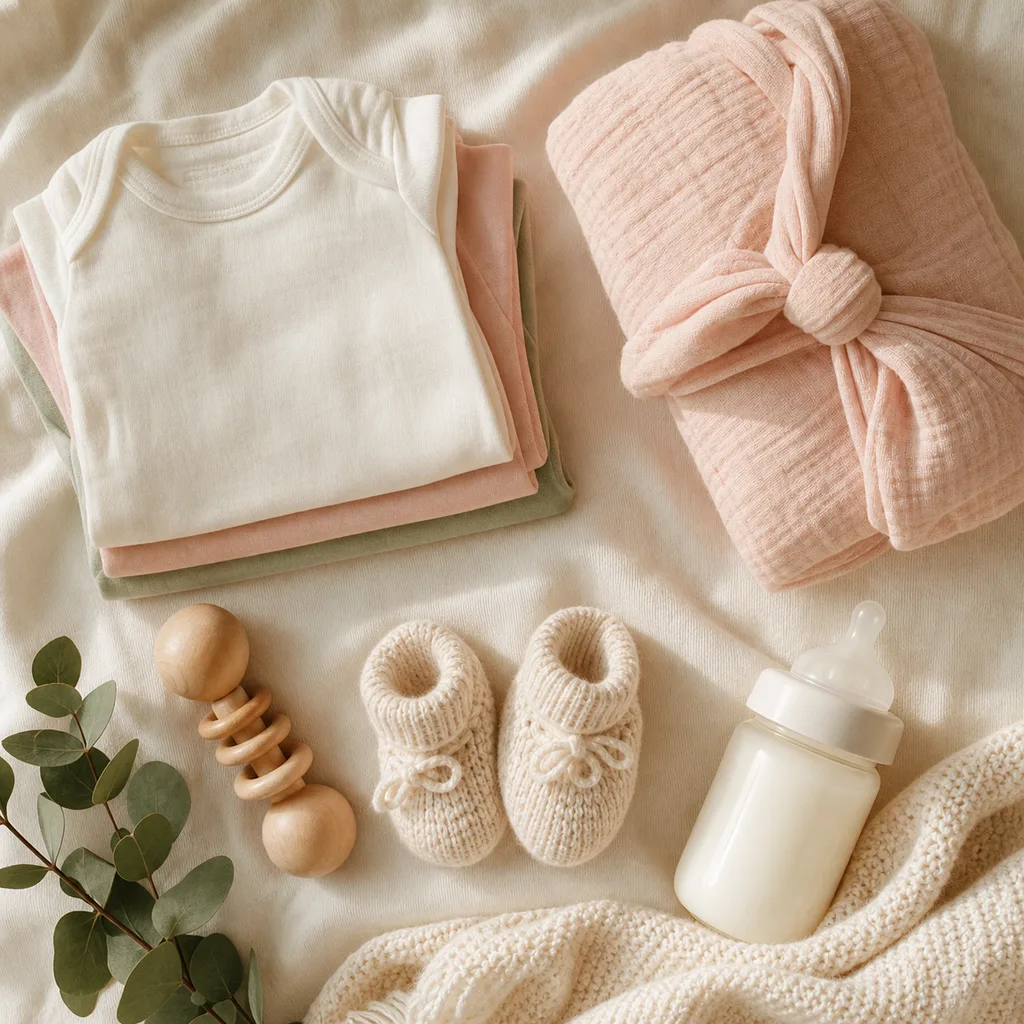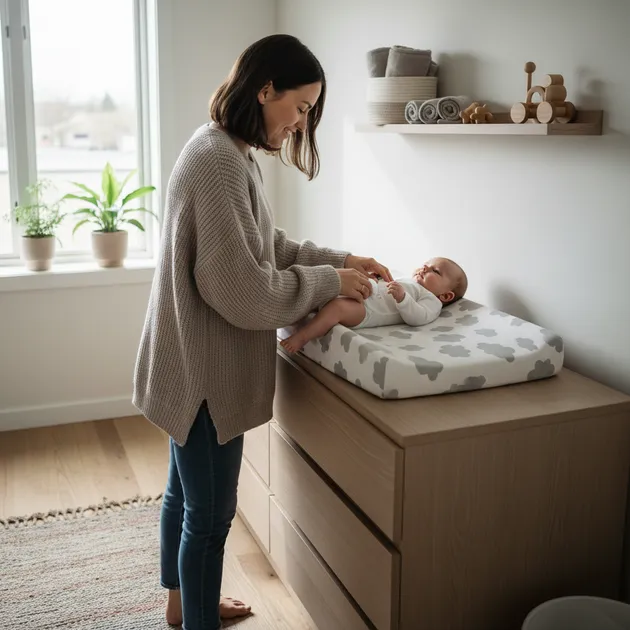
You will change diapers around 6,000 times during your baby's first two years. A good changing mat is not just a nice extra, it is one of the most-used pieces of gear you will own.
Here is everything you need to know to choose the right changing mat, whether for home use, travel, or both.
Why Do You Need a Changing Mat?
A changing mat gives your baby a soft, hygienic, and safe surface during diaper changes. Without a mat, your baby lies directly on hard surfaces, which is uncomfortable and makes it difficult to keep the changing area clean.
A good changing mat with raised sides also prevents your baby from rolling off the changing table. When your baby starts becoming more active around 3–4 months, this is a real safety benefit.
Safety first: Even with a mat with raised sides, never step away from your baby on a changing table. Always keep one hand on your baby. Read more about safe diaper changing in our changing table guide.
Types of Changing Mats
Flat Changing Mat (Basic)
The simplest type, a flat, padded surface. Works well on the floor or a bed, where falling is not a risk.
Pros:
- Affordable ($15–$30)
- Easy to bring along
- Simple to clean
Cons:
- No side support
- Baby can roll off if lying on a raised surface
Contoured Changing Mat (with Raised Sides)
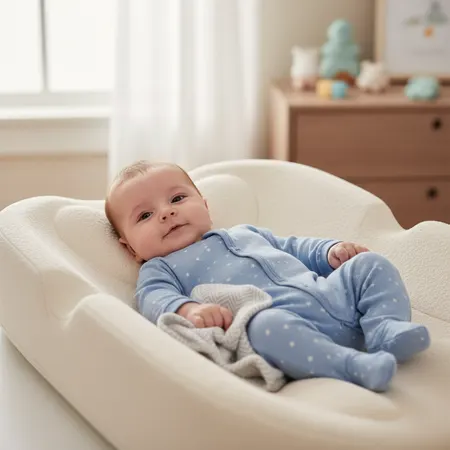
The most common type for regular home use. Raised sides give your baby a safe frame during diaper changes.
Pros:
- Prevents baby from rolling to the side
- Stable and comfortable
- Fits perfectly on a changing table or dresser
Cons:
- Takes up more space
- Heavier than a flat mat
- Not as easy to fold
Inflatable Travel Changing Mat
Designed to take on the go. Inflates in seconds and packs down to a small roll.
Pros:
- Takes minimal space in the diaper bag
- Provides a clean surface wherever you are
- Lightweight (under 200 grams / 7 oz)
Cons:
- Less padded than fixed mats
- Can puncture
Travel tip: Always keep a compact changing mat in your diaper bag. It makes diaper changes at a café, a friend's house, or the airport much easier. Pack it alongside wipes and a couple of spare diapers.
Materials. What Should You Choose?
PVC-Free Plastic (TPU or EVA)
The most common material for contoured changing mats. Water-resistant, easy to wipe down, and durable.
Look for: OEKO-TEX certification or an EU-approved PVC-free label. Avoid cheap mats with a strong plastic smell, it may indicate phthalates or other unwanted chemicals.
Silicone
A newer option that is naturally antibacterial and dishwasher-safe. More expensive, but extremely durable.
Best for: Families who prioritize hygiene and are willing to pay a little more. Silicone is also a good choice for babies with sensitive skin.
Cotton Cover
Many changing mats come with a washable cotton cover that goes over the plastic core. The cover provides a softer surface against your baby's skin.
Tip: Buy at least two covers, one in use, one in the wash. Diaper accidents happen more often than you might expect.
Size. Standard or Compact?
Most contoured changing mats follow a standard size of approximately 70 x 50 cm (28 x 20 inches). This fits most dressers and changing tables.
Compact mats (50 x 35 cm / 20 x 14 inches) are designed for travel and tight changing areas. They work fine for newborns but quickly become too small after 4–5 months.
Choose standard size if you have the space. Babies grow fast, and a mat that is too small makes diaper changes stressful for both of you.
Where Should You Change Your Baby?
On a Dresser with a Changing Mat
The most common setup in family homes. A dresser at the right working height with a changing mat on top gives you an ergonomic changing station that is kind to your back.
Important: Secure the mat to the dresser with a non-slip pad or straps. A mat that slides is a safety hazard.
On a Changing Table
A dedicated changing table often has a built-in changing mat and extra storage. Ideal if you have space in the nursery.
On the Floor
The safest option since your baby cannot fall. A flat changing mat or a towel on the floor works well, especially as your baby gets older and more active.
On a Bathroom Counter
Practical for changing after a bath. Use a waterproof changing mat and make sure the surface is stable.
Nursery planning tip: Plan your changing area early. See our nursery decorating guide for tips on placement and storage that will make everyday life easier.
Cleaning and Maintenance
The changing mat should be wiped down with a damp cloth after each diaper change. Use a mild cleaner or baby-safe disinfectant weekly.
Cotton covers should be washed at 60°C (140°F) to remove bacteria. Put the cover in the dryer to make it soft again.
Plastic mats can be rinsed off in the shower and air-dried. Avoid strong chemicals that can break down the material.
During diaper rash, it is especially important to clean the changing mat frequently to avoid repeated contact with bacteria.
Checklist. What to Look For
- Raised sides, prevents rolling, especially when changing on a raised surface
- PVC-free material, safer for your baby, better for the environment
- Washable cover, ideally cotton, machine washable at 60°C (140°F)
- Non-slip underside, the mat should stay stable on the surface
- Right size, standard 70 x 50 cm (28 x 20 inches) for home use
- OEKO-TEX or equivalent, documented free from harmful substances
Plan your baby gear: Add a changing mat and other changing supplies to your shopping list, get everything ready before the baby arrives. Also check our checklists for a complete overview of what you need.
Frequently Asked Questions
Do I need a changing mat with raised sides?
Yes, if you are changing your baby on a dresser or changing table. The raised sides provide an extra safety barrier against rolling. On the floor, a flat mat is sufficient.
Can I use a towel instead of a changing mat?
A towel works as a temporary solution, but provides neither padding, non-slip grip, nor raised sides. A changing mat is safer and more hygienic for daily use.
When should I buy a changing mat?
Buy the changing mat around weeks 30–34 of pregnancy, along with the rest of your changing gear. That gives you time to set up the changing area before the baby arrives.
How long do you use a changing mat?
Most parents use a changing mat until the child is around 2 years old and starts standing still during diaper changes. Some use it longer as part of their bathroom routine.
Are expensive changing mats better than cheap ones?
Not necessarily. What matters most is that the mat is PVC-free, has raised sides (for use on a raised surface), and is easy to clean. A good changing mat does not need to cost more than $20–$40.
Read More
- Changing Table: How to Choose the Right One
- Diaper Rash: Prevention and Treatment
- Nursery: Decorating and Tips
- Diaper Bag: Complete Guide
- Shopping List. Have Everything Ready
- Checklists for Parents
Sources
- CPSC. "Baby Product Safety." cpsc.gov
- AAP. "Diapering Safety." healthychildren.org
- Which? "Changing Mat Buying Guide." which.co.uk
Last updated: March 2026
🔧 Helpful Tools
- All Baby Tools. Browse all free tools for pregnancy and baby care
📖 Related Articles
- Changing Pads: How to Choose the Best One for Your Baby. Complete guide to changing pads. Types, materials, safety, and the best changing pads for home and travel.