Sleep training baby routines can sound harsh before you know what the phrase means. In real life, sleep training is a range of ways to help a baby fall asleep with less parent help and resettle after normal night wakings.
For some families, that means a gentle bedtime fade. For others, it means timed check-ins. Some never use a named method; they build a predictable routine and slowly reduce rocking, feeding, or bouncing.
The safest sleep training plan starts with age, health, feeding needs, and a safe sleep space. For many babies, formal sleep training is a 4 to 6 month conversation, not a newborn strategy.
Key Takeaways
- Sleep training means helping a baby practice falling asleep and returning to sleep with less help.
- Newborns are too young for formal sleep training. Focus on safe sleep, feeding, and gentle rhythm.
- Many families consider sleep training around 4 to 6 months, depending on development, growth, and pediatrician guidance.
- Methods range from very gradual to more structured: bedtime fading, pick up put down, chair method, graduated extinction, and full extinction.
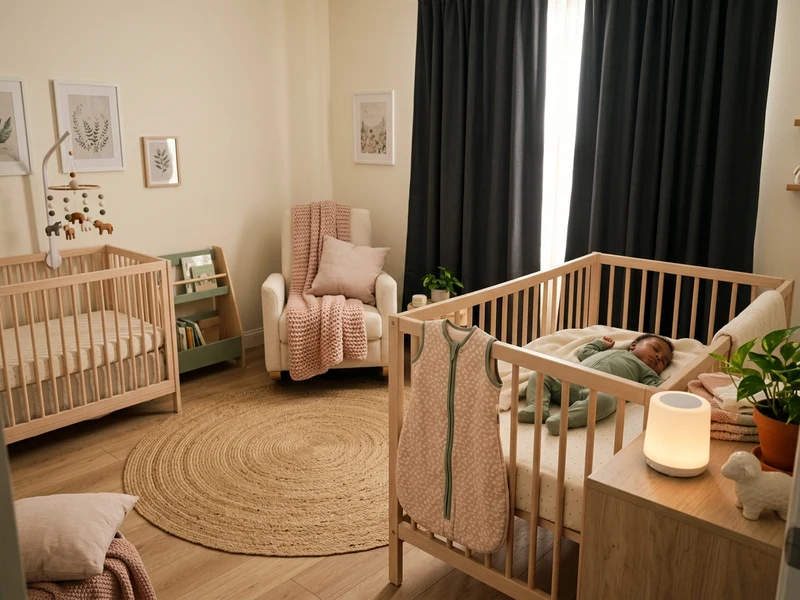
- Safe sleep rules do not change during sleep training: back, firm flat mattress, no loose blankets, pillows, bumpers, or toys.
- Pause if your baby is sick, not feeding well, teething intensely, traveling, or in a major sleep regression.
Sleep Training Baby: What It Means
Sleep training is not about making a baby sleep through every need. Babies still wake. Some still need night feeds. Some wake because they are sick, uncomfortable, overtired, or going through a developmental stretch.
The goal is narrower: help your baby practice falling asleep from a calm, awake state. If bedtime always ends with feeding to sleep, rocking until fully asleep, or replacing the pacifier ten times, your baby may look for the same help after each sleep cycle. Those habits are not wrong; sleep training only matters when the current pattern is not working for the baby, the parents, or both.
The American Academy of Pediatrics notes that baby sleep cycles become more regular around 6 months. Before that, uneven sleep is common. The NHS also reminds parents that babies change sleep patterns often, especially during growth, illness, and development.
When Can You Start Sleep Training?
Most families should think in stages, not a single magic age.
| Baby's age | What to focus on | Sleep training fit |
|---|---|---|
| 0 to 3 months | Feeding, safe sleep, day-night cues, soothing | No formal sleep training |
| 3 to 4 months | Simple bedtime routine, practice one calm crib transfer | Gentle habit-building only |
| 4 to 6 months | More regular routine, pediatrician check if feeding or growth is complex | Some gentle or structured methods may fit |
| 6 months and older | Consistent bedtime, planned response to wakes, nap rhythm | Wider range of methods may fit |
Age is only one part of readiness. Before starting, ask:
- Is my baby gaining weight and feeding well?
- Has the pediatrician raised any concern about growth, reflux, breathing, prematurity, or medical needs?
- Are we in a stable week without travel, illness, vaccines, or a new caregiver?
- Can I follow the same plan for several nights, even when it is emotionally hard?
- Is the crib or bassinet set up according to safe sleep guidance?
If the answer is no, wait. Waiting is not failure. It is often what makes the later plan simpler.
Sleep Training Methods Compared
No method is automatically best. The right method is the one you can apply consistently without ignoring your baby's health or your own limits.
| Method | Parent role | Best fit | Typical pace |
|---|---|---|---|
| Bedtime fading | Shift bedtime later temporarily, then earlier | Babies who fight bedtime but settle once sleepy | Gradual |
| Pick up put down | Comfort baby, then return them to crib awake | Younger babies or parents who want hands-on support | Variable |
| Chair method | Sit nearby, then move farther away over nights | Babies who need parent presence | 1 to 3 weeks |
| Graduated extinction | Leave and return at planned check-in intervals | Families who want structure without disappearing all night | Several nights to 2 weeks |
| Full extinction | Put baby down and do not return except for planned needs | Older babies; emotionally hard for many families | Often faster, but intense |
For a deeper comparison, see our sleep training methods guide. For the evidence layer, read Sleep Training Your Baby: What Does the Research Say?.
A 2016 randomized trial published in Pediatrics studied graduated extinction and bedtime fading in infants with sleep problems. In that sample, both approaches improved sleep outcomes, and researchers did not detect adverse stress or attachment effects. That is reassuring, but it does not mean every method suits every baby or every family.
Before You Start: Safety and Readiness Checklist
Sleep training should never loosen safe sleep rules.
The AAP and CDC recommend placing babies on their backs for sleep, using a firm, flat sleep surface, and keeping soft objects and loose bedding out of the sleep area. That means no pillows, quilts, weighted blankets, positioners, bumpers, stuffed animals, or loose blankets during baby sleep.
Before night one:
- Baby sleeps on their back.
- Mattress is firm, flat, and covered by a fitted sheet only.
- Sleep space is free of loose bedding and soft objects.
- Baby is not swaddled once showing signs of rolling.
- Room is comfortable, not overheated.
- Feeding plan is clear, especially if baby still needs night feeds.
- Both caregivers know the response plan.
If your baby wakes and still needs a feed, feed them. Sleep training is not the same as night weaning.
A Gentle 7-Night Way to Start
You do not have to begin with the hardest version. A simple first week can show whether your baby needs more structure.
Nights 1 and 2: Track the baseline
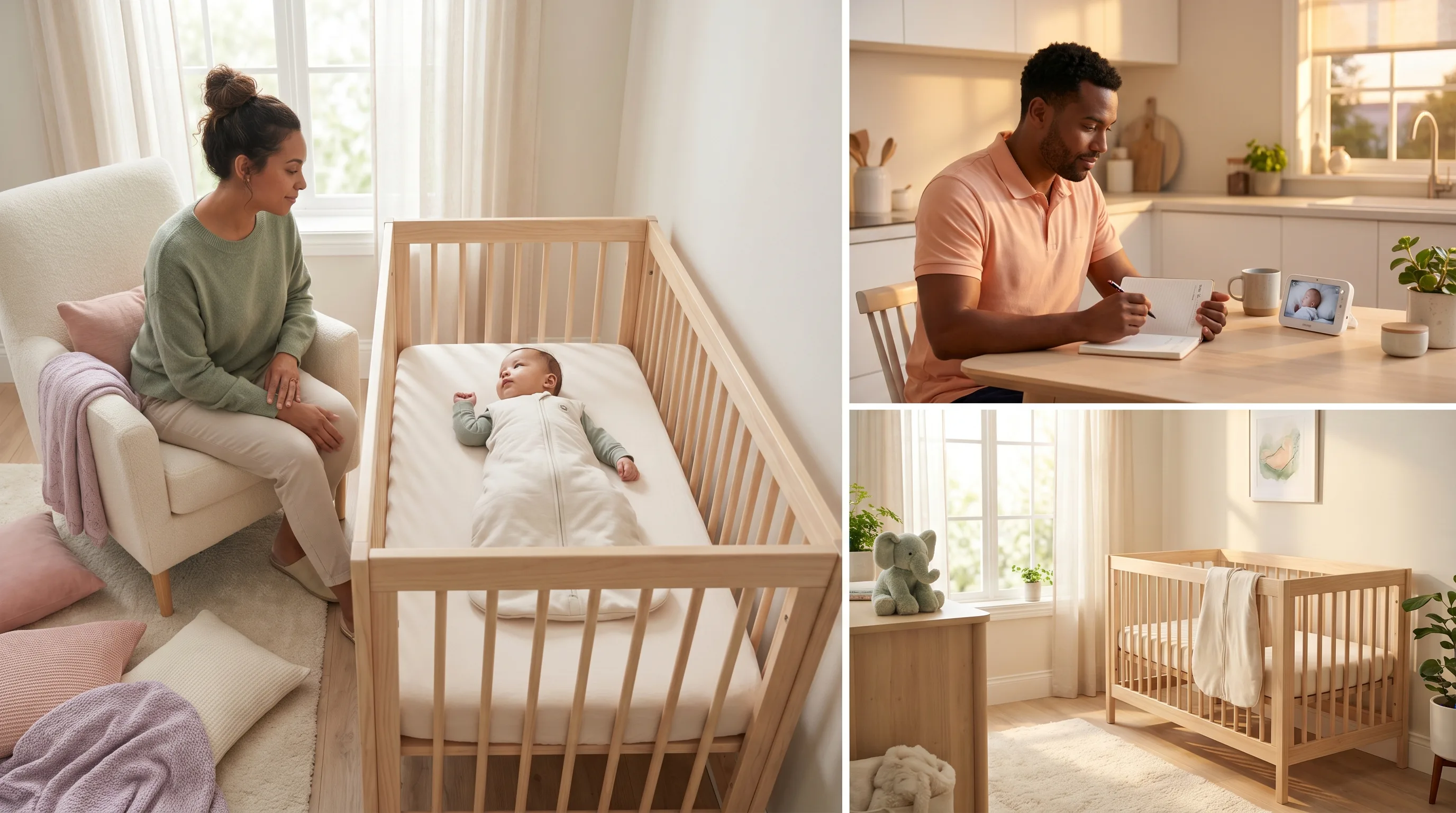
Write down bedtime, naps, feeds, night wakes, and how baby falls asleep. Use Hush, the Babysential sleep tracker, if you want the pattern in one place. Do not change everything yet.
Nights 3 and 4: Set the sleep cue
Choose a short routine: feed, diaper, sleep sack, book or song, lights down, crib. Put baby down calm and drowsy, not fully asleep, once per night. If it falls apart, soothe and try again tomorrow.
Nights 5 and 6: Reduce one helper
Pick one change. Rock for two minutes less. Move feeding earlier in the routine. Pause for 60 seconds before rushing in for every noise. Keep the rest of the night familiar.
Night 7: Decide whether to continue
If bedtime is easier, keep going gradually. If wakes are escalating or crying feels unmanageable, pause and choose a different method.
For sound cues, Soothing Sounds can help keep bedtime consistent without adding screens or stimulation.
When to Pause or Call the Pediatrician
Pause sleep training if your baby has fever, breathing changes, poor feeding, vomiting, unusual crying, dehydration signs, or fewer wet diapers. Also pause during travel, a daycare start, a move, or an active infant sleep regression.
Call your pediatrician before sleep training if your baby was premature, has reflux or weight-gain concerns, has a chronic condition, snores loudly, has pauses in breathing, or you are unsure whether night feeds are still medically needed.
Also consider your own capacity. If one caregiver is spiraling with anxiety or sleep deprivation, choose a method with more support. The goal is steadier sleep, not a test of toughness.
FAQ
What age can you sleep train a baby?
Many families wait until around 4 to 6 months, when sleep rhythms are more mature. Newborns should not do formal sleep training; focus on safe sleep, feeding, and gentle day-night cues.
What is the gentlest sleep training method?
Bedtime fading, pick up put down, and chair-style gradual withdrawal are often gentler because a parent stays involved while baby practices falling asleep with less help.
Is sleep training safe?
For a healthy, developmentally ready baby, behavioral sleep training has evidence of benefit without detected long-term harm in available studies. Safe sleep rules still apply every night.
Should I sleep train during a sleep regression?
Usually wait until the regression, illness, travel, or big family change settles. Keep the routine steady and restart training when nights are less chaotic.
Related Babysential Guides
- Sleep Training Methods: Complete Comparison Guide
- Sleep Training Your Baby: What Does the Research Say?
- Baby Sleep Schedule by Age
- Infant Sleep Regression: Signs, Ages, and What Helps
Helpful Tools
- Track bedtime, naps, feeds, and night wakes with Hush, our baby sleep tracker.
- Build a consistent bedtime sound cue with Soothing Sounds.
Sources
- American Academy of Pediatrics, Sleep
- American Academy of Pediatrics, Safe Sleep
- Centers for Disease Control and Prevention, Providing Care for Babies to Sleep Safely
- World Health Organization, Making sure newborns and children under 5 years sleep safely
- NHS, Helping your baby to sleep
- Pediatrics, Behavioral Interventions for Infant Sleep Problems: A Randomized Controlled Trial