Sleep Training Methods: Complete Comparison Guide
Sleep training is the process of helping babies learn to fall asleep independently and resettle during night wakings. Multiple evidence-based methods exist, ranging from no-cry approaches to graduated extinction. All major methods shown in research to be effective; the "best" method is the one you can implement consistently.
Key Takeaways
- A landmark 2016 study (Pediatrics) found no difference in stress hormones, parent-child attachment, or behavioral outcomes at age 5 between sleep-trained babies and controls.
- Most sleep training methods are appropriate from 4–6 months, the AAP advises against formal sleep training before 4 months.
- The Ferber method (graduated extinction) typically produces results in 5–7 nights; full extinction (cry it out) in 3–5 nights.
- The "best" sleep training method is the one parents can implement consistently, all major methods are evidence-based and safe.
- Sleep training prerequisites: baby must be healthy, at least 4 months, and ideally no longer needing night feeds (confirm with your pediatrician).
Is Sleep Training Safe?
Yes, according to current evidence. A landmark 2016 study (Pediatrics) randomizing babies to sleep training vs. control found:
- No difference in infant stress hormones (cortisol)
- No difference in parent-child attachment quality
- No difference in child emotional/behavioral outcomes at 5 years
- Sleep-trained group: significantly improved sleep, improved maternal wellbeing
The AAP (2022 Safe Sleep Guidelines) recognizes behavioral sleep intervention as safe and effective.
Methods Compared at a Glance
| Method | Crying Level | Parent Presence | Age | Typical Timeline |
|---|---|---|---|---|
| Extinction (CIO) | High initially | No | 4–6+ months | 3–5 nights |
| Ferber (graduated) | Moderate | Brief check-ins | 4–6+ months | 5–7 nights |
| Chair method | Low-moderate | Progressive withdrawal | 4–6+ months | 2–3 weeks |
| Pick Up/Put Down | Low-moderate | Hands-on | 4+ months | Variable |
| Fading | Low | Gradually less | Any | 2–4 weeks |
| No-cry | Minimal | High | Any age | Weeks/months |
Method Deep Dives
1. Extinction ("Cry It Out")
What: Put baby down awake, don't return until morning (or set feeding time).
Evidence: Among the fastest and most studied. Weissbluth's "Healthy Sleep Habits, Happy Child."
Pros: Quickest results (3–5 nights), few nights of crying
Cons: Hardest emotionally for parents; baby does cry significantly first 2–3 nights
Age: 5–6+ months
2. Ferber Method (Graduated Extinction)
What: Put baby down awake. Return at increasing intervals to offer brief verbal reassurance (30 seconds, no picking up).
Check-in schedule:
| Night | Checks at... |
|---|---|
| 1 | 3 min, 5 min, then 10 min |
| 2 | 5 min, 10 min, then 12 min |
| 3 | 10 min, 12 min, then 15 min |
| 4+ | Continue extending |
Pros: Some parental contact; faster than gentler methods
Cons: Brief check-ins can sometimes extend crying
Age: 4–6+ months
3. Chair Method (Sleep Lady Shuffle)
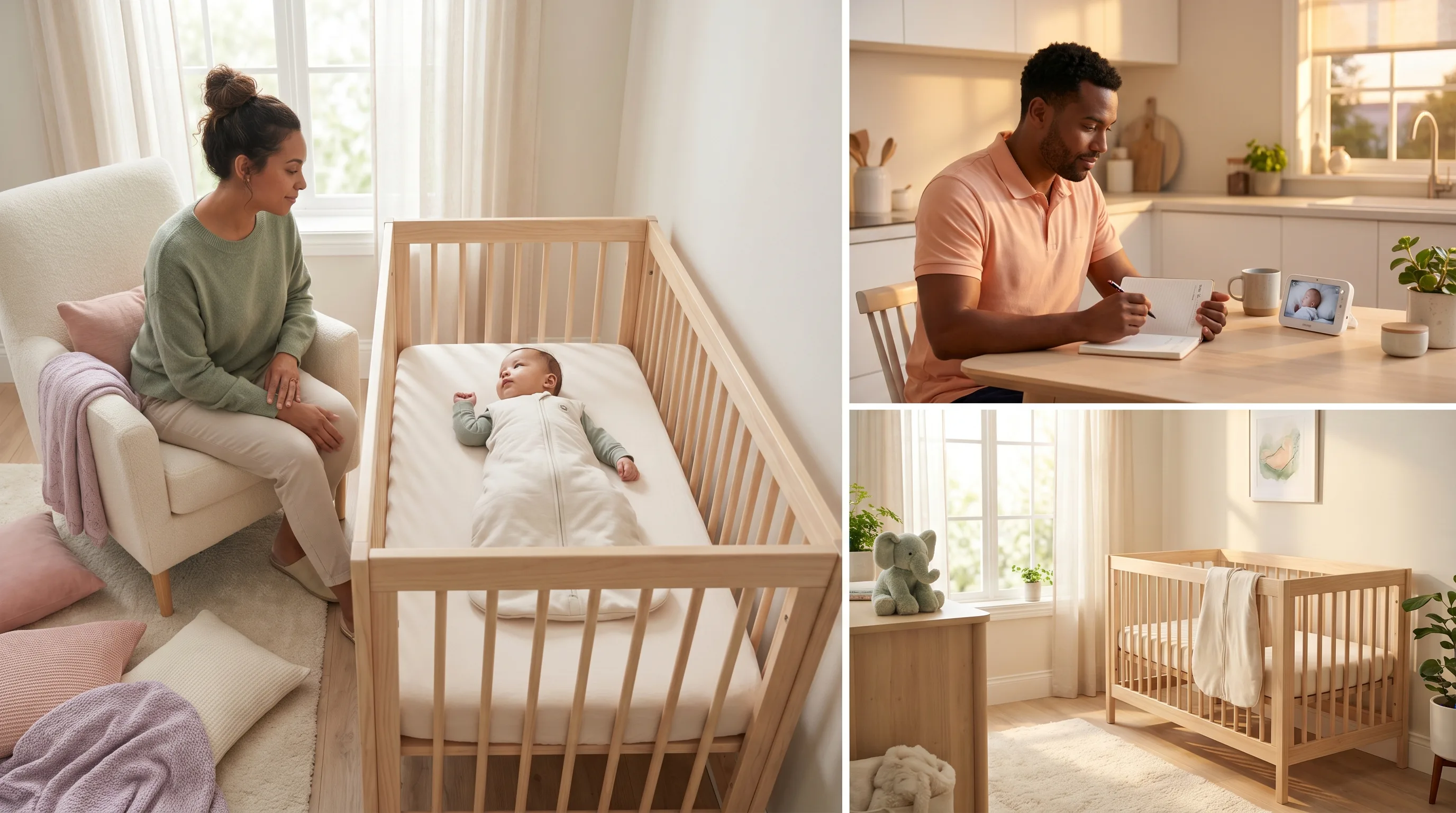
What: Parent sits next to crib, offering verbal reassurance without picking up. Every 2–3 nights, parent's chair moves further from the crib until out of the room.
Pros: Gradual; parent present; less crying
Cons: Slower (2–3 weeks); parent presence can be stimulating
Age: 4+ months
4. Pick Up/Put Down
What: Put baby down awake. If crying, pick up briefly until calm, put down again. Repeat until baby sleeps.
Pros: Responsive; baby not left to cry alone
Cons: Can backfire at certain ages (4–7 months) by overstimulating; very time-intensive
Age: Best under 4 months or over 8 months
5. No-Cry Methods
Based on Elizabeth Pantley's "No-Cry Sleep Solution":
- Gradual removal of sleep associations (nursing/rocking to sleep)
- Pulling away from breast/bottle just before sleep
- Building independent sleep associations slowly
Pros: Minimal crying; gentle
Cons: Takes weeks to months; requires extreme consistency
Before You Start: Prerequisites
Sleep training works best when:
- ✅ Baby is at least 4 months (6 months preferred by many pediatricians)
- ✅ Baby is healthy (not sick, no major developmental changes)
- ✅ You have 2 weeks without major disruption (travel, illness, vaccines)
- ✅ Both caregivers are aligned on approach
- ✅ Baby no longer medically needs night feeds (discuss with pediatrician)
- ✅ Wake windows are optimized for age
🔗 Calculate optimal bedtime and wake windows with our Sleep Schedule Tool before starting sleep training.
Sources: Hiscock H et al., "Behavioral Sleep Problems and Intervention". Pediatrics 2016; American Academy of Pediatrics. Behavioral Sleep Interventions; Ferber R, "Solve Your Child's Sleep Problems"; Weissbluth M, "Healthy Sleep Habits, Happy Child"
Frequently Asked Questions
Is sleep training safe for babies?
Yes. Multiple peer-reviewed studies, including a 2016 randomized controlled trial published in Pediatrics, found that behavioral sleep training, including cry-it-out, causes no harm to babies' attachment, stress hormones, emotional development, or behavior. The AAP recognizes behavioral sleep intervention as safe and effective from 4–6 months.
What is the Ferber method and how does it work?
The Ferber method (graduated extinction) involves putting baby down awake and returning at progressively longer intervals to offer brief verbal reassurance (30 seconds, no picking up). Check-in schedule starts at 3 minutes on night 1, extending each night. Most babies respond within 5–7 nights. It is appropriate from 4–6 months.
What age should you start sleep training?
Most sleep training methods are appropriate from 4–6 months, when babies have developmentally mature sleep cycles and most no longer require night feeds. Some gentler approaches (consistent bedtime routines, drowsy-but-awake practice) can begin building habits from 2–3 months. The AAP advises against formal sleep training before 4 months.
Which sleep training method is best?
There is no single "best" method, all major methods (extinction, Ferber, Chair, Pick Up/Put Down, No-Cry) are evidence-based. The best method is the one you can implement consistently. Extinction (CIO) and Ferber produce faster results; gentler methods (Chair, No-Cry) take longer but involve less crying. Choose based on your tolerance, consistency, and baby's temperament.
Sources
- AAP. Safe sleep guidelines for infants
- NICHD. Safe to Sleep campaign. SIDS prevention
- CDC. Infant safe sleep practices
🔧 Helpful Tools
- Baby Sleep Tracker. Track and optimize your baby's sleep
- Soothing Sounds. White noise and soothing sounds to help your baby sleep
- All Baby Tools. Browse all free tools for pregnancy and baby care