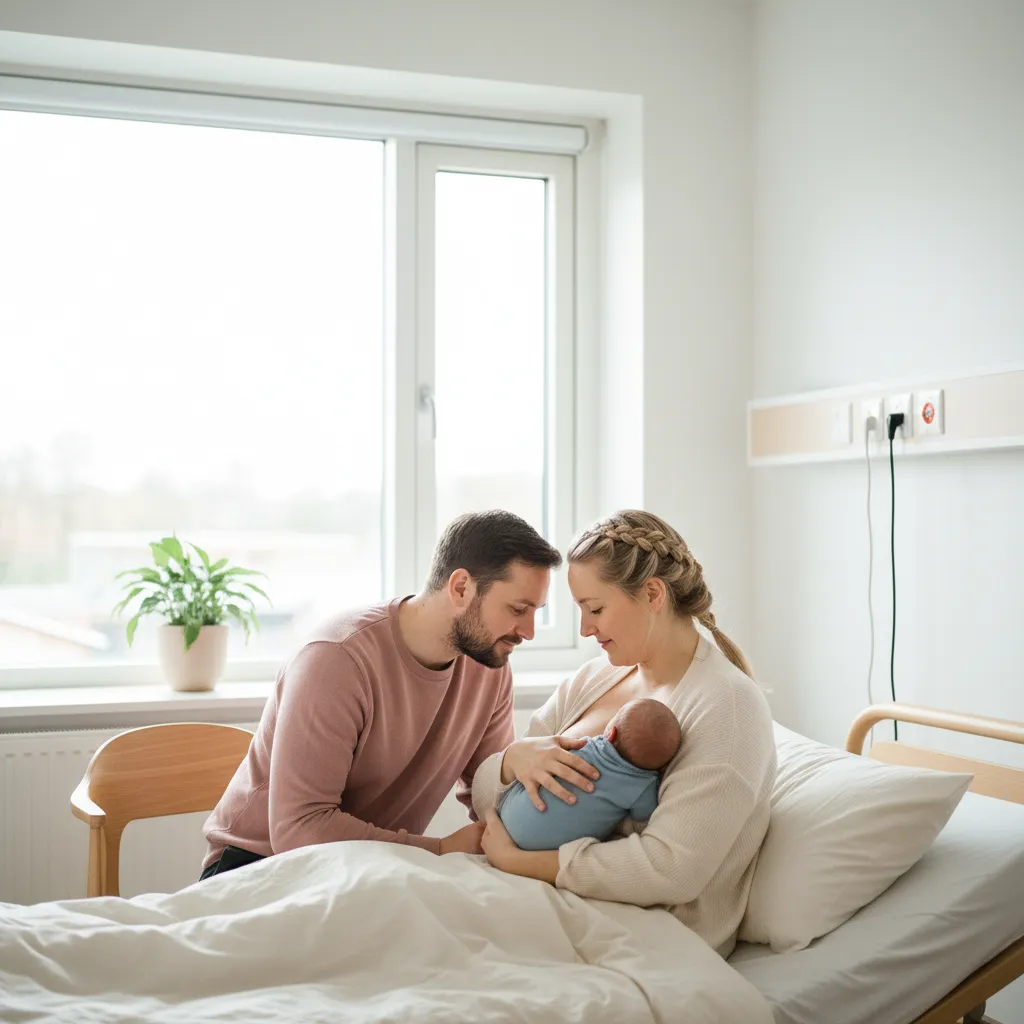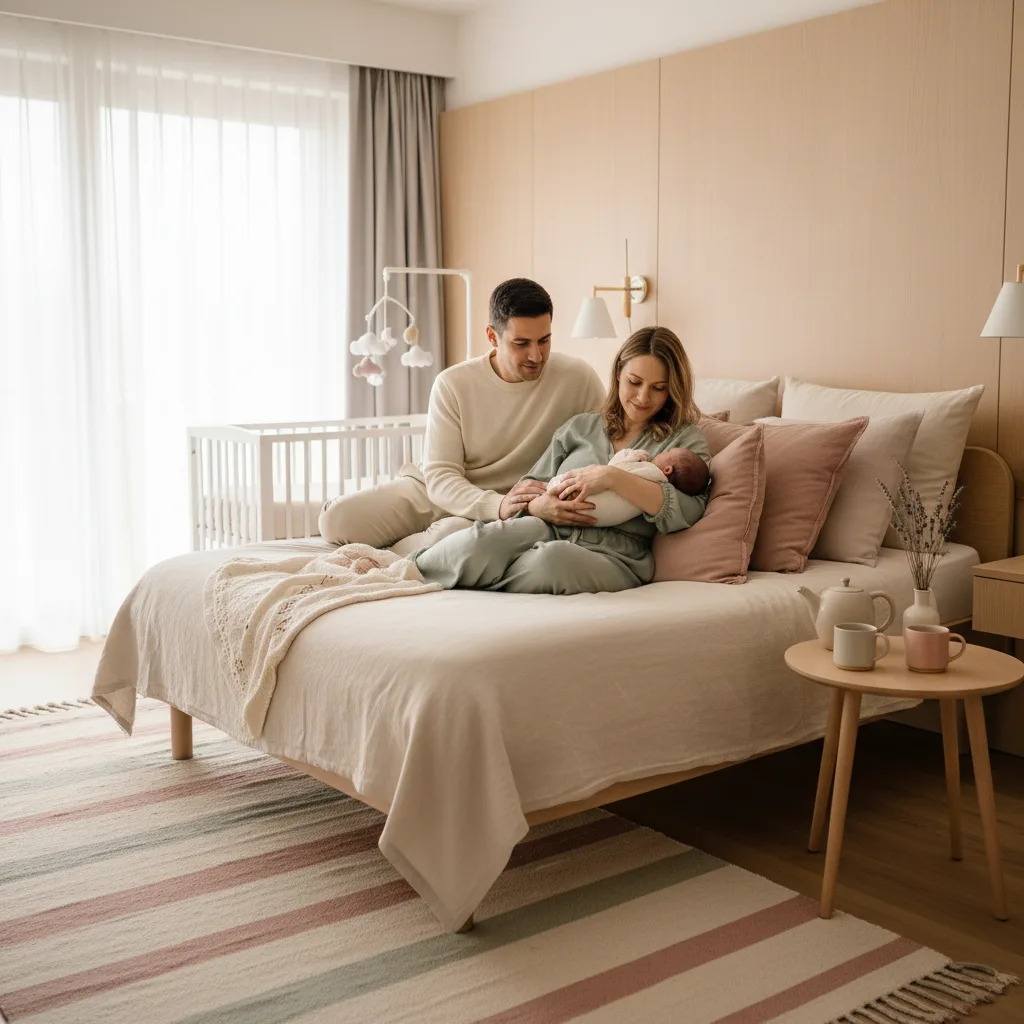
The baby has arrived. The birth is over. And now you have a brand new little person to get to know. A postnatal hotel or family-centered birth center gives you exactly what you need in these first days: peace, reassurance, and professional support, without the clinical hospital feel.
Many hospitals and birth centers around the world offer this kind of family-friendly postnatal stay as an alternative to a standard maternity ward. It's something many new parents describe as invaluable. Here is everything you need to know.
What Is a Postnatal Hotel?
A postnatal hotel is a hotel-like facility at or near the hospital where new families can stay during the first days after birth. Unlike a standard maternity ward, the rooms are more like hotel rooms, with a double bed, private bathroom, and a calmer atmosphere.
The most important feature: both parents stay together with the baby. Your partner doesn't need to leave at night, as is often the case in regular hospital wards. You are together around the clock.
Even though it feels like a hotel, professionals are always close by. Midwives and maternity nurses are available for questions and guidance, especially around breastfeeding, newborn care, and the first days with your baby.
What Can You Expect?
The Room
Postnatal hotel rooms vary between facilities, but most have:
- Double bed for both parents
- Bassinet or cot next to the bed
- Private bathroom with shower
- Seating area or armchair
- Small kitchen or access to a shared kitchen
- TV and internet
The furnishings are warmer and more home-like than a standard hospital ward. The goal is for you to feel safe and relaxed.
Follow-Up and Support
Even though the rooms feel like a hotel, the professional support is the truly valuable element:
- Midwife available 24/7, call from the room whenever you need help
- Breastfeeding guidance, individual help with latch, feeding technique, and any challenges
- Newborn checks, the baby is assessed daily by a pediatrician or midwife
- Newborn care guidance, help with the umbilical cord, bathing, and diaper changes
- Emotional support, conversations about the birth experience and transition to parenthood
Use your time in the postnatal suite actively. Ask every question you have about feeding, newborn care, and baby handling, the midwives are there for exactly this. There are no stupid questions.
Meals
Most postnatal hotels include meals in the stay. Some offer a buffet in a communal dining area, others offer room service. The food is often better than standard hospital meals, and in many places partners can eat too.
Who Can Use Postnatal Facilities?
Postnatal hotels and family-centered care rooms are for families where both mother and baby are healthy after the birth. This option typically suits you if:
- The birth was uncomplicated, vaginal birth or cesarean section with normal recovery
- The baby is healthy, no need for specialized medical monitoring
- You are ready for discharge from the delivery unit, but would like a little more time with support
If the mother or baby needs closer medical monitoring, you will stay in the standard maternity ward instead, where there is continuous medical staffing.
After a cesarean section, you can often move to a postnatal hotel room after 1-2 days on the maternity ward, provided recovery is progressing normally. Speak with your midwife about the options available to you.
How Long Can You Stay?
The length of stay varies between facilities, but typically is:
- 1-3 nights after vaginal birth
- 2-4 nights after cesarean section
- Longer if needed, if breastfeeding takes time to establish or there are other challenges
The general trend in many countries is that postnatal stays have become shorter over the years. Many families find themselves discharged after just 1-2 days. A postnatal hotel stay can give you a little extra time to find your footing.
What Does It Cost?
In countries with universal healthcare, postnatal care is typically covered by the health system, meaning costs are minimal or covered by insurance. In private hospitals and some birth centers, there may be additional fees. Always check with your hospital or birth center and your insurance provider before your due date.
Check your health insurance coverage before your due date. Many families qualify for extended postnatal stays as part of their maternity coverage. Ask your care provider what is included.
What to Pack for the Postnatal Stay
Pack your hospital bag with the understanding that you'll be staying for several days. In addition to the essentials, it's a good idea to have:
For you:
- Comfortable clothes for the first days (loose pants, nursing top)
- Nursing pillow, some facilities have them on loan, but your own is best
- Warm socks and slippers
- Lip balm, face cream, and what you need to feel comfortable
- Charging cables for your phone
For the baby:
- Clothes in newborn size (onesies, sleepsuits, hat)
- Baby blanket for comfort
- Car seat for the journey home
For your partner:
- Comfortable clothes for a few days
- Their own charger
- Snacks for night feeds, chocolate or something good to eat
Prepare your hospital bag in good time, ideally by week 36. You can use our hospital bag checklist to make sure you don't forget anything important.
Tips for Getting the Most Out of Your Stay
- Ask for help with feeding, the first days are crucial for establishing good breastfeeding or bottle-feeding. The midwives are experts. Read our guide to feeding your newborn
- Rest when the baby sleeps, you are exhausted after the birth. Let your partner receive visitors and shield you
- Limit visits, the first days are about the three of you. Friends and family can wait a few days
- Ask all your questions, write down everything you're wondering and bring it up with the midwife. No question is too small
- Talk about the birth experience, your midwife can help you process what you've been through
- Document the moments, take photos and write down thoughts. You'll be surprised how quickly you forget
From the Postnatal Stay to Home
The transition from a postnatal facility to your own home can feel significant. Suddenly you're alone with the responsibility. Here are some things that make the transition easier:
- Prepare your home before birth, food in the freezer, a clean house, baby clothes ready
- Arrange a home visit, many health systems offer home visits from a midwife or health visitor in the first days after discharge
- Have support people ready, someone who can shop, cook, or hold the baby while you sleep
- Set up a sleep tracker, logging your baby's sleep patterns from the start helps you find a rhythm
- Follow your baby's development, keep track week by week
Read more about the first week home with a newborn and what to expect after birth.
Remember that pelvic floor exercises can be started gently in the first days after birth. Even light exercises help the healing process. When you're ready for more, gradually building back up to regular exercise will support your recovery.
Frequently Asked Questions
Can my partner stay the whole time?
Yes, that's the whole point of family-centered postnatal care. Your partner stays in the room together with you and the baby around the clock. You're a family from the very first moment.
Do I have to breastfeed to access postnatal hotel care?
No. Postnatal rooms are for all new families, regardless of whether you breastfeed or use formula. The midwives can help you with both.
What if the baby becomes sick while we're in the postnatal suite?
The postnatal hotel is connected to the hospital. If the baby needs medical attention, you will be quickly transferred to the neonatal unit or maternity ward. Staff monitor the baby's health continuously.
Can I request postnatal hotel care in advance?
Yes, you can express your wish for a postnatal hotel stay when creating your birth plan and during antenatal appointments. Places are allocated based on availability, and healthy mothers with healthy babies are prioritized.
Is postnatal hotel care the same as a birth center?
Not exactly. A birth center is a type of facility offering a more natural approach to the birth itself. A postnatal hotel is a stay for the days after birth, regardless of where you gave birth.
Summary
Family-centered postnatal care gives you a unique opportunity to begin family life in a supportive environment, with professional guidance just outside the door and hotel-like comfort inside your room. The first days with your baby are precious, and this kind of stay lets you spend them on what matters most: getting to know the new little person in your life.
Prepare by checking what your hospital or birth center offers, packing your bag in good time, and writing your preferences into your birth plan. A wonderful start awaits!
Read More
- What to Expect After Birth
- The First Week Home with a Newborn
- Breastfeeding a Newborn. Getting Started
- Hospital Bag Checklist
- Birth Plan Builder
Sources: WHO. Postnatal Care, AAP. Newborn Care
Last updated: March 2026
Sources
- ACOG. Clinical guidance on labor and delivery
- WHO. Global maternal health recommendations
- Mayo Clinic. Labor and delivery medical guidance
🔧 Helpful Tools
- Due Date Calculator. Calculate your estimated due date
- Contraction Timer. Track your contractions during labor
- All Baby Tools. Browse all free tools for pregnancy and baby care
📖 Related Articles
- Your Hospital Stay After Birth: What Happens in the First Days. What actually happens on the postnatal ward after delivery? Everything you need to know about the first hours and days in hospital after giving birth.
- Afterpains: Painful Contractions After Birth. Afterpains are painful contractions after giving birth. Learn why they occur, how long they last, and what relieves the pain.
- The Postpartum Period: What Happens to Your Body After Birth. Everything you need to know about the postpartum period, bleeding, hormones, breastfeeding, pelvic floor, and the 6-week checkup. An honest guide for new mothers.