Your child has been coughing for several days, the fever won't break, and their breathing sounds heavier than usual. Could it be pneumonia? It's a worry many parents face, especially during cold and flu season.
Pneumonia in children sounds serious, and it can be. But with proper treatment, the vast majority of children recover completely. Here's a reassuring guide to symptoms, treatment, and when to seek medical help, based on current pediatric guidelines.
What Is Pneumonia?
Pneumonia is an infection in the lung tissue itself. When bacteria or viruses reach the lungs, inflammation develops in the tiny air sacs (alveoli). These fill with fluid and pus, making it harder to breathe and take in oxygen.
In children, pneumonia is one of the most common reasons for hospital admission, particularly in children under 2 years. The illness is most common in winter and early spring, when respiratory infections are generally more prevalent.
Viral or Bacterial. What's the Difference?
There are two main types of pneumonia in children, and treatment differs:
Viral pneumonia is the most common form in young children. It's often caused by RSV, influenza, or other cold viruses. The illness usually starts like a common cold with cough and runny nose and develops gradually. The child is often tired but not necessarily extremely ill.
Bacterial pneumonia typically causes stronger symptoms. Streptococcus pneumoniae (pneumococcus) is the most common bacteria. The child often becomes sicker faster with high fever, labored breathing, and reduced general wellbeing. This type requires treatment with antibiotics.
Mycoplasma pneumonia is a third variant most common in children between 5 and 14 years. It's often called "walking pneumonia" because symptoms can be milder, a persistent cough, low-grade fever, and general fatigue. Only 3–10% of children with mycoplasma infection develop pneumonia. The rest have milder respiratory symptoms that resolve on their own.
It can be difficult to distinguish viral from bacterial pneumonia without a medical examination. The doctor uses blood tests (CRP), chest X-ray, and clinical examination to assess the cause.
Symptoms of Pneumonia in Children
Symptoms vary with the child's age. It's especially important to recognize the signs in the youngest children, because infants can become seriously ill quickly.
Symptoms in Infants (0–12 months)
The youngest children often show different signs than older children:
- Rapid, labored breathing, breathing rate increases noticeably
- Nasal flaring, nostrils widen with each breath
- Grunting, a grunting sound on exhale
- Retractions, the skin between the ribs or below the breastbone pulls inward
- High fever, but some infants can have pneumonia without fever
- Poor appetite, eating or drinking less than usual
- Lethargy, the baby is quieter and less interested than normal
- Vomiting, mucus in the airways can trigger retching
Infants under 3 months with cough and breathing difficulties should always be seen by a doctor the same day. Small babies have an immature immune system and can become seriously ill very quickly. Call your doctor or emergency services immediately.
Symptoms in Older Children (1–5 years)
- Persistent cough, often productive with mucus
- High fever, typically above 38.5°C (101.3°F), often with rapid onset
- Rapid and labored breathing, the child breathes noticeably faster and harder
- Reduced general wellbeing, the child is more listless and unwell than with a common cold
- Stomach pain, surprisingly common with pneumonia in children
- Chest pain, "it hurts in my chest" when coughing or taking a deep breath
- Reduced appetite, the child doesn't want to eat as normal
Symptoms in School-Age Children (over 5 years)
Older children can better describe what they feel. Look for:
- Productive cough with discolored sputum (yellow-green mucus)
- Chest pain, especially when coughing
- Fever above 38.5°C (101.3°F) for more than 3 days
- Shortness of breath during activity
- Headache and muscle aches
- General exhaustion and fatigue
When to See a Doctor?
It's always better to seek medical advice once too often than once too few. Contact your doctor or emergency services if the child has:
- Fever above 38.5°C (101.3°F) lasting more than 3 days
- Cough that's getting worse or not improving after a week
- Faster and heavier breathing than normal
- Reduced general wellbeing, more lethargic than with a typical cold
- Wheezing or whistling sound when breathing out
Call emergency services (911 in the US, or your local emergency number) if your child:
- Has severe breathing difficulties or bluish discoloration of lips/nails
- Is extremely lethargic, difficult to wake, or unresponsive
- Cannot drink or is clearly dehydrated
- Is under 3 months with fever and breathing problems
- Has retractions between the ribs or below the breastbone
Diagnosis. What Does the Doctor Do?
When you come to the doctor with suspected pneumonia, the examination typically includes:
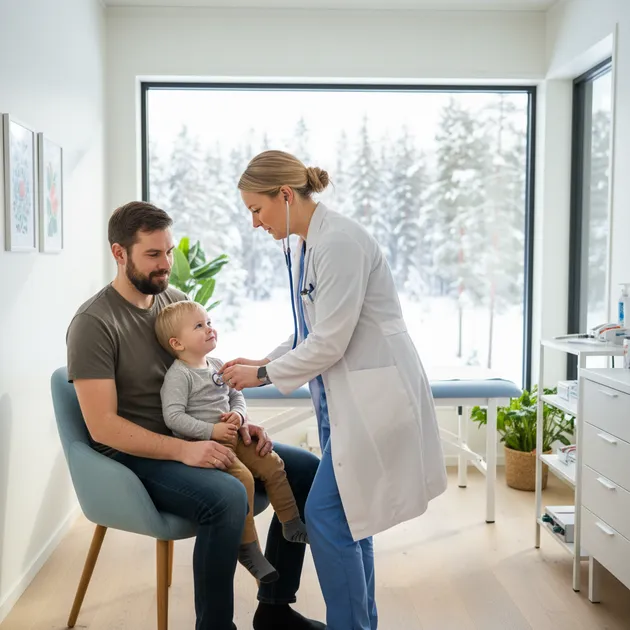
Listening with a stethoscope: The doctor listens for crackling sounds or changed breath sounds over the lungs. This is often the first sign of pneumonia.
Blood tests (CRP): The CRP value (C-reactive protein) shows whether there's inflammation in the body. High CRP suggests bacterial infection, while lower values may point toward a virus.
Chest X-ray: Confirms the diagnosis and shows the extent of the inflammation. Used especially when the doctor is uncertain or the illness is serious.
Oxygen saturation (pulse oximetry): A small clip on the finger or toe measures oxygen levels in the blood. Low levels may indicate the lungs aren't taking in enough oxygen.
PCR test: If mycoplasma or other atypical bacteria are suspected, the doctor may take a throat swab to identify the exact cause.
Treatment of Pneumonia
Treatment depends on whether the pneumonia is caused by bacteria or viruses.
Bacterial Pneumonia. Antibiotics
With bacterial pneumonia, antibiotics are necessary. Current guidelines recommend:
- Amoxicillin is typically the first choice for uncomplicated bacterial pneumonia in children
- Treatment usually lasts 5–7 days
- For mycoplasma pneumonia, macrolide antibiotics (such as azithromycin or erythromycin) are used
- For severe illness, intravenous antibiotics may be needed in hospital
Research shows that a short antibiotic course (3–5 days) can be as effective as a longer course for children with uncomplicated pneumonia. Always follow your doctor's recommendation for your child, and complete the full course as prescribed.
Important about antibiotics:
- Give the medication at the right time and complete the full course
- Most children start to improve within 48–72 hours
- Contact your doctor if the child doesn't improve after 2–3 days on antibiotics
- Antibiotics don't work against viruses, this is why the doctor must assess the cause
Viral Pneumonia. Supportive Care
Viral pneumonia is not treated with antibiotics. Instead, the focus is on:
- Rest, let the child sleep and rest as much as needed
- Fluids, make sure the child drinks enough. Offer frequent small amounts
- Fever reducers, acetaminophen (Tylenol) or ibuprofen (Advil/Motrin) as needed, dosed correctly for the child's weight
- Elevated head position, an extra pillow can make breathing easier at night
- Saline nasal drops, help with a blocked nose, especially for infants
Hospital Treatment
Some children need admission to hospital. This is especially true for:
- Infants under 6 months with pneumonia
- Children with severe breathing difficulties or low oxygen levels
- Children who can't drink enough
- Children with underlying conditions (asthma, cystic fibrosis, immune deficiency)
- Children who don't improve on antibiotics after 48–72 hours
In hospital, the child can receive supplemental oxygen, intravenous fluids and antibiotics, and monitoring of breathing and oxygen saturation.
Recovery
Most children with pneumonia are treated at home and recover completely. But it takes time to fully recover.
Typical course:
- Days 1–3: Fever and lethargy are worst. With bacterial form, antibiotics begin to work
- Days 3–5: Fever drops, the child has more energy. The cough can actually get worse before it gets better
- Weeks 1–2: The child gradually feels better, but may still be more tired than usual
- Weeks 2–4: The cough diminishes gradually. Some children cough for up to 4–6 weeks after pneumonia
- Weeks 4–6: Full recovery in most children
It's normal for the child to be more tired than usual for several weeks after pneumonia. Don't push the child back to full activity too soon. Let the child set the pace.
When can the child return to daycare or school?
The child can return when they have been fever-free for at least 24 hours and have the energy to participate in activities. It's normal for the child to still have some cough, this doesn't mean they're still contagious.
Preventing Pneumonia
There are several ways to reduce the risk of pneumonia in children.
Pneumococcal Vaccine. The Most Important Protection
The pneumococcal vaccine (Prevnar) is part of routine childhood vaccination programs and provides excellent protection against the most common bacteria that cause pneumonia.
Standard vaccination schedule:
- Dose 1: At 2 months of age
- Dose 2: At 4 months of age
- Dose 3: At 6 months of age
- Booster: At 12–15 months of age
The vaccine provides 89–97% protection against invasive pneumococcal disease caused by the vaccine types. Since the vaccine was introduced into childhood vaccination programs, the incidence of serious pneumococcal disease in children has dropped dramatically.
Other Preventive Measures
- Good hand hygiene, teach the child to wash hands often, especially before meals and after using the bathroom
- Avoid tobacco smoke exposure, secondhand smoke doubles the risk of respiratory infections in children
- Adequate sleep, a well-rested child has a stronger immune system
- Influenza vaccine, may be considered for children with chronic conditions
- Breastfeeding, breast milk contains antibodies that protect against infections in the first months of life
Frequently Asked Questions
Is pneumonia contagious?
Yes and no. Pneumonia itself isn't directly contagious, but the bacteria and viruses that cause it spread through droplets (coughing and sneezing). Most people who are exposed to these microbes only get a common cold, pneumonia develops only in some people.
Can children get pneumonia multiple times?
Yes. Having had pneumonia once doesn't protect against future episodes. Children with repeated bouts of pneumonia should be investigated for underlying causes such as asthma, immune deficiency, or anatomical abnormalities.
Do cough suppressants help?
Cough suppressant medications are generally not recommended for children under 6 years. The cough is the body's way of clearing mucus from the airways. Speak with your doctor if the cough is very distressing and disrupting sleep.
How long does the cough last after pneumonia?
A residual cough after pneumonia can last 4–6 weeks, sometimes longer. As long as the child is otherwise well and in good form, this is normal. Contact your doctor if the cough persists beyond 6 weeks or gets worse.
Does the child need a follow-up chest X-ray?
A follow-up X-ray is not necessary after a straightforward pneumonia where the child recovers completely. The doctor may consider follow-up with X-ray if the child had a serious illness, has had repeated pneumonias, or has persistent symptoms.
What's the difference between bronchitis and pneumonia?
Bronchitis is inflammation of the large airways (bronchi), while pneumonia is inflammation in the lung tissue itself (alveoli). Bronchitis is usually viral and resolves on its own, while pneumonia can be more serious and may require antibiotics. The symptoms can be similar, and the doctor distinguishes between them.
Sources
- American Academy of Pediatrics. Pneumonia
- WHO. Pneumonia
- Centers for Disease Control and Prevention. Pneumococcal Vaccination
- Infectious Diseases Society of America. Pediatric Pneumonia Guidelines
This article is written for informational purposes and does not replace medical advice. Always contact a doctor if you are worried about your child's health.
🔧 Helpful Tools
- Baby Milestones Tracker. Track your baby's developmental milestones
- All Baby Tools. Browse all free tools for pregnancy and baby care