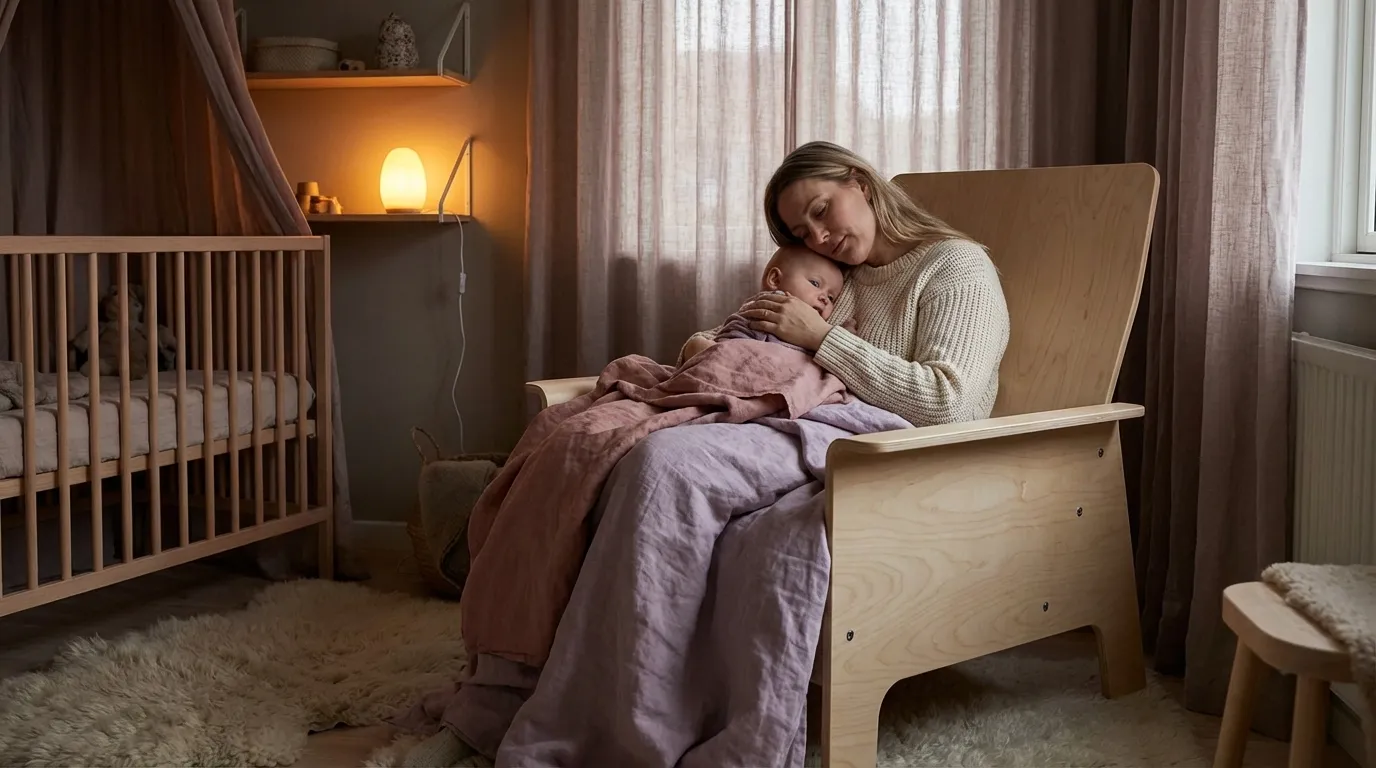
The baby who finally started sleeping in longer stretches is suddenly waking up every hour. Welcome to the 4-month sleep regression.
This is one of the most challenging periods for new parents. But it's also completely normal, and it will pass.
What Is the 4-Month Sleep Regression?
Around 3–4 months of age, your baby's brain undergoes a major change. Their sleep pattern matures and starts to resemble that of adults.
That sounds positive, and it is. But the transition can cause your baby to wake more often between sleep cycles.
Sleep regression isn't a medical term. It's a word parents use to describe periods when sleep suddenly gets worse.
Did you know? According to the AAP, 2 out of 3 babies still wake at night at 6 months of age. By 9 months, about half sleep through the night.
Signs of Sleep Regression at 4 Months
Do any of these sound familiar?
- More frequent night wakings, from maybe 1–2 to 4–6 times
- Shorter naps, 30–45 minutes instead of hours
- Harder to settle, what used to work no longer does
- More unsettled, your baby seems tired but can't relax
- Increased need for closeness, only wants to sleep on you
This is frustrating, but completely normal. Your baby isn't going backward in development, quite the opposite.
Why Does It Happen Now?
At 4 months, big things happen in your baby's brain:
Sleep cycles change. Newborns only have two sleep phases (active sleep and quiet sleep) and start sleep cycles in REM sleep. At 4 months, babies develop four to five phases, just like adults, and begin to start in light NREM sleep instead. The sleep cycle is still short (40–60 minutes versus adults' 90 minutes), and between each cycle, babies can wake more easily.
The brain is working hard. Your baby is learning to grasp, roll, babble, and smile. All this development continues at night too.
Increased awareness. Your baby is more aware of their surroundings. They notice when you put them down, and react.
The circadian rhythm is forming. Melatonin production starts around 3–4 months of age according to the AAP. This means the body is beginning to properly distinguish between day and night for the first time. It can take time before everything falls into place.
From the AAP: At 4–5 months of age, babies begin to understand bedtime and sleep routines. This is a good time to establish consistent evening routines.
How Long Does the 4-Month Sleep Regression Last?
Most parents find the worst of it lasts 2–6 weeks. But it varies. Some babies get through it in a week. Others take longer.
Week by Week: What to Expect
| Week | What's Happening | What You Can Do |
|---|---|---|
| Week 1–2 | Sudden change. Baby wakes much more often, naps become short (30–45 min). Everything feels chaotic. | Stick to routines. Don't make major changes. |
| Week 2–3 | Often the worst point. Baby may wake every hour at night. You're exhausted. | Share night duty between parents. Accept help. |
| Week 3–4 | Some babies begin to stabilize. Naps may get a little longer. | Keep predictable routines. Watch for sleep cues. |
| Week 4–6 | Most babies find a new rhythm. Nighttime sleep gradually improves. | Adjust bedtime to fit baby's new pattern. |
The effect can last longer if:
- Baby develops new sleep associations (like only sleeping on your arm)
- You don't find a good daytime nap rhythm
- Baby enters a pattern of lots of nighttime feeding
The most important thing to remember: This is a phase. It will pass.
5 Tips for Getting Through the Sleep Regression
1. Stick to Routines
Babies thrive with predictability. Repeat the same evening ritual every day: bath, calm atmosphere, dimming the lights, lullaby.
2. Ensure Enough Daytime Sleep
An overtired baby sleeps worse at night. Babies at 4 months still need 3–4 naps during the day.
Wake window for 3–4 months: 75–120 minutes. Watch for tiredness cues before your baby becomes overtired.
3. Adjust Bedtime
According to AAP guidelines, babies aged 4–8 months should be put to bed between 5:30–7:30pm.
An early bedtime may seem counterintuitive, but well-rested babies often sleep better.
4. Give Closeness. Without Guilt
The AAP is clear: babies need varying levels of support. It's normal to comfort, carry, and nurse to help your baby sleep.
Do what works for your family right now.
5. Use a Sleep Tracker to See Patterns
When you're exhausted, it's hard to remember what happened yesterday. A sleep tracker helps you log sleep and see trends over time.
Tip: With a sleep tracker, you can spot daily patterns in your baby's sleep and see when things start improving.
When Should You Contact Your Pediatrician?
Sleep regression is normal, but reach out if:
- Sleep problems last more than 6–8 weeks without improvement
- Your baby is losing weight or seems lethargic
- You as a parent feel exhausted and need support
- You're concerned about your baby's health
Your pediatrician can offer advice tailored to your situation.
Frequently Asked Questions
When Is Sleep Regression Common?
Sleep regressions can occur at several ages: around 4 months, 6 months, 8–10 months, 12 months, and 18 months. The 4-month regression is often the most noticeable because the sleep pattern changes permanently.
How Much Should a 4-Month-Old Sleep?
Babies aged 4–8 months need 12–15 hours of sleep per day, according to the AAP. This includes nighttime sleep and 3–4 daytime naps.
How Often Does a 4-Month-Old Wake at Night?
It varies a lot. Some wake 1–2 times, others 5–6 times. At 6 months, 2 out of 3 babies still wake at night. This is completely normal.
Is Sleep Regression the Same as a Developmental Leap?
Partly. Developmental leaps describe periods of rapid development that can affect sleep. Sleep regression is a more popular term for the same phenomenon. Neither is a medical diagnosis.
How Long Does the 4-Month Sleep Regression Last?
Most families find the worst lasts 2–6 weeks. Some babies get through it in a week, while others need up to eight weeks. The most important thing is to stick to regular routines and avoid introducing new sleep habits you don't want long-term.
What Helps Most?
The most important thing is to ensure enough daytime sleep (3–4 naps), stick to the evening routine, and put your baby to bed early enough (5:30–7:30pm). Give closeness and comfort without guilt.
Can the 4-Month Sleep Regression Start at 3 Months?
Yes. Some babies begin the regression as early as 3 months, because brain maturation happens at different rates. The signs are the same: more frequent night wakings, shorter naps, and harder to settle.
Does Breastfeeding Affect the Sleep Regression?
Breastfed babies may wake somewhat more often because breast milk is digested faster than formula. But nursing also provides comfort and calm. The AAP notes it is completely normal to nurse your baby to sleep during this period.
Remember This
The 4-month sleep regression is exhausting, but it's a sign that your baby is developing completely normally.
You don't need to fix everything. Sometimes it's just about getting through.
Read also: Sleep Regression at 8 Months | Sleep Regression at 12 Months | Baby Sleep Cues Guide | Wake Windows for Babies
Sources and References
- AAP. Healthy sleep habits: How many hours does your child need?
- CDC. Important milestones: Your baby by four months
- NIH. Sleep in infants and young children
- American Academy of Sleep Medicine. Pediatric sleep recommendations
- La Leche League International. Sleep and breastfeeding
🔧 Helpful Tools
- Baby Sleep Tracker. Track and optimize your baby's sleep
- Soothing Sounds. White noise and soothing sounds to help your baby sleep
- All Baby Tools. Browse all free tools for pregnancy and baby care
📖 Related Articles
- Baby Sleep Regression. Complete Guide for All Ages. Sleep regression in babies at 4, 8, 12, 18 months, and 2 years. Learn what causes sleep regressions, how long they last, and get concrete tips to get through them.
- Sleep Regression in Babies - 4, 8, 12 and 18 Months. Everything about sleep regression in babies and toddlers. Learn when the most common regressions occur, what causes them, and how to get through them.
- Sleep Regression at 12 Months: What's Happening and What to Do. Sleep regression at 12 months is common. Learn what's happening, how long it lasts, and what you can do for better nights.