The first weeks with a newborn are overwhelming. You are sleeping little, your body is exhausted, and the gym feels like a distant planet. But there is one form of exercise that works from day one: walking.
Walking is the gentlest, most accessible, and most underrated form of postpartum exercise. You do not need a babysitter, you do not need any equipment beyond what you already have, and your baby will probably sleep better outside than inside.
Why Walking Is Perfect Exercise After Birth
Walking is not just "going for a stroll." Research shows that regular walking delivers significant health benefits, especially for new parents.
Physical benefits:
- Improves circulation and supports recovery after birth
- Strengthens the heart and lungs without straining the pelvic floor
- Contributes to gradual weight normalisation
- Helps prevent blood clots in the postpartum period
Mental benefits:
- Reduces the risk of postpartum depression and anxiety
- Increases energy levels
- Improves sleep quality (yes, even with a newborn)
- Provides a sense of achievement and normality
The WHO and most national health guidelines recommend at least 150 minutes of moderate physical activity per week for adults. That works out to about 30 minutes of walking per day, something most people can manage with a stroller.
When Can You Start?
After vaginal birth: Most people can begin with short walks in the first days after delivery. Start with 10–15 minutes and listen to your body. No pain, pressure downward, or increase in bleeding? Then gradually build up.
After cesarean section: Short, gentle walks are usually possible after a few days, but check with your midwife or doctor first. Avoid hills for the first 4–6 weeks.
Stop and contact your provider if you experience increased bleeding, pelvic pain, dizziness, or downward pressure during a walk.
Week-by-Week Progression
Here is a realistic plan for building up walks gradually:
Weeks 1–2: Slow Start
- Duration: 10–15 minutes
- Pace: Slow and comfortable
- Frequency: Every day or every other day
- Goal: Get outside, get some fresh air
Weeks 3–4: Build Duration
- Duration: 20–30 minutes
- Pace: Comfortable, slightly faster
- Frequency: Daily
- Goal: Establish a routine
Weeks 5–8: Increase Intensity
- Duration: 30–45 minutes
- Pace: Moderate, you can hold a conversation but get a little breathless
- Frequency: Daily, with some longer walks at weekends
- Goal: Build cardiovascular fitness
Weeks 9–12: Challenge Yourself
- Duration: 45–60 minutes
- Pace: Vary between easy and brisk
- Frequency: Daily
- Goal: Add hills, intervals, or strength exercises along the way
From 12 Weeks: Move Forward
Now you are ready to combine walking with more demanding exercise. Consider a structured postpartum fitness program that builds on the foundation you have laid.
Turn Your Walk Into a Workout
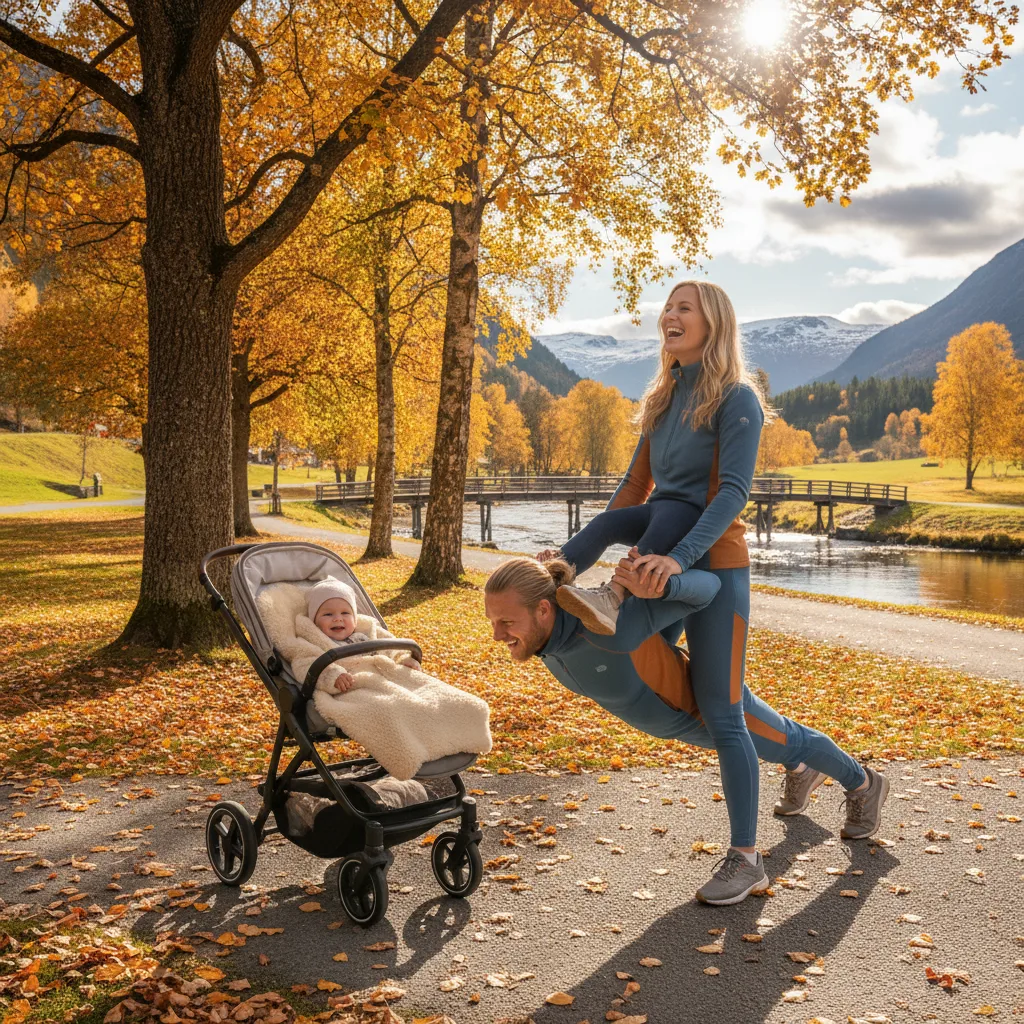
A brisk walk gives more exercise than you might think. Here are some ways to increase the intensity:
Interval Walking
Alternate between 3 minutes at a fast pace and 2 minutes at an easy pace. Repeat 5–6 times. This increases calorie burn and builds fitness more quickly.
Hill Walking
Seek out routes with inclines in your neighborhood. Hills give a leg and glute workout without stressing the knees and pelvis the way running can.
Strength Pauses
Stop every few minutes for a short exercise:
- Squats: 10 reps with hands on the stroller handle
- Lunges: 8 on each leg
- Calf raises: 15 toe raises while holding the stroller
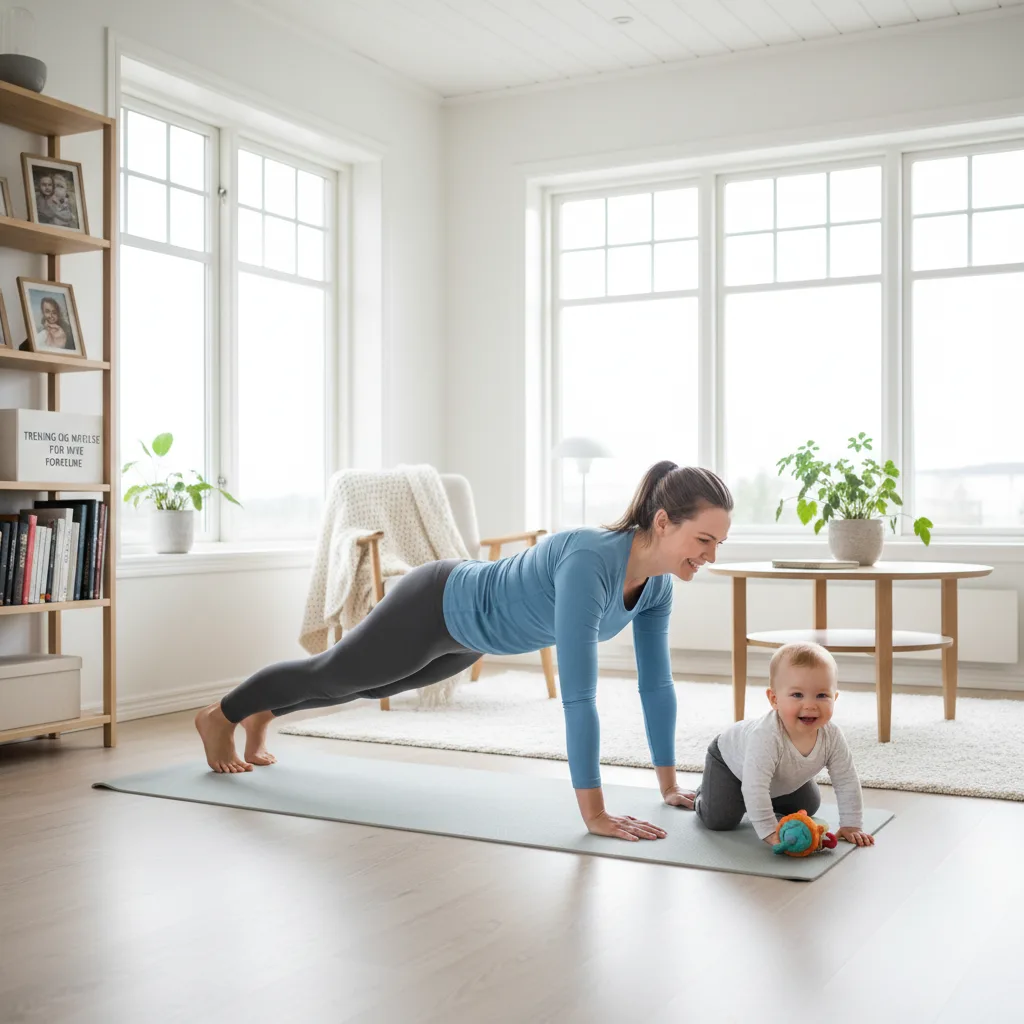
- Wall push-ups: Use a bench or wall along the route
Proper Walking Technique
- Keep your back straight and shoulders down
- Gently engage your core, think about lightly drawing the navel in
- Roll through the foot from heel to toe
- Use your arms actively to increase calorie burn
- Take longer strides to activate the glutes and backs of the thighs
Carrier vs. Stroller?
Both work well, but they give different exercise effects:
Stroller:
- Easier to maintain good posture
- Simpler to do strength exercises along the way
- Baby can lie flat (important for newborns)
- You can walk longer without getting sore shoulders or a tired back
Baby carrier:
- Provides extra load that increases calorie burn
- Keeps baby close, which many newborns prefer
- More flexible in terrain where a stroller does not fit
- Strengthens the core
For the very first weeks, a stroller is often the better choice. It lets you focus on walking technique and your own body. When baby is 4–6 weeks old and has good head control, you can try a carrier with baby facing in toward your chest.
Walking in All Weathers
Weather is rarely ideal, but do not let it stop you. With the right preparation, a walk in any weather is perfectly manageable.
Winter and Cold
- Guidelines: Healthy newborns can go out in temperatures as low as around -10 to -12°C (about 10–14°F), according to most pediatric guidelines. Dress baby warmly and check that hands stay warm.
- For you: Layers, good grip shoes or ice cleats, and gloves
- Tip: Shorten the walk in severe cold. Check on baby after 20–30 minutes.
- Stroller: Use a weather shield that blocks wind, but ensure good air circulation
Rain and Wind
- Rain cover on the stroller is essential
- For you: Waterproof jacket and waterproof shoes
- Tip: Choose routes with shelter, through woodland, near buildings, or in terrain that provides some cover
Spring and Summer
- Sun: Use a sun shade on the stroller. Babies under 6 months should not be in direct sunlight.
- Heat: Walk in the early morning or late afternoon. Avoid midday heat.
- Insects: Use a mosquito net over the stroller in bug season
Motivation Tips That Actually Work
Build a Routine
Choose a fixed time for your walk. For many parents, mid-morning works best, after the morning routine and before the baby gets tired.
Use an App
Track your walks with a fitness app. Seeing your progress gives a real sense of achievement.
Find a Walking Buddy
Nothing beats motivation like a scheduled commitment. New parent groups, postnatal classes, or mom-and-baby fitness groups are great places to find walking companions.
Podcast or Audiobook
A walk can become the only quiet moment of the day. Use it for something you enjoy, a great podcast, an audiobook, or just the silence.
Set Goals
- First week: Get out the door every day
- First month: 30 minutes daily
- Second month: Try a new route each week
- Third month: Walk 5 km without stopping
Social Connection
Walking with other new parents is one of the best ways to build community after having a baby. Many people find that their social circle shifts, and walking groups provide a natural space to meet others in the same stage of life.
- Postnatal groups often organise group walks
- Local parent groups are often advertised on social media and community notice boards
- Your pediatrician or midwife may be able to connect you with other new parents in your area
Build on Your Walks
Walking is a wonderful starting point, but it is only the beginning. When you feel ready, you can build on it with:
- Stroller workouts for more structured outdoor training
- Pelvic floor exercises, which are the most important thing to do alongside walking
- Running after birth when you are ready for the next step
Frequently Asked Questions
When can I take my newborn outside?
Healthy newborns can go outside from the first day of life, according to pediatric guidelines. Start with short outings and adjust the length to suit the weather and temperature. Avoid crowded places in the first weeks to reduce exposure to illness.
Do you burn calories walking?
Yes. Half an hour of brisk walking burns approximately 150–200 calories, depending on weight and pace. With a stroller and some inclines, that goes up. Over time, daily walking has a significant cumulative effect.
Can walking replace other forms of exercise?
In the first weeks, absolutely yes. Walking is sufficient exercise in the postpartum period. Over time you should combine it with strength training and pelvic floor exercises for the best health outcomes. But walking remains one of the most important forms of exercise for life.
Is it safe to use a carrier from birth?
Yes, but choose a carrier that provides good support for the newborn's head and neck. Baby should be positioned with face toward your chest and high enough that you can kiss the top of their head. Always ensure the airway is clear.
What do I do if the baby cries on the walk?
Stop and check whether baby is hungry, wet, or uncomfortable. Some babies need time to get used to the stroller, try a carrier, a pacifier, or push until the baby falls asleep before putting them in the stroller.
Sources
- WHO. Physical activity recommendations
- AAP. Exercise after childbirth
- ACOG. Physical activity and exercise during pregnancy and the postpartum period
🔧 Helpful Tools
- Pelvic Floor Trainer. Guided pelvic floor exercises for pregnancy and postpartum
- All Baby Tools. Browse all free tools for pregnancy and baby care
📖 Related Articles
- Exercise and Mental Health for New Parents. Exercise can prevent and ease postpartum depression, anxiety, and exhaustion. Here's how to get started, with realistic goals and routines that fit life with a baby.
- The Postpartum Period for Partners: How to Be the Best Support. A practical guide for partners in the postpartum period. Supporting breastfeeding, bonding with your baby, managing the household, and looking after your own mental health.