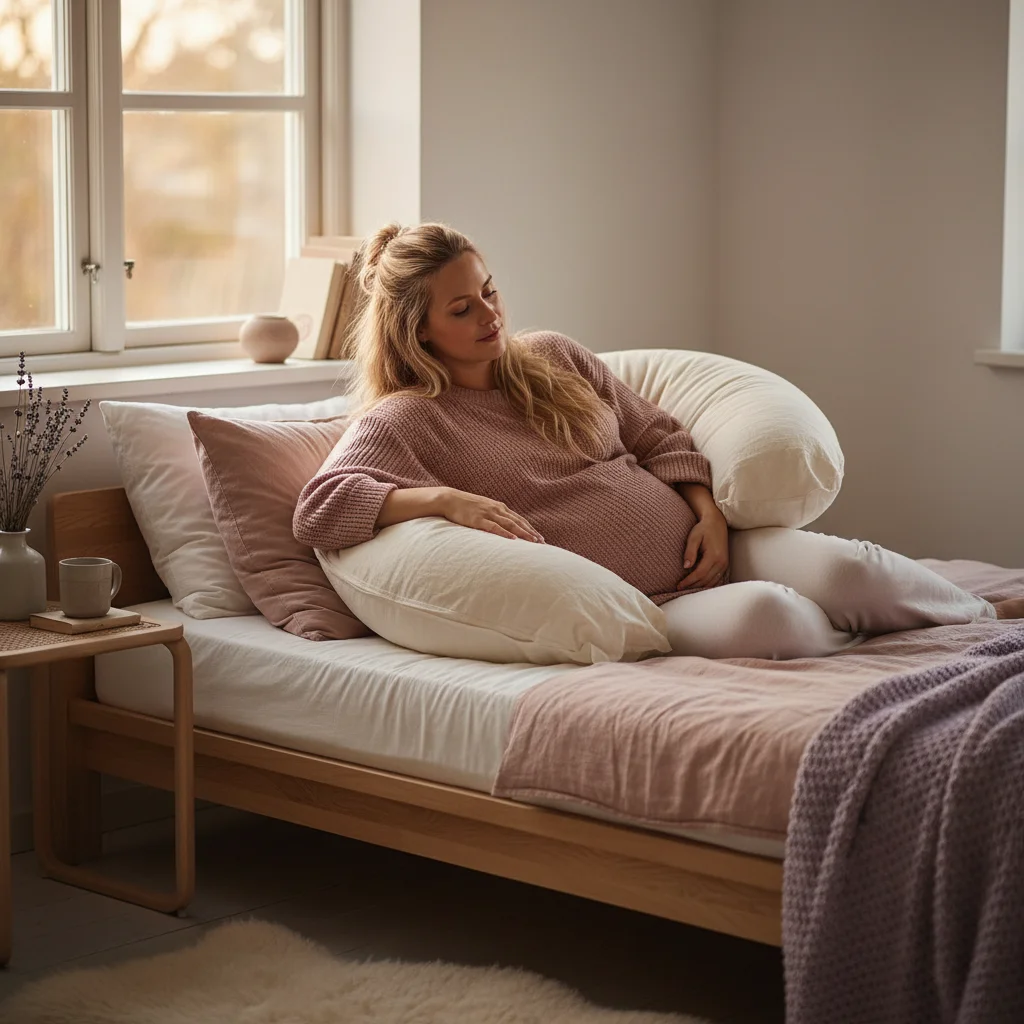
You're tired, but your body refuses to relax. Your belly is in the way, you've been to the bathroom three times already, and the baby is kicking more than ever. Sleep problems during pregnancy are something nearly every pregnant person experiences, especially in the third trimester. You're not alone, and there are things that help.
Why Is It Hard to Sleep?
Sleep problems during pregnancy have several causes, and they change across the three trimesters.
First Trimester
- Progesterone, the hormone that maintains the pregnancy makes you tired during the day, but can disrupt nighttime sleep
- Frequent urination, the uterus is growing and pressing on the bladder
- Nausea, some people experience nausea at night too
Second Trimester
Many people sleep better now. Nausea has subsided and the belly isn't that large yet. But some new discomforts begin:
- Heartburn, stomach acid pushes upward
- Leg cramps, common at night
- Vivid dreams, hormonal changes can cause intense dreams
Third Trimester
Sleep problems peak here:
- Large belly, hard to find a comfortable position
- Frequent urination, the baby presses hard on the bladder
- Heartburn, worst when lying down
- Restless legs, restlessness and tingling in the legs that worsens when resting
- Shortness of breath, the uterus presses against the diaphragm
- Pelvic pain, can make turning over painful
- Baby kicks, especially active at night
Up to 80 percent of pregnant people report sleep problems in the third trimester. It's one of the most common pregnancy complaints.
Best Sleeping Position During Pregnancy
From around week 28, health authorities recommend sleeping on your side. The left side is considered best because it provides optimal blood flow to the uterus and baby.
Why not on your back? When you lie on your back in late pregnancy, the heavy uterus can press on the vena cava, the large blood vessel that carries blood back to the heart. This can cause dizziness and reduce blood supply to the baby.
Practical tips for side sleeping:
- Place a pillow between your knees to relieve pressure on the pelvis and hip
- Put a pillow under your belly for support
- Lie at a slight angle with a pillow behind your back if full side-lying is uncomfortable
- A long nursing pillow or pregnancy pillow can provide support along the entire body
Don't stress if you wake up on your back. Your body usually signals discomfort before it becomes a problem. Just roll back onto your side.
10 Tips for Better Sleep
1. Create a Consistent Evening Routine
Do the same things every evening: shower, herbal tea, reading. Your body learns that it's time to sleep.
2. Limit Fluid Intake in the Evening
Drink plenty throughout the day, but taper off a couple of hours before bedtime. This reduces bathroom trips at night.
3. Avoid Eating Right Before Bed
Have your last meal 2–3 hours before lying down. This helps prevent heartburn. If you're hungry, choose a light snack, yogurt, crackers with cheese, or a banana.
4. Keep the Bedroom Cool and Dark
Many pregnant people feel warmer than usual. A cool bedroom (64–66°F / 18°C) with good ventilation helps.
5. Move During the Day
Regular activity, a walk, swimming, prenatal yoga, makes you naturally more tired in the evening. Avoid intense exercise in the last few hours before bedtime.
6. Elevate Your Upper Body for Heartburn
Use an extra pillow or place something under the mattress at the head end. This helps keep stomach acid down.
7. Magnesium for Cramps and Restless Legs
Magnesium supplements can ease leg cramps and restless legs. Talk to your midwife or OB about the right dose. Magnesium-rich foods include nuts, whole grains, leafy greens, and dark chocolate.
8. Relaxation and Breathing Exercises
Try deep breathing, progressive muscle relaxation, or meditation. Even 10 minutes can help your body settle down.
9. Put Down the Screen
Blue light from phones and tablets suppresses melatonin production. Put away screens at least 30 minutes before you want to sleep.
10. Accept That Some Nights Will Be Bad
Stressing about poor sleep makes it harder to sleep. Remember that your baby is not affected by you having a few bad nights.
Use Babysential's Sleep Tracker after the baby is born to track sleep patterns, both yours and the baby's.
When Should You Seek Help?
Most sleep problems during pregnancy are harmless, but some should be checked:
- Loud snoring with pauses in breathing, could be sleep apnea, which affects oxygen supply
- Severe restless legs that don't let you rest at all, may require treatment
- Insomnia lasting several weeks that affects your daytime functioning
- Anxiety or worry that keeps you awake, may be a sign that you need someone to talk to
Never use sleep medication without speaking to your doctor or midwife first. Most sleep aids are not recommended during pregnancy. Your doctor can help you find safe alternatives.
Sleep and Mental Health
Poor sleep over time can affect mood and energy levels. If you experience persistent sadness, anxiety, or worry in addition to sleep problems, talk to your healthcare provider. It's completely normal to need help, and good support is available.
Prepare for Sleep After Birth
Sleep problems during pregnancy are actually good practice for life with a newborn. Your body is adapting to sleeping in shorter intervals. Some tips to prepare:
- Practice sleeping when the opportunity arises, not just at set times
- Talk to your partner about sharing nighttime duties
- Read about the first week home with a newborn to know what to expect
Frequently Asked Questions
Is it harmful to the baby if I sleep poorly?
No, your baby is not affected by a few bad nights. Your body prioritizes the baby's needs. But chronic sleep deprivation can affect your own health, so seek help if it persists.
Can I sleep on my stomach while pregnant?
In the early weeks it's completely safe. As your belly grows, it naturally becomes uncomfortable and most people stop on their own. From the second trimester, side sleeping is most comfortable.
Does napping during the day help?
A short nap of 20–30 minutes can boost energy without disrupting nighttime sleep. Avoid long naps after 3 PM, as they can make it harder to fall asleep in the evening.
Read More
Read also: Heartburn and Acid Reflux During Pregnancy | Pelvic Girdle Pain | Restless Legs During Pregnancy
- Sleep Tracker for your baby, track sleep after birth
- Follow your pregnancy week by week. Babysential's pregnancy timeline
- Prenatal Checkups, complete overview
- Constipation During Pregnancy, another common complaint
- Pelvic Floor Exercises, a strong pelvic floor helps with many complaints
- Pregnancy Checklists, stay organized
Sources
🔧 Helpful Tools
- Due Date Calculator. Calculate your estimated due date
- Contraction Timer. Track your contractions during labor
- All Baby Tools. Browse all free tools for pregnancy and baby care
📖 Related Articles
- Restless Legs in Pregnancy: Causes, Relief, and When It Goes Away. Bothered by restless legs during pregnancy? Learn why it happens, what actually helps, and when it goes away. Practical tips that work for pregnant people.