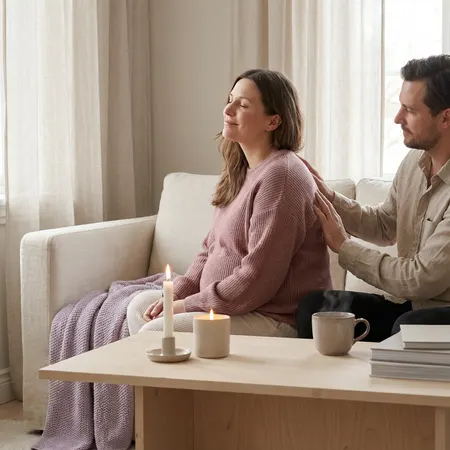
Hypnobirthing is a birth preparation method that uses self-hypnosis, breathing exercises, and visualization to help you feel calmer and more confident during labor. The method has grown increasingly popular, and many midwives recognize it as a useful tool.
The word "hypnosis" might sound a little mysterious. In practice, hypnobirthing is about something very concrete: training your mind to work with your body instead of against it.
What Is Hypnobirthing?
Hypnobirthing is built on the idea that fear and tension create a negative spiral during labor. When you are afraid, your body produces adrenaline. Adrenaline inhibits oxytocin, the hormone that drives contractions forward. The result can be a longer labor and stronger pain.
The method teaches you to break this cycle. Through mental techniques and conscious breathing, you can stay in a relaxed state where your body produces the hormones it needs.
The concept was first described in 1987 and has since developed into several approaches. The Mongan Method is among the most well-known internationally. The KGHypnobirthing program, developed by Katharine Graves, is also widely used.
Hypnobirthing is not the same as stage hypnosis. You do not lose control. The state can be compared to being deeply absorbed in a book or film, you are conscious but relaxed and focused.
The Techniques in Hypnobirthing
Hypnobirthing consists of several techniques that work together. You do not need to master all of them, but most courses cover these main areas.
Breathing Techniques
Breathing is the foundation. Two techniques appear in most hypnobirthing courses:
Up breathing (opening phase): Breathe in slowly through the nose while counting to four. Breathe out through the mouth for eight counts. This breath is used during contractions in the opening phase and helps the uterine muscles work with the body.
Down breathing (pushing phase): Take a deep breath and direct the breath downward as you exhale. The idea is to "breathe the baby down" rather than push with great force. Many midwives report that women using this technique have a calmer pushing phase.
Visualization
You use mental imagery to help the body relax. Some common visualizations:
- A flower opening (representing the cervix)
- Waves coming and going (representing contractions)
- A safe place you know well
Visualization is more than daydreaming. Research shows that the brain does not draw a sharp line between a vivid mental image and reality. When you imagine feeling calm and safe, your nervous system responds accordingly.
Affirmations
Short, positive statements you repeat to yourself:
- "My body knows what to do"
- "Each contraction brings me closer to my baby"
- "I am strong and safe"
It may feel unusual at first. But after weeks of daily repetition, these sentences become automatic thoughts that replace fear and worry.
Deep Relaxation and Self-Hypnosis
Through guided listening exercises, you train yourself to reach a state of deep relaxation. Most courses include audio files you listen to daily during pregnancy. The point is that your body learns to switch off quickly when you activate the techniques during labor.
Start early. Most practitioners recommend beginning hypnobirthing exercises from around weeks 20–25. The more you practice, the easier it is to activate the techniques during labor itself.
What Does the Research Say?
Research on hypnobirthing gives promising but cautious results. Here is a balanced picture.
Cochrane Review (2016): The most comprehensive review included nine studies with a total of 2,954 women. The conclusion was that hypnosis may reduce the use of pain medication during labor. The effect on epidural use, cesarean rates, and birth satisfaction was uncertain. The quality of evidence was rated as low.
Randomized controlled trial (2020): A study published in Health Care Women International found that hypnobirthing can reduce pain and fear during labor and lead to a better birth experience.
Systematic review (2023): Researchers found positive effects on anxiety, depression, and birth fear. Women reported higher self-confidence and a better emotional experience.
Summary from the research: Studies suggest hypnobirthing may reduce the need for pain medication and improve the birth experience. It has not been proven to cause a pain-free birth or reduce cesarean rates.
In short: The research suggests hypnobirthing can reduce the need for pain medication and improve the birth experience. It has not been proven to produce a pain-free birth or reduce cesarean section rates.
Can You Combine Hypnobirthing with Medical Pain Relief?
Yes. Hypnobirthing and medical pain relief are not opposites. You can use the techniques regardless of which form of pain relief you choose.
Many people use hypnobirthing techniques in the early phase and get an epidural later if they want one. Others use them throughout the entire birth. Some find that the techniques let them manage without medication longer; others find they give better control even with an epidural.
There is no value or prestige attached to giving birth without pain relief. A positive birth is one where you felt informed, safe, and respected, whatever you chose along the way.
The Partner's Role
Most hypnobirthing courses include the partner. The partner learns to:
- Read your body language and know when you need support
- Guide you through the breathing exercises
- Protect the birth environment (light, sound, calm)
- Communicate with healthcare staff on your behalf
Many couples find that the course strengthens their teamwork and gives the partner a clear role during labor.
Finding a Hypnobirthing Course
There are several options for those who want to try it:
Online courses: Many certified hypnobirthing instructors offer courses online, both the Mongan Method and KGHypnobirthing have certified practitioners worldwide. Search for a certified instructor in your country.
In-person courses: Doulas, midwives, and birth educators in many cities offer group or one-on-one courses. Check with your local birth center or midwife.
Apps and audio files: Most courses include audio files for daily practice. Apps such as Calm, Insight Timer, and dedicated hypnobirthing apps offer relevant content.
Most practitioners recommend starting a course around weeks 25–30. That gives you enough time to practice, but you are far enough along in pregnancy to connect it mentally to the birth.
Who Is Hypnobirthing For?
Hypnobirthing can suit most pregnant people, whether it is your first birth or your fifth. The method is especially popular among:
- First-time parents who want to prepare mentally
- People with birth anxiety
- Couples who want an active role for the partner
- People who have had a difficult birth previously
You do not need to be particularly "spiritual" or experienced with meditation. Hypnobirthing is about technique and practice, not belief.
Frequently Asked Questions
Does hypnobirthing work for everyone?
Not everyone experiences the same effect. Some people notice a big difference; others notice less. It depends partly on how much you practice, how labor unfolds, and individual factors. Most who try it report experiencing some benefit, even if the birth did not go exactly as planned.
Can I use hypnobirthing for a cesarean?
Yes. Breathing exercises, relaxation, and affirmations can be used for both planned and emergency cesareans. Many people find the techniques help them stay calm in the operating room.
Does hypnobirthing replace a standard birth preparation class?
No. Hypnobirthing covers the mental preparation, but a standard birth preparation class provides important practical information about the stages of labor, breastfeeding, and the postpartum period. Many people do both.
How much does a course cost?
Online courses typically range from $50–$200. In-person day courses may cost $200–$500, often including the partner. Some health insurance plans cover birth preparation courses, check with your provider.
What if I am skeptical?
That is completely normal. Many people who try the method start with healthy skepticism. You do not need to "believe" in it for the techniques to have an effect. Breathing and relaxation work regardless of your mindset. Try a free sample exercise before investing in a full course.
Sources
- Madden K, Middleton P, Cyna AM, Matthewson M, Jones L. Hypnosis for pain management during labour and childbirth. Cochrane Database of Systematic Reviews, 2016.
- Uludağ E, Mete S. The effect of nursing care provided based on the philosophy of hypnobirthing on fear, pain, duration, satisfaction and cost of labor. Health Care Women Int, 2021.
- Catsaros S, Wendland J. Systematic review on hypnosis for pregnancy and childbirth (2023). Université Paris Cité.
🔧 Helpful Tools
- Due Date Calculator. Calculate your estimated due date
- Contraction Timer. Track your contractions during labor
- All Baby Tools. Browse all free tools for pregnancy and baby care
📖 Related Articles
- TENS Machine During Labor. Natural Pain Relief. How to use a TENS machine for pain relief during labor. Electrode placement, effectiveness, and tips for getting started with TENS for contractions.