Have you heard that white noise can help your baby sleep better? There is plenty of buzz about sound machines, apps, and playlists among new parents. But does it actually work, and is it safe?
Here is a clear-headed look at what the research says, the different types of sound available, and how to use background noise as a safe part of your baby's sleep routine.
Key Takeaways
- The womb is surprisingly loud, approximately 80–90 decibels, which is why steady background sound feels familiar and calming to newborns.
- The AAP recommends keeping white noise machines at under 50 decibels and placing them at least 7 feet (2 meters) from the crib to protect developing hearing.
- Pink noise (more bass, less treble) is preferred by many parents over white noise, it sounds like rain and many babies respond better to it.
- White noise is a sleep association tool, not a cure: it works best as part of a consistent bedtime routine, not as a standalone fix for sleep problems.
- Most sleep experts recommend gradually reducing white noise volume over time so baby doesn't become dependent on it to fall asleep.
What is white noise?
White noise is a steady, monotone sound that contains all audible frequencies at equal intensity. Think of the sound of a fan, a detuned TV signal, or running water.
For a baby, this type of sound can be soothing because it resembles the sounds inside the womb. The uterus is surprisingly loud, the sounds of blood flow, heartbeat, and digestion create a constant background hum of around 80–90 decibels.
When a baby suddenly finds themselves in a quiet room after birth, the transition can feel unfamiliar. A steady background sound can make the environment feel more familiar and secure.
Different types of background sound
There are several variations of background noise, each with slightly different characteristics:
White noise. All frequencies at equal intensity. Sounds like a fan or TV static. Can feel slightly harsh.
Pink noise. More bass, less treble. Sounds like rain against a window or wind through trees. Many people find this softer than white noise.
Brown noise. Even deeper and more bass-heavy. Sounds like distant thunder or a river. Calm and deep.
Nature sounds. Rain, waves, wind in trees. Natural and pleasant, but can vary in intensity.
Tip: Many parents find that pink noise or brown noise works better than pure white noise for babies. Try different types and see what your baby responds best to.
What does the research say?
Several studies have looked at the effect of white noise on infant sleep. A frequently cited study from the Archives of Disease in Childhood found that 80% of newborns fell asleep within five minutes with white noise, compared to 25% without.
The research is not entirely conclusive. Studies are small, and there are no large-scale definitive trials specifically on this topic.
What we do know is that monotone sounds can:
- Help babies calm down more quickly
- Mask sudden sounds (which can wake a sleeping baby)
- Create a predictable part of the sleep routine
- Make the transition from womb to world softer for newborns
Important: White noise is not a magic cure. Some babies sleep fine without it, and some respond very little to it. It is entirely individual.
How loud can the sound be?
This is the most important point. Sound that is too loud can damage your baby's hearing.
Recommendations for safe volume levels:
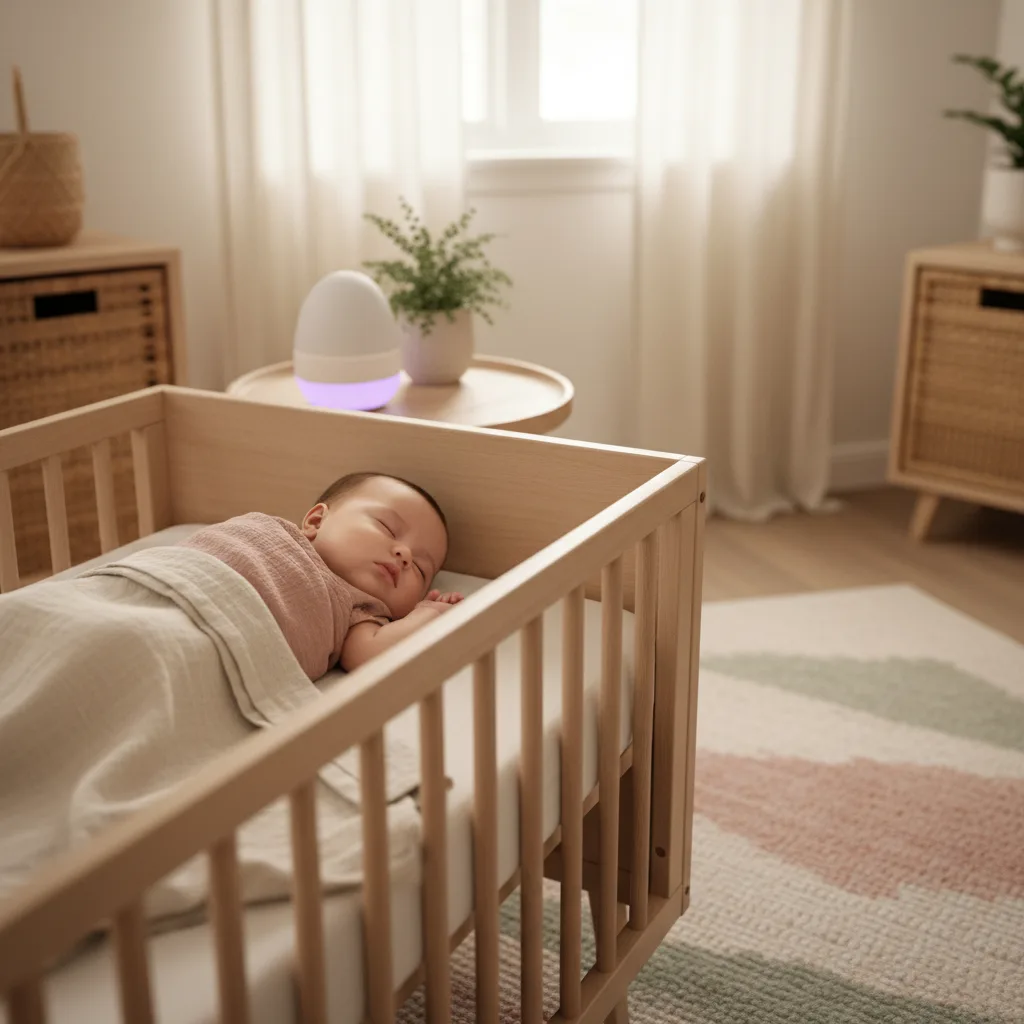
- Keep the sound level below 50 decibels (roughly the volume of a quiet conversation)
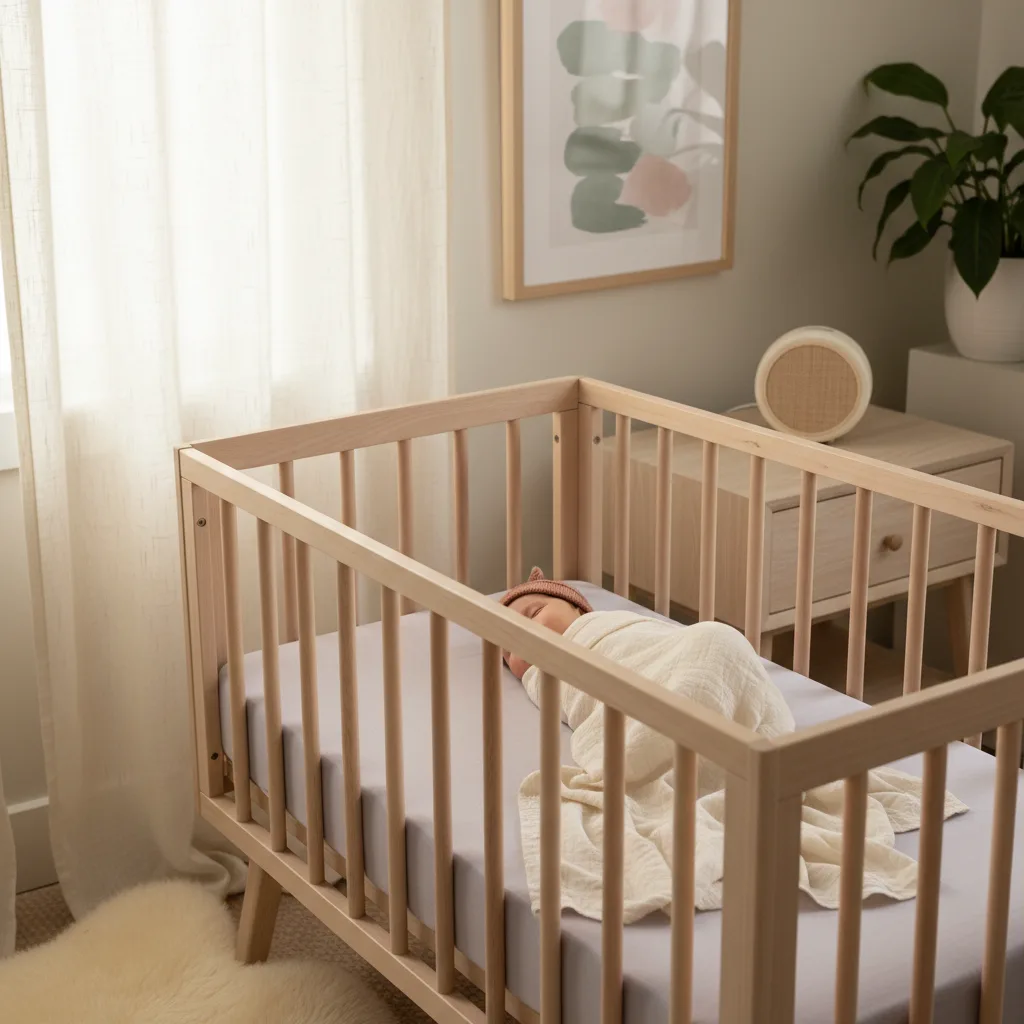
- Place the sound source at least 2 meters (6 feet) from your baby's head
- Use a decibel meter app on your phone to check the level
- When in doubt, turn it down
A study published in Pediatrics found that many sound machines can produce over 85 decibels at maximum volume when placed near a baby. That is well above the recommended level and can damage hearing over time.
How to use white noise safely
1. Choose the right timing
Use background noise only during sleep, not all day long. Your baby also needs to hear normal everyday sounds, voices, and music to develop their hearing normally.
2. Start the sound before putting baby down
Turn on the sound as part of the bedtime routine, ideally after the last nursing or bottle. That way your baby associates the sound with sleep.
3. Keep the volume low
Below 50 decibels, at least 2 meters away. The sound should be a soft background, not a dominant noise.
4. Use a timer
Many apps and machines have a timer function. Set it to turn off after 30–60 minutes. Your baby does not need sound all night.
5. Do not use your phone as the sound source in the crib
Never place a phone in the crib or close to your baby. Use a separate device or a dedicated sound machine positioned at a safe distance.
Tip: Log your baby's sleep when you experiment with white noise. That way you can compare sleep quality with and without it, and see whether it actually makes a difference for your baby.
Can babies become dependent on white noise?
This is a common concern. The answer is: possibly, but it is manageable.
Some babies may become used to having background noise to fall asleep. This is not harmful, but it can become inconvenient, for example, while traveling or at a grandparent's house.
How to prevent dependency:
- Use white noise as one part of the routine, not the only sleep association
- Vary between different sounds occasionally
- Gradually reduce the volume over time
- From around 6 months, you can start trying nights without it
Many families use white noise during the most intensive period (0–6 months) and then gradually phase it out.
What about older babies and toddlers?
For babies over 6 months and toddlers, background sound can still be useful, especially:
- During periods of sleep regression
- When the child is sick and unsettled
- In new environments (travel, visiting)
- If the nursery has a lot of outside noise (traffic, siblings)
Alternatives to white noise
Not all babies like white noise. Other things that can help with sleep:
- Lullabies. Your voice is the most soothing sound for your baby
- Swaddling. For newborns under 3 months (always follow safe swaddling guidelines)
- Dark room. Blackout curtains make a big difference
- Consistent bedtime routine. The most effective sleep tool of all
- Good room temperature, 68–72°F (20–22°C) is ideal for sleep
Frequently asked questions
Is white noise dangerous for babies?
No, not if you keep the volume below 50 decibels and place the sound source at least 2 meters from your baby. Sound that is too loud over a long period can affect hearing.
Which type of noise is best for babies?
It is individual. Many parents find that pink noise (like rain or wind) works better than pure white noise. Try different variations.
Should white noise play all night?
Preferably not. Use a timer and let the sound turn off after 30–60 minutes, once your baby has fallen asleep.
From what age can I use white noise?
You can use it from birth. Newborns often respond well because the sound resembles the womb. Gradually reduce its use from around 6 months.
Can I use Spotify or YouTube?
Yes, but be aware of ads that can play loudly in the middle of the night. Offline playlists or dedicated apps are safer.
Summary
White noise can be a useful tool for baby sleep, especially in the first few months. The most important thing is to use it safely: low volume, good distance, and as part of a comprehensive sleep routine.
Remember that white noise is not a substitute for good sleep habits, but a supplement that can make the difference on difficult evenings.
Read also: Baby sleep cues | Sleep routines for babies | Safe sleep environment for the nursery
Further reading
- Age-by-age sleep schedule, from 0–12 months
- Bedtime rituals that work, build an evening routine that sticks
- Safe sleep for baby, the most important rules for a safe sleep environment
Sources
- Spencer, J.A. et al. (1990). White noise and sleep induction. Archives of Disease in Childhood, 65(1), 135–137.
- Hugh, S.C. et al. (2014). Infant sleep machines and hazardous sound pressure levels. Pediatrics, 133(4), 677–681.
- American Academy of Pediatrics (AAP). Safe Sleep Guidelines
- National Sleep Foundation. Baby and toddler sleep
Last updated: March 2026
🔧 Helpful Tools
- Baby Sleep Tracker. Track and optimize your baby's sleep
- Soothing Sounds. White noise and soothing sounds to help your baby sleep
- All Baby Tools. Browse all free tools for pregnancy and baby care
📖 Related Articles
- Baby Sleep Help: Get Support with Infant Sleep Around the Clock. Struggling with baby sleep? Babysential's Sleep Assistant AI answers your sleep questions 24/7, based on international pediatric health guidelines.
- Baby Won't Fall Asleep Alone: How to Help Gradually. Baby only falls asleep while nursing, being rocked, or held? Learn gentle methods to help your baby become more comfortable falling asleep, without letting them cry alone.
- Wake Windows for Babies: Complete Guide by Age (0–18 Months). Complete guide to wake windows for babies by age. Learn your baby's ideal awake time from newborn to 18 months, sleep cues to watch for, and what happens when they get overtired.