Being asked to be a godparent is a great honor. It means the parents trust you and want you as an important person in their child's life. But what does the godparent role actually involve? What is expected of you? And what should you give as a gift?
This guide gives you everything you need to know, from the tradition's origins to practical gift ideas and help with your godparent speech.
What Is a Godparent?
A godparent (also called a godmother or godfather) is a person the parents choose to play a special role in a child's life. Traditionally, a godparent was a Christian sponsor who promised to support the child's faith, but today the role has become broader.
Godparent in a Religious Christening
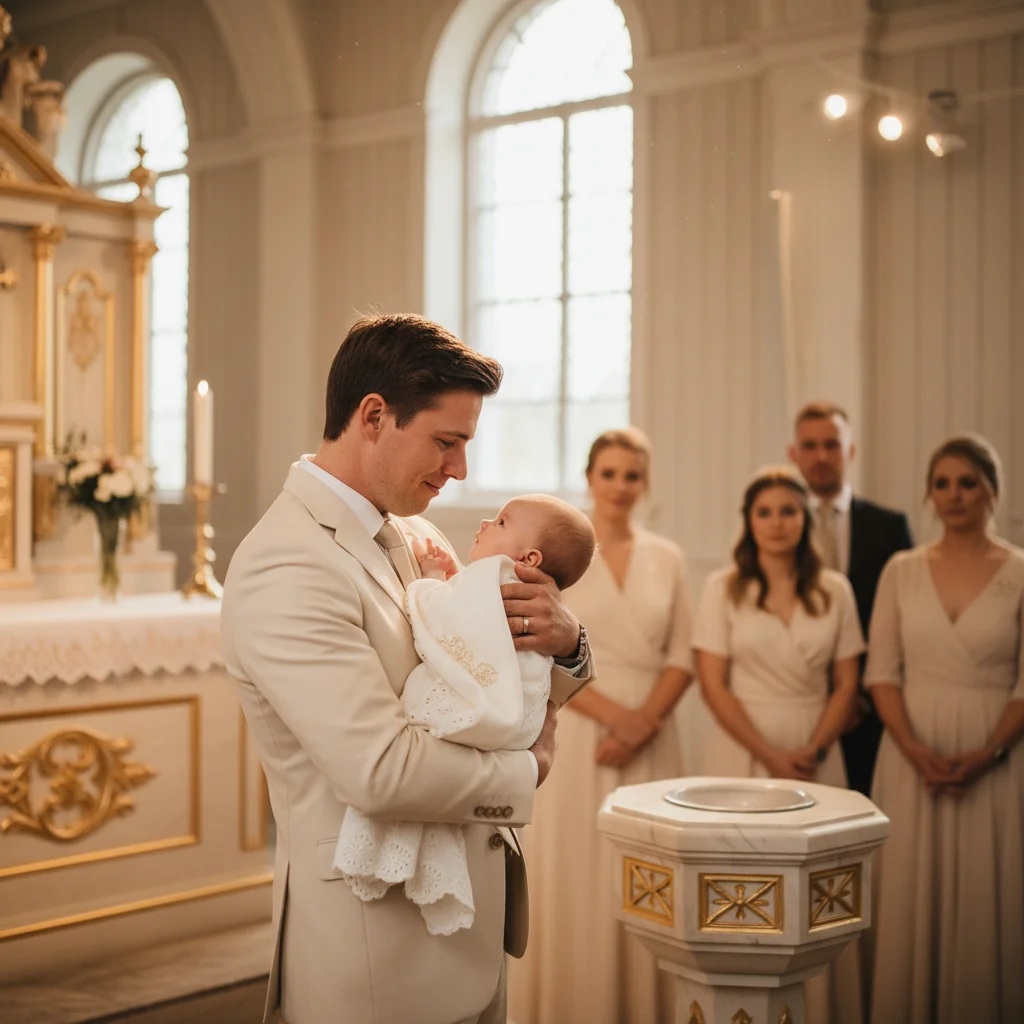
In a church christening, godparents have a formal role. They are present during the ceremony and typically promise to:
- Help with the child's religious upbringing
- Pray for the child
- Be a role model and a trusted adult
Requirements vary by denomination. Most churches ask that godparents be baptized and confirmed. It is common to have 2–4 godparents.
Godparent at a Naming Ceremony
At a non-religious naming ceremony, the godparent role is more flexible. Parents choose what the role means, and there are no formal requirements. Many use the term "godparent" or "supporting person" to mark that this person has a special place in the child's life.
Godparent in Other Religious Traditions
Different faith communities have different traditions for godparents. In the Catholic Church, for example, there are stricter requirements, a godparent must be a practicing Catholic.
The History of the Godparent Tradition
The godparent tradition goes back centuries in many cultures, originating in the early Christian church. Originally, the godparent's most important task was to ensure the child's Christian upbringing if the parents were to die.
In older agricultural societies, it was a great honor to be asked as a godparent, and the role carried a lifelong responsibility. The godparent traditionally gave the first gift in silver, a tradition that lives on today with silver keepsakes as the most popular godparent gift.
In modern families, the role has evolved. Many godparents see themselves as an extra trusted adult in the child's life, a kind of "reserve parent" who is there for the big moments and whom the child can always turn to.
Godparent Responsibilities and Expectations
What Is Expected of You?
There is no official job description for godparents, but here is what most parents hope for:
At the christening or naming ceremony:
- Be present at the ceremony
- Hold the baby (at a church christening, often during the actual baptism)
- Give a short speech if desired
During childhood:
- Remember birthdays and important occasions
- Be a trusted adult the child can rely on
- Stay in regular contact, visits, short messages, the occasional outing
- Give a small birthday or holiday gift
During the teenage years:
- Be available as a conversation partner
- Be present at confirmations or other milestone events
- Offer a different perspective from the parents'
The most important thing: The godparent role is not about money or grand gestures. It is about being present and showing the child that they have an extra adult who cares about them.
How Much Contact Is Normal?
This varies enormously from godparent to godparent. Some are closely involved and see the child weekly, while others send cards for birthdays and show up at the big occasions. Both are completely fine, what matters is keeping the connection alive.
A good rule of thumb is to reach out at least 4–5 times a year: the birthday, a holiday, the christening anniversary, and a couple of times in between.
How Parents Choose Godparents
Who Can Be a Godparent?
For a religious christening, the main requirement is usually that the godparent is baptized. Beyond that, parents choose freely. Common choices are:
- Siblings and cousins
- Close friends
- Long-standing colleagues with a close friendship
How Many Godparents?
Typically 2–4. Most churches require a minimum of two. At naming ceremonies, parents decide the number themselves.
Can You Say No?
Yes, it is acceptable to decline being a godparent. If you feel you cannot live up to the role, for example due to distance, life circumstances, or personal reasons, it is better to be honest. Parents will appreciate the honesty over a reluctant commitment.
The Godparent Speech
Many godparents dread the speech, but it does not need to be long or perfect. Here is a simple structure:
Structure for the Godparent Speech
- Opening. Thank the parents for the honor and say what it means to you
- About the baby. Something about the baby or the birth (something light-hearted works well)
- About the parents. Why they will be wonderful parents
- Your promise. What you will mean to the child
- Closing. A wish for the child's future
Tips for the Speech
- Keep it short, 2–3 minutes is perfect
- Speak from the heart rather than reading word for word
- A funny story is fine, but keep it respectful
- Practice in front of a mirror or a friend
- Have notes as a backup, but try to speak freely
Example Opening
"Dear [child's name]. When [mom/dad] asked me to be your godparent, I was incredibly happy and honored. This is a role I take very seriously, and I look forward enormously to being part of your life."
Tip for nervous speakers: Write down bullet points on a card rather than a full script. Speak slowly, breathe well, and remember that everyone in the room is rooting for you.
The Best Godparent Gifts
As a godparent, you are often expected to give a slightly more considered gift than other guests. Here are the most popular options:
Classic Godparent Gifts
Silver keepsake with engraving The number one classic godparent gift. A silver spoon, cutlery set, or silver cup with the baby's name and christening date engraved. Look for reputable silversmiths in your area or established brands known for baby silver.
Jewelry A small pendant with the baby's initials, birthstone, or a cross (for religious christenings). Something the child can carry throughout their entire life.
Piece of jewelry for the child to grow into A bracelet, ring, or necklace that will fit as an older child or teenager.
Modern Godparent Gifts
Savings or investment account Open a savings account or investment account for the child and deposit a starting amount. With an 18-year time horizon, even a small sum can grow significantly. Create a gift letter explaining the gift.
Regular monthly contribution Set up an automatic monthly transfer, even a small amount. Over 18 years it adds up to a meaningful sum plus interest.
Time capsule box A beautiful box filled with items from today, a newspaper from the birth date, current coins, photos, a letter from you. To be opened when the child turns 18.
Personal Godparent Gifts
Godparent promise Write a personal "contract" stating what you promise to do as a godparent. Frame it beautifully. For example: "I promise to always pick up when you call," "I promise to come to your school graduations."
Handwritten letter + gift Combine a physical gift with a personal letter describing what the godparent role means to you and what you wish for the child's future.
Embroidered blanket with name A soft, personalized blanket with the baby's name embroidered. Both practical and sentimental.
Not sure what to give? Our christening gift guide recommends gifts based on budget and relationship.
How Much Should a Godparent Gift Cost?
There is no set rule, but here is a rough guide based on what is common:
| Budget | Examples |
|---|---|
| $50–100 | Silver spoon without engraving, personal book, named stuffed animal |
| $100–200 | Silver spoon with engraving, cutlery set, savings contribution |
| $200–400 | Complete silver keepsake set, silver cup, investment account |
| $400–1,000 | Gold jewelry, combination gift (silver + savings account) |
| $1,000+ | Designer heirloom piece, large savings gift, gold + personal letter |
Remember: What matters most is not the amount, but the thought. A considered gift at $100 with a personal letter beats a generic gift at $500.
Being a Godparent from a Distance
If you live far from the child, here are tips for staying connected:
- Send short videos. A 30-second hello means a lot
- Digital children's books. Record yourself reading a favorite book and send it as an audio file
- Video calls. Schedule regular "godparent calls" once a month
- Letters and cards. Send physical mail, children love getting post
- Annual tradition. Create a fixed tradition, for example a special trip together every summer
Frequently Asked Questions
What do you do during the actual christening ceremony?
At a religious christening, one of the godparents typically holds the baby during the baptism itself. The officiant will guide everyone through what happens. Godparents respond to questions about taking on responsibility for the child's faith. Beyond that, it is customary to give a short speech at the celebration afterward.
Can you be a godparent for multiple children?
Yes, there is no limit to how many children you can be a godparent for. But consider whether you have the capacity to meaningfully fill the role for all of them, it is better to be an engaged godparent for three children than an absent one for ten.
What if the relationship with the parents changes?
The godparent relationship is between you and the child, not you and the parents. Even if your friendship or connection with the parents changes over time, you are still the child's godparent. Try to maintain your connection with the child regardless.
Do you have to give a speech as a godparent?
No, there is no obligation to speak. But most people appreciate a few words from the godparent. If you are nervous, 1–2 minutes where you thank the parents for the honor and say something kind about the child and the family is plenty.
Can you add a new godparent later?
In many denominations, additional godparents can be recognized at later ceremonies, though the original godparents remain. In practice, it is more common to "expand" the godparent group than to replace anyone.
Read More
- Christening gifts: The best gift ideas
- Unique christening gift ideas
- Personal christening gifts: Gifts with lasting meaning
Sources
- Historical and theological sources on the godparent tradition across Christian denominations.
- Consumer research on godparent gifts and christening customs.
- Guidance from major denominations including the Catholic Church and various Protestant churches.
🔧 Helpful Tools
- All Baby Tools. Browse all free tools for pregnancy and baby care