Nibble / Guide
From first spoon to the family table
Choose a stage
Set your baby’s age in Profile and the guide opens at the right step.
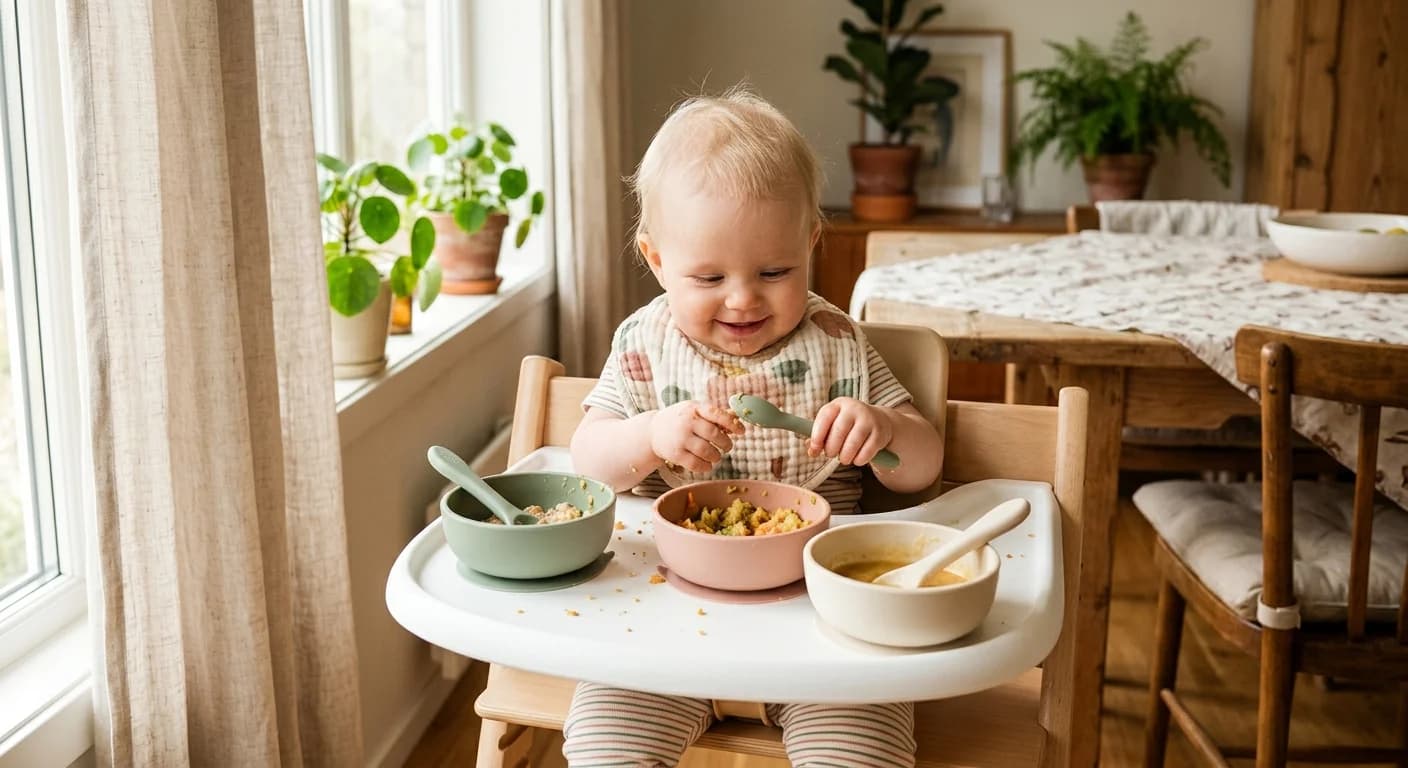
Around 6 months
First tastes
Start with smooth or mashed food, or soft finger foods that break up easily. Some babies go straight to mashed and finger foods.
A few teaspoons or pieces, alongside the usual milk feeds. Try one new single-ingredient food at a time and wait 3 to 5 days before the next.
Ready to start?
Most babies are ready around 6 months. Signs to look for:
- Sits up alone or with support
- Controls their head and neck
- Opens their mouth when you offer food
- Swallows food instead of pushing it back out
- Brings objects to their mouth
- Tries to grasp small objects, such as toys or food
Good to try now
All foodsFood suggestions appear once your food log and Nibble preferences have loaded, so a food you excluded or that caused a reaction is never shown by mistake.
Not yet
- HoneyUntil 12 monthsCan cause infant botulism.
- Cow's milk as a drinkUntil 12 monthsToo much protein and minerals for young kidneys. Plain yogurt without added sugar is fine before 12 months.
- JuiceUntil 12 monthsNot needed. Whole fruit is better.
- Added sugarUntil 2 yearsNo room for it in a young child's diet.
- Salty foodsKeep outProcessed meats, salty snacks. Do not add salt to baby's food.
- Whole nuts, popcorn, whole grapesKeep outChoking risk. Use smooth nut butter thinly spread, and cut grapes small.
- Raw carrot and apple, hot dogsKeep outChoking risk. Cook hard vegetables until soft.
- Unpasteurized milk, cheese or juiceKeep outRisk of harmful bacteria.
- High-mercury fishKeep outShark, swordfish, king mackerel, bigeye tuna.
Meals for this step
Food suggestions appear once your food log and Nibble preferences have loaded, so a food you excluded or that caused a reaction is never shown by mistake.
Put foods in this week’s planAges are a guide. Every baby moves at their own pace, and a baby with a previous reaction or severe eczema should start allergens with their pediatrician’s advice. Sources:
Questions parents ask
When should my baby start solid foods?
Around 6 months. The CDC and NHS both point to signs of readiness rather than a date: your baby sits up alone or with support, controls their head and neck, opens their mouth for food and swallows it instead of pushing it back out.
How should textures change after the first tastes?
Start with smooth or mashed food, or soft finger foods that break up easily. From around 7 months move on to mashed, lumpy and soft finger foods as soon as your baby manages them, and by 10 to 12 months offer small soft pieces of family food.
What should babies not eat yet?
No honey before 12 months, because it can cause infant botulism. No cow's milk as a drink and no juice before 12 months, and no added sugar before 2 years. Keep out salty foods, unpasteurized milk, cheese and juice, and high-mercury fish. Whole nuts, popcorn, whole grapes, raw carrot and apple, and hot dogs are choking risks.
Can I track the foods my baby has tried?
Yes. The guide sits inside Nibble, so every food you log shows as tried here, and the foods to try next come first.